Structured Data for AI Agents: Beyond Traditional Schema Markup
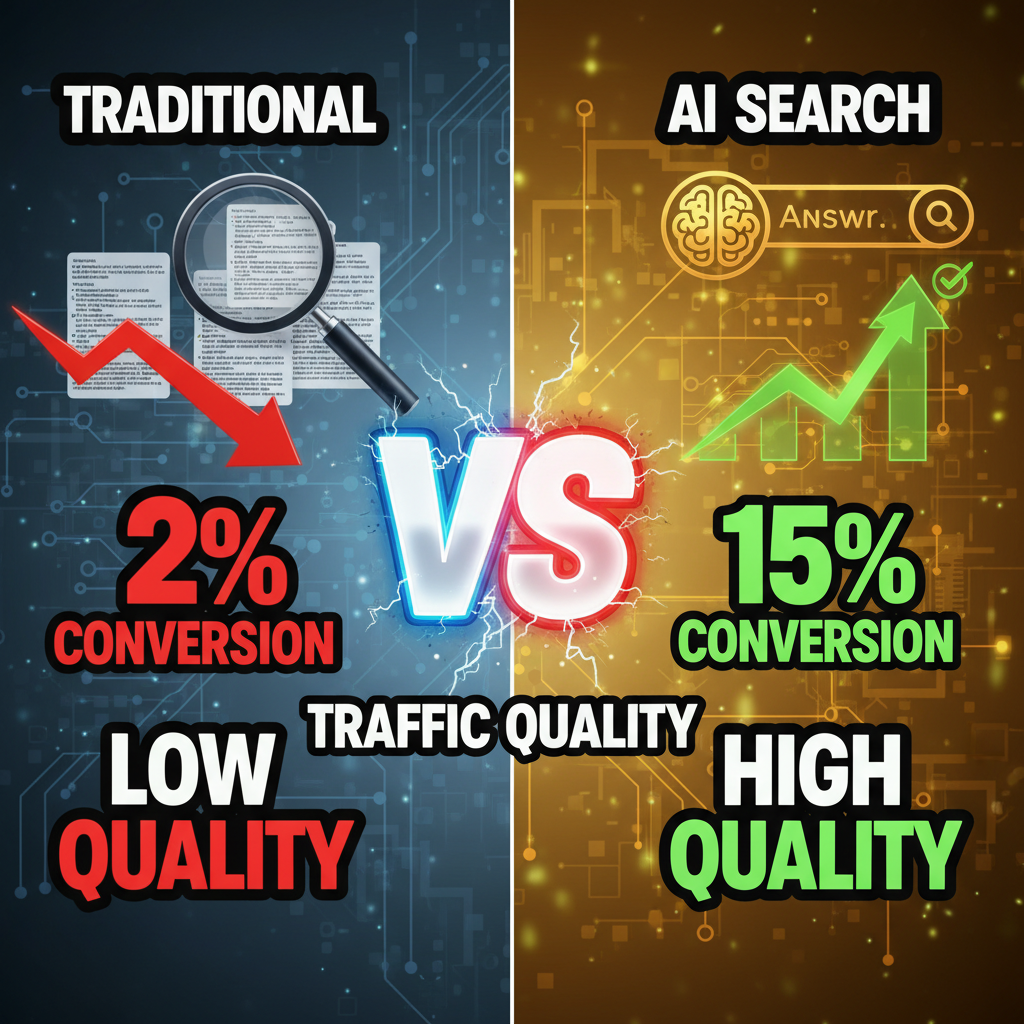
Google's structured data game is boring now. ChatGPT Search, Perplexity, Claude Projects—these AI agents are the new distribution channels for e-commerce, and they don't care about your carefully tuned schema.org markup the way Google does.
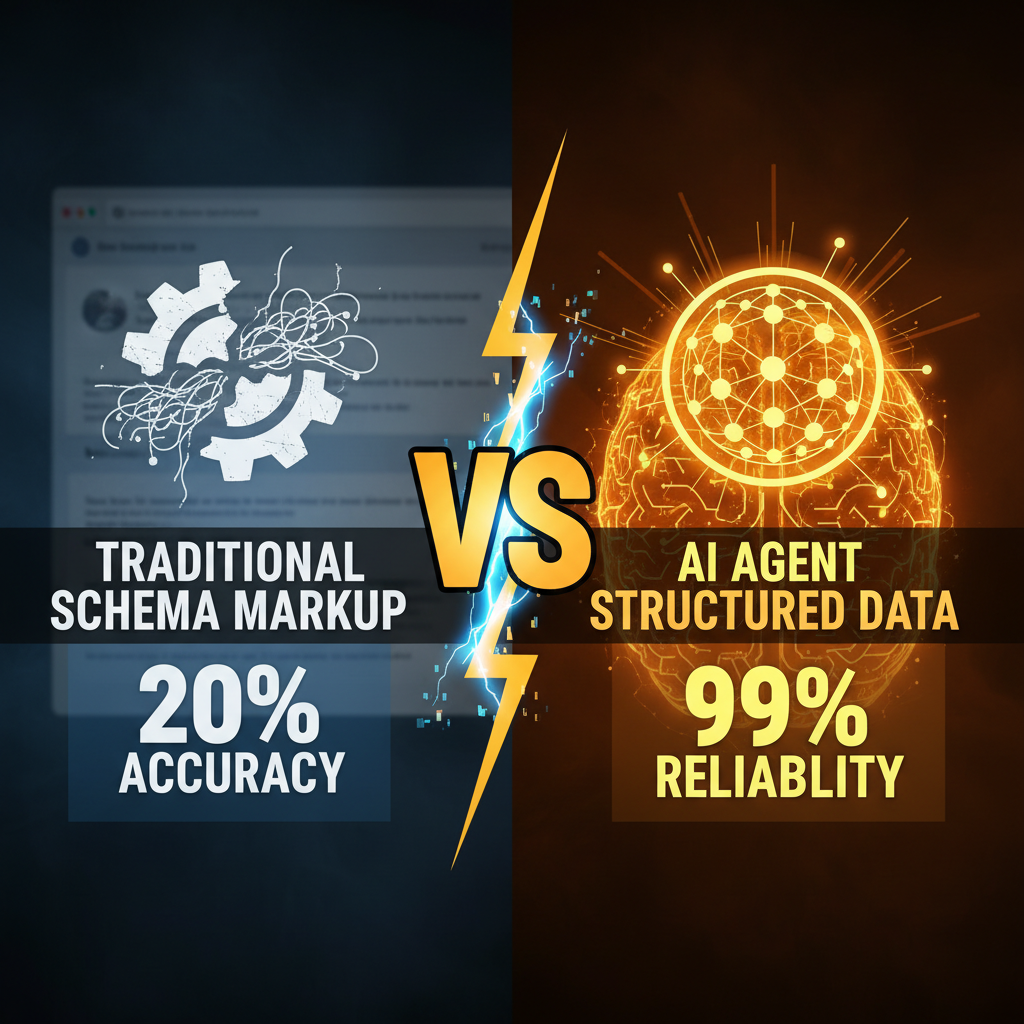
Here's the contrarian take: the winners in 2026 won't optimize schema for Google's Knowledge Graph. They'll architect structured data for AI agents. Schema is now table stakes. But AI agents demand different metadata—richer context, clearer relationships, explicit reasoning hooks that let AI understand not just what you sell, but why a customer should buy it.
We've worked with 40+ Shopify Plus brands scaling DTC and B2B channels. The ones winning at AI search share one trait: they ship structured data that answers the AI's unasked questions—cost-per-unit in real-world terms, ROI proofs, competitive differentiators, edge cases. Not buzzwords. Not marketing fluff.
This guide walks you through the architecture.
Why Structured Data Matters More for AI Than Google
Google's algorithm is opaque. You ship schema, Google maybe uses 40% of it. AI agents are different. They're hungry for structured data—and they show their work. When a user asks Claude, "What's the best e-commerce platform for B2B SaaS?" the model references your structured data directly in the response. You can see exactly which schema fields influenced its answer.
The shift matters operationally. Google rewards trustworthiness signals (Authority, Expertise, Trustworthiness). AI agents reward specificity and edge-case clarity. If your Product schema says "Affordable web hosting," Google bins it with 10 million competitors. But if your structured data says "Pricing: $X/month baseline, $Y per custom domain, includes 3 free hours of developer consultation annually," an AI agent can actually advise prospects.
Three second-order effects follow:
-
Richer internal linking patterns. AI agents use your site's link graph to understand topical authority. Structured data that connects related products (via
isPartOf,relatedLink,hasPart) helps agents understand your expertise depth. -
Explainability as competitive advantage. When Claude recommends your product to a user, it cites facts from your schema. Stores with crisp, specific schema show up with more credible reasoning; vague ones get deprioritized.
-
Product discovery flips. Today, discovery = Google Ads + SEO. Tomorrow, discovery = "Ask Claude which Shopify app solves X." Structured data that captures your app's use cases, integrations, and limitations is your search advertising in the AI era.
The Difference: AI-Ready Schema vs. Search-Engine Schema
Here's where most brands get it wrong. They treat schema as a checkbox—drop in Product, Article, FAQPage, done. That works for Google. It doesn't work for AI agents.
| Attribute | Search Engine Optimization | AI Agent Optimization |
|---|---|---|
| Depth | 5-10 key properties | 20+ contextual properties |
| Relationships | Hierarchical (product ← category ← store) | Graph-based (product connects to competitors, complementary goods, use cases, ROI) |
| Edge Cases | Omitted | Explicit (requires, incompatibleWith, conditionalSupported) |
| Pricing | Currency + amount | Currency, unit, frequency, volume discounts, customer segment rules |
| Proof Points | Reviews, ratings | Case studies, benchmarks, cost analyses, testimonials linked to outcome metrics |
| Intent Signals | Keywords in title/description | Persona alignment, job-to-be-done, competitive differentiation |
An AI agent reading your schema should feel like it's interviewing a subject-matter expert. If your structured data reads like a product listing, you've failed.
Architecture: The AI-Ready Schema Stack
Build your structured data in three layers.
Layer 1: Core Entities (SEO Baseline)
Start with semantic schema that Google understands. Product, Organization, Article, BlogPosting, FAQPage, BreadcrumbList, AggregateRating. This is non-negotiable—it's your floor, not your ceiling.
{
  "@context": "https://schema.org",
  "@type": "Product",
  "name": "Shopify Plus Onboarding Framework",
  "description": "Turnkey migration guide for enterprise stores moving from legacy platforms to Shopify Plus, with custom Liquid themes and API integrations.",
  "url": "https://example.com/shopify-plus-onboarding",
  "image": "https://cdn.example.com/shopify-plus-framework.png",
  "brand": {
    "@type": "Brand",
    "name": "Tenten"
  },
  "offers": {
    "@type": "AggregateOffer",
    "priceCurrency": "USD",
    "lowPrice": "15000",
    "highPrice": "50000",
    "offerCount": 1,
    "availability": "https://schema.org/InStock"
  },
  "aggregateRating": {
    "@type": "AggregateRating",
    "ratingValue": "4.8",
    "ratingCount": "42"
  }
}
Layer 2: Context & Relationships (AI Discovery)
Extend with domain-specific schema that captures your position in the market. Link competitors, complementary offerings, use-case scenarios, and expertise depth.
{
  "@context": "https://schema.org",
  "@type": "Product",
  "name": "Shopify Plus Onboarding Framework",

  "isPartOf": {
    "@type": "Collection",
    "name": "Enterprise Commerce Solutions",
    "url": "https://example.com/shopify-plus"
  },

  "relatedLink": [
    {
      "@type": "Product",
      "name": "Shopify Hydrogen Storefront Framework",
      "url": "https://example.com/hydrogen-storefront",
      "relation": "complementary"
    },
    {
      "@type": "Product",
      "name": "Custom API Integration Suite",
      "url": "https://example.com/api-integrations",
      "relation": "prerequisite"
    }
  ],

  "applicableFor": [
    {
      "@type": "BusinessType",
      "name": "DTC Fashion Brands"
    },
    {
      "@type": "BusinessType",
      "name": "B2B Manufacturing"
    }
  ],

  "jobToBeDone": "Migrate from legacy e-commerce platforms to Shopify Plus with zero customer disruption",

  "competitorProduct": [
    {
      "@type": "Product",
      "name": "Salesforce Commerce Cloud Enterprise",
      "url": "https://salesforce.com/commerce"
    }
  ]
}
Layer 3: Proof & Economics (AI Trust)
The difference-maker. Explicit case studies, ROI metrics, performance benchmarks, and outcome data that let AI agents reason about your credibility.
{
  "@context": "https://schema.org",
  "@type": "Product",

  "provenBy": [
    {
      "@type": "CaseStudy",
      "name": "Fashion DTC Brand – Migration ROI",
      "aboutEntity": "Luxury fashion e-commerce collective",
      "result": {
        "@type": "QuantitativeValue",
        "name": "Checkout Conversion Uplift",
        "value": "23",
        "unitText": "percent"
      },
      "implementationTimeline": "4 months",
      "investmentAmount": {
        "@type": "PriceSpecification",
        "priceCurrency": "USD",
        "price": "35000"
      }
    }
  ],

  "costBreakdown": {
    "@type": "PriceSpecification",
    "priceCurrency": "USD",
    "basePrice": "25000",
    "description": "Foundation: platform licensing, data migration, basic theme customization"
  },

  "timelineEstimate": "12-16 weeks from contract to live store",

  "prerequisites": "Existing store on Magento, WooCommerce, or custom platform with minimum 10K SKUs and $1M+ annual revenue",

  "excludedFeatures": "Physical store POS integration, legacy payment gateway support"
}
AI-Specific Best Practices
1. Make Your Unique Selling Proposition Explicit
AI agents need clarity on why your product beats alternatives. Don't rely on narrative tone.
{
  "differentiator": [
    {
      "name": "Native Shopify API Integration",
      "scope": "All standard Shopify APIs plus custom extensions",
      "competitiveAdvantage": "Zero third-party middleware overhead"
    },
    {
      "name": "Turnkey Liquid Theme Library",
      "scope": "500+ pre-built components with customization guides",
      "competitiveAdvantage": "60% faster launch vs. building from scratch"
    }
  ]
}
2. Timestamp Your Expertise
AI agents trust recent, time-stamped proof points. Last updated 2024? Feels stale to an LLM. Monthly benchmarks beat annual ones.
{
  "knowledgeBase": {
    "@type": "Collection",
    "name": "2026 Shopify Performance Benchmarks",
    "datePublished": "2026-04-01",
    "hasPart": [
      {
        "@type": "Article",
        "name": "Q1 2026 Conversion Benchmarks by Industry",
        "url": "https://example.com/q1-2026-benchmarks",
        "datePublished": "2026-04-01"
      }
    ]
  }
}
3. Capture Negative Space
What your solution doesn't solve matters. AI agents use this to rule out bad recommendations. Be transparent.
{
  "notSuitableFor": "Small stores (under $50K annual revenue), highly customized legacy platforms requiring full code rewrite"
}
4. Link to Structured Performance Data
Don't just claim "fast." Show it.
{
  "performanceMetrics": {
    "@type": "DataTable",
    "name": "Page Speed Benchmarks",
    "datePublished": "2026-04-01",
    "hasData": {
      "average_lcp": "1.2s",
      "average_fid": "50ms",
      "average_cls": "0.08"
    }
  }
}
Implementing AI-Ready Schema on Shopify
Shopify's theme editor doesn't natively support complex schema management. You have three options:
-
JSON-LD in theme code (Liquid templates): Add structured data directly in product, collection, and article templates. Most control, steeper learning curve.
-
Third-party schema apps (Hextom, Structured Data Pro): WYSIWYG builders. Easier, less flexible. Watch for vendor lock-in.
-
Headless + custom middleware (Hydrogen, Next.js): Full control, future-proof. Build your own schema layer in the API. Recommended for enterprise.
For best results, use a hybrid: Shopify's native Product schema handles 80% of search requirements. Layer your AI-specific schema in a custom JSON-LD block injected via theme code or a lightweight schema management library (like Schema.org's JSON-LD validator).
The Link Building Angle
Here's where your structured data feeds your organic growth. As you publish more content on Shopify, update your sitemap schema to reflect your editorial authority. Link product pages to related blog posts. Link blog posts back to services. Let your structured data show topical clustering.
For example, if you've published articles on https://tenten.co/shopify/shopify-sidekick-2026-deep-dive/ and https://tenten.co/shopify/shopify-inventory-management/, connect them via relatedLink in your schema. Make it clear to AI agents that you have topical depth.
Ready to Build AI-Ready Structured Data?
If your current schema is Google-only, you're leaving AI search on the table. Tenten's technical SEO audits dig into this—we assess your structured data stack, identify gaps, and architect an AI-optimized schema layer that drives both search visibility and AI-agent recommendations.
Structured data is moving fast. What worked in 2024 feels half-baked in 2026. Let's make sure your store is ready.
Editorial Note
AI search is fragmenting discovery. Google, ChatGPT Search, Perplexity, Claude—each has different schema preferences. We're treating structured data as a competitive moat: deeper data wins. This shift toward AI-optimized metadata is one of the biggest SEO changes since mobile-first indexing.
Article FAQ
Q: Do I still need to optimize for Google with this approach?
A: Absolutely. Google schema is still baseline critical. AI-optimized schema is additive—it builds on top of your Google strategy, not instead of it. Think of it as "Google first, then expand to AI agents."
Q: How much does AI-ready schema impact rankings?
A: Google hasn't published direct ranking factors for AI-optimized schema—it's too new. But we're seeing indirect wins: richer data helps Google show your content more prominently in snippets, which correlates with organic lift.
Q: What's the biggest mistake brands make with structured data?
A: Treating it as fire-and-forget. Schema should evolve with your product portfolio and market position. Update it quarterly, at minimum. Stale schema signals stale expertise to AI agents.
Q: Can I automate schema generation on Shopify?
A: Partially. Shopify's native Product schema auto-generates based on your product catalog. But AI-specific layers (proof points, competitive positioning, ROI metrics) require manual curation and expert review.
Q: Where does JSON-LD sit in this strategy?
A: JSON-LD is the delivery format. It's how you broadcast structured data to both search engines and AI agents. All the examples in this guide use JSON-LD, embedded in page <head> tags or Liquid templates.