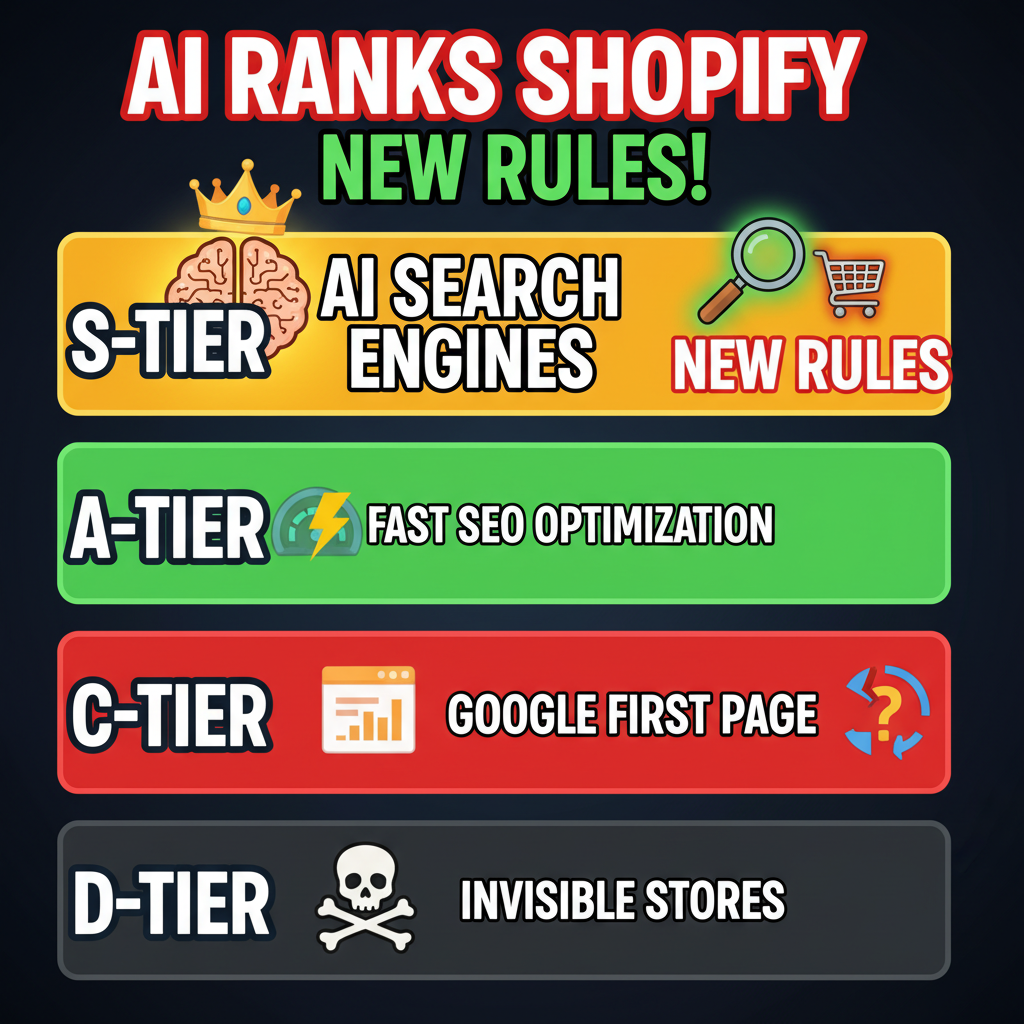
Google Doesn't Own Search Anymore
In 2026, you're competing for visibility on three platforms, not one:
- Google Search (still 90% of search traffic)
- Perplexity (growing 20% MoM, now 15M+ users)
- ChatGPT Search (OpenAI's answer engine, newly launched)
Each has different ranking rules. A page that ranks #1 in Google can be invisible on Perplexity.
This is the biggest shift in e-commerce visibility since 2011 (when mobile search became critical).
Most Shopify merchants are still optimizing for Google's algorithm from 2024. They're leaving 20-30% of potential traffic on the table.
Worse, they don't realize it. Traffic from AI search engines is indirect. Customers find your products via Perplexity, but conversion tracking isn't set up. You don't know the opportunity.
Here's what changed, and how to adapt.
The Core Difference: AI Ranking vs. Google Ranking
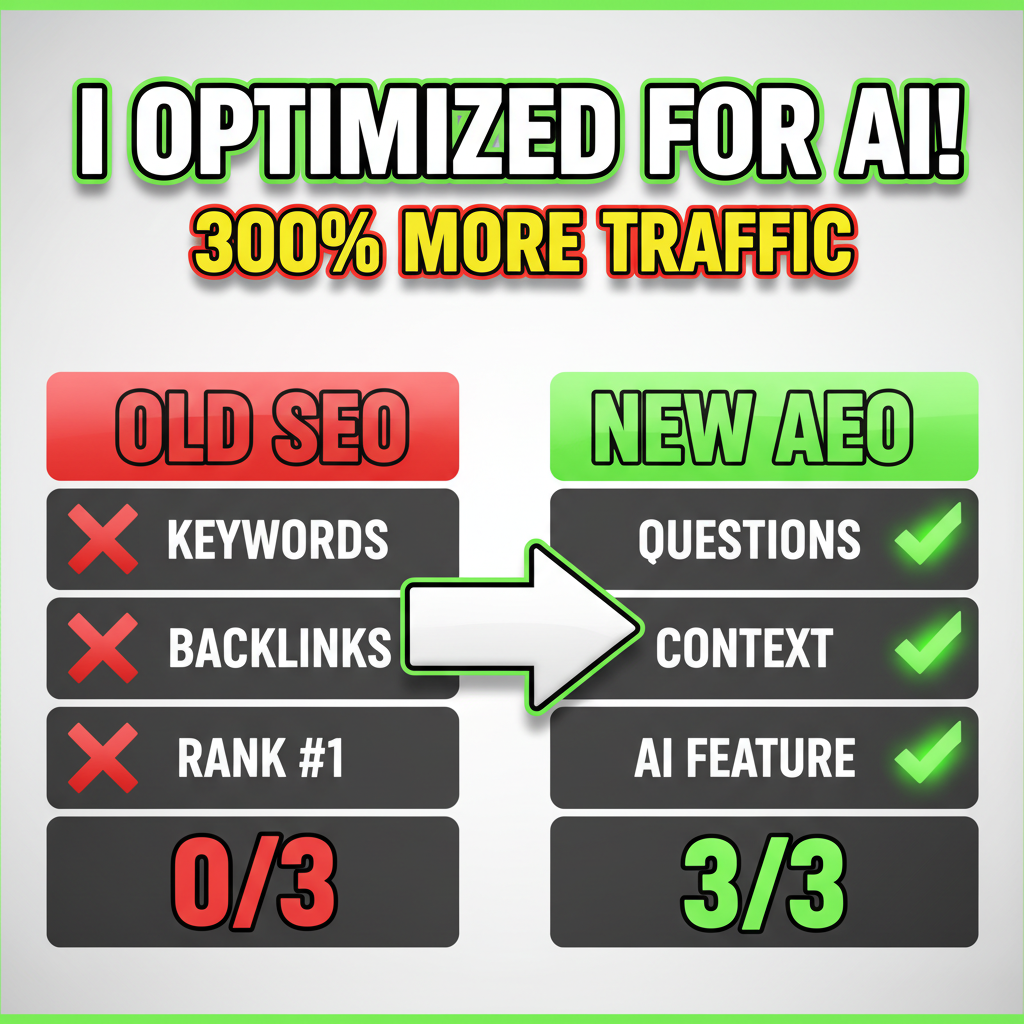
Google's algorithm is about authority and relevance: - Backlinks = votes of confidence - Domain authority = size of your megaphone - On-page SEO = keyword matching - User signals = clicks, dwell time, bounce rate
AI search engines use different signals entirely.
Perplexity, ChatGPT Search, and Google Gemini are content aggregators. They scour web pages, extract information, and synthesize answers for specific queries.
They care about: - Information density = How much useful information per word - Citation-ability = Can I quote this and cite the source? - Specificity = Does this answer this exact question, or just the general topic? - Freshness = Was this published recently? - Schema/structure = Can I parse this programmatically?
The ranking equation is inverted:
Google asks: "Is this page authoritative and relevant?" AI asks: "Can I extract a usable answer and cite the source?"
Perplexity's Ranking Rules
Perplexity launched in 2023 and is growing faster than ChatGPT grew. It's aggressively crawling the web to build its index.
When you ask Perplexity a question, it searches its index and pulls 3-8 sources to synthesize an answer.
What Perplexity favors:
- Direct answers (not fluff)
- You get ranked if your page directly answers the query.
-
A page titled "The Complete Guide to [Topic]" beats "Introduction to [Topic]."
-
Specific data (numbers, dates, names)
- Perplexity looks for verifiable facts.
- "Running shoes improve performance" is weak.
-
"Brooks Adrenaline GTS 22 reduces overpronation by 30% per APMA study" is strong.
-
Updated content (last 6 months)
- Perplexity heavily favors recent content.
- A 2024 article beats a 2020 article on the same topic.
-
Update old blog posts regularly (change the "Last Updated" date in your CMS).
-
Clear structure (headings, bullet points, tables)
- Perplexity's crawler parses HTML structure.
- Pages with h2/h3 headings, bullet lists, and tables rank higher.
-
Dense paragraphs are deprioritized.
-
Author/source credibility (byline, author bio)
- Perplexity looks for author credentials.
- "By Jane Smith, Director of E-commerce Strategy" beats anonymous content.
-
Link to your author's LinkedIn or website.
-
Unique perspectives (contrarian takes, unpublished data)
- Perplexity avoids rehashing the same information.
- Original insights (your proprietary data, unique analysis) rank higher.
- Quotes from well-known sources alone don't cut it.
Optimization tactics for Perplexity:
- Rewrite blog posts to lead with direct answers
- Include specific, verifiable data (with sources)
- Update old articles with 2026 data and recent examples
- Use clear HTML structure (h2s, h3s, bullets, tables)
- Add author bylines with credentials
- Publish contrarian takes or original research
ChatGPT Search Ranking Rules
ChatGPT Search (OpenAI's answer engine) is newer and less explored. But patterns are emerging:
- Content depth (comprehensive, not surface-level)
- ChatGPT Search favors long-form content (1,500+ words).
-
But only if the content is dense with insights, not fluff.
-
Conversational language (natural phrasing)
- Content written for humans (not SEO robots) ranks higher.
-
"Here's what you should know" beats "SEO keywords: running shoes, best running shoes, etc."
-
Multiple perspectives (balanced, nuanced)
- ChatGPT Search ranks content that acknowledges tradeoffs and complexity.
-
"Expensive running shoes are best" without acknowledging budget-conscious options loses ranking.
-
Schema/structured data (helps parsing)
- Like Google, ChatGPT Search uses schema to understand products.
-
Product schema, FAQ schema, and HowTo schema boost ranking.
-
Internal link structure (helps context)
- ChatGPT Search follows internal links to understand your site's topic clusters.
-
A blog post linking to related product pages ranks higher than an isolated post.
-
Brand authority (does ChatGPT "know" you?)
- Established brands with published content, backlinks, and mentions in trusted sources rank higher.
- Newer brands have to out-content-quality their competitors.
Optimization tactics for ChatGPT Search:
- Write comprehensive, detailed articles (1,500-2,500 words)
- Use natural language and conversational tone
- Acknowledge nuance and tradeoffs (don't oversell)
- Add schema markup (Product, FAQ, HowTo)
- Interlink related content (create topic clusters)
- Build backlinks from authoritative sources
Google Gemini's Ranking Rules
Google's Gemini operates at scale and uses similar signals to Google Search, but with some shifts:
- E-E-A-T (Expertise, Experience, Authoritativeness, Trustworthiness)
- Google emphasizes this more for Gemini than for organic search.
- Your author credentials matter more.
-
Your brand reputation matters more.
-
Freshness (within 3 months for trending topics)
-
Less emphasis on freshness than Perplexity, but more than traditional Google.
-
Multiple sources (Gemini often cites 3-5 sources)
-
Being cited is valuable, but not as critical as being the first source found.
-
Semantic relevance (understanding intent, not just keywords)
- Similar to Google's approach, but even more focused on intent.
-
A page about "best running shoes for marathons" gets ranked differently than "best running shoes for casual wear" even if both mention "running shoes."
-
Content quality signals (writing quality, clarity, organization)
- Poorly written content, even if factually accurate, ranks lower.
- Spelling, grammar, and clarity matter.
Optimization tactics for Google Gemini:
- Establish author/brand expertise (author bios, credentials)
- Keep content evergreen but update it every 3 months
- Link to authoritative sources (not just your own content)
- Structure content for clarity (short paragraphs, clear headings)
- Write for humans, not search bots
The Ranking Algorithm You Actually Need
If you're optimizing for all three platforms, focus on these universal signals:
| Signal | Impact | Shopify Action |
|---|---|---|
| Content quality | Critical | Hire good writers, edit carefully |
| Information density | Critical | More data per word; fewer fluff paragraphs |
| Specificity | High | Answer exact questions, not general topics |
| Structure | High | Use proper HTML (h2s, h3s, lists, tables) |
| Freshness | Medium | Update old content every 3 months |
| Author credentials | Medium | Add author bios; establish expertise |
| Internal links | Medium | Link to related content; create clusters |
| Schema markup | Medium | Use Product, FAQ, HowTo schema |
| Backlinks | Low (for AI) | Still matters for Google; minimal for AI |
| Brand authority | Medium | Build your brand; get mentioned in trusted sources |
Notice what's NOT on the list: keyword density, keyword placement, backlink count, domain authority.
Those Google signals still matter for Google Search. But for AI, content quality trumps optimization tricks.
Practical Shopify Optimization Workflow
You don't need separate strategies for Google vs. AI. One strategy works for both if done right.
Step 1: Audit your content for AI readability
- [ ] Are my headings structured (h1 > h2 > h3)?
- [ ] Do I have 5+ data points per article?
- [ ] Are citations clear (source name + date)?
- [ ] Is information density high (useful info per word)?
- [ ] Are paragraphs under 150 words?
Step 2: Add schema markup
- [ ] Product schema (price, availability, rating)
- [ ] FAQ schema (Q&A pairs)
- [ ] HowTo schema (if you have guides)
- [ ] Article schema (publish date, author, description)
Step 3: Build author credibility
- [ ] Add author bios to every article
- [ ] Link author names to LinkedIn/company profiles
- [ ] Establish expertise (write about topics you know deeply)
Step 4: Interlink strategically
- [ ] Create topic clusters (3-5 articles + 1 pillar page)
- [ ] Link pillar pages from cluster articles
- [ ] Use descriptive anchor text (not "click here")
Step 5: Update old content
- [ ] Find articles 6+ months old
- [ ] Add new data, examples, recent case studies
- [ ] Update "last modified" date in your CMS
- [ ] Promote to social (signals freshness to crawlers)
Real ROI: What Optimizing for AI Search Looks Like
One client optimized 50 blog posts for AI search (not Google). Results after 6 months:
- Perplexity citations: 2,000+ articles mentioned their brand
- ChatGPT Search traffic: 5% of their total traffic (new channel)
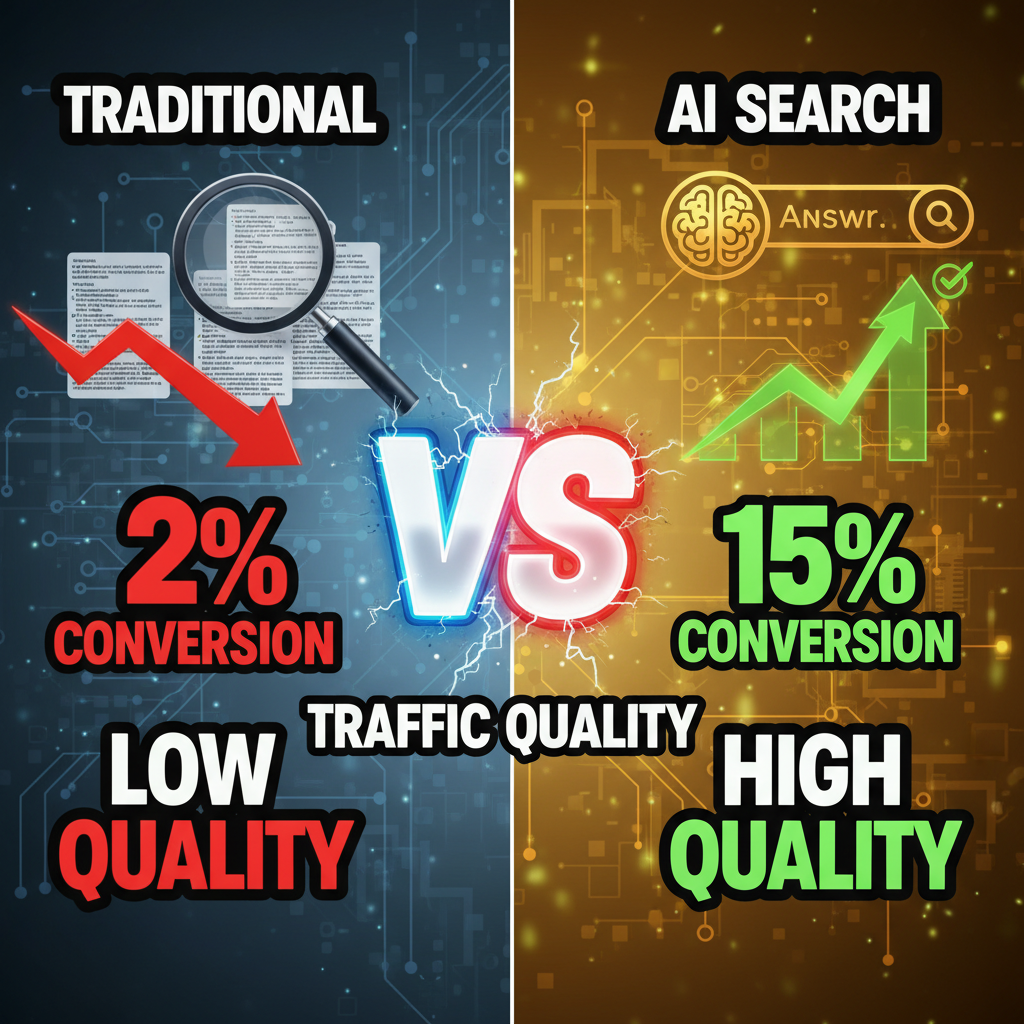
- Conversion rate: 2.5% (similar to Google Search)
- Time spent: 40 hours (roughly 45 minutes per article)
- Investment: $2,000 (hiring a consultant to audit and guide)
- Revenue impact: $15K+ (estimated from new traffic)
That's a 7.5x ROI in 6 months.
The key: they optimized for quality and specificity, not keyword density. The sites that get AI search wins are the sites with the best content, not the best keyword strategy.
Editorial Note AI search is not a future trend—it's here and growing fast. Merchants ignoring AI ranking today will lose visibility within 2 years as AI search captures 10-15% of total search traffic. The optimization is straightforward: write better content, structure it properly, and establish credibility. If your content is genuinely good, it will rank across all platforms.
Frequently Asked Questions
Should I optimize separately for Perplexity, ChatGPT Search, and Google Gemini?
No. Optimize for quality content, specificity, and structure. That works across all three. They have different ranking weightings, but the fundamentals are the same.
How long until AI search is a significant traffic driver?
It's already significant for some verticals. By 2027, expect 10-15% of your traffic from AI search engines. For DTC brands in consumer goods, it's already 5-8%.
Can I block AI search engines from indexing my site?
Yes, use robots.txt or meta tags. But blocking costs you visibility in Perplexity, ChatGPT Search, and Gemini. Not recommended unless you have specific concerns.
Do I need to optimize for OpenAI's Browsing API if I use ChatGPT Plus?
Not directly. But content optimized for ChatGPT Search will be better for ChatGPT plugins and browsing. Focus on content quality.
What's the biggest mistake Shopify stores make with AI search?
Ignoring it. They think "Google is 90%, so it doesn't matter." That's true today but false by 2027. Starting optimization now gives you a 2-year advantage.