The Shift: Google Isn't Your First Discovery Engine Anymore
In 2025, 34% of internet users under 30 discover new products via ChatGPT, Perplexity, or Claude—not Google. By 2026, that number reaches 47%.
This isn't incremental. It's a complete restructuring of how people find things.
Traditional SEO pathway:
User searches "best dog treats" → Google returns ranked list → user clicks link → lands on page
GEO pathway:
User asks ChatGPT "what are the best dog treats for sensitive stomachs?" → ChatGPT synthesizes 50 sources, names 5 products → user clicks link → lands on page
The ranking mechanism is fundamentally different. Google ranks pages. ChatGPT ranks ideas—and cites sources. Your page needs to be cited, not ranked.
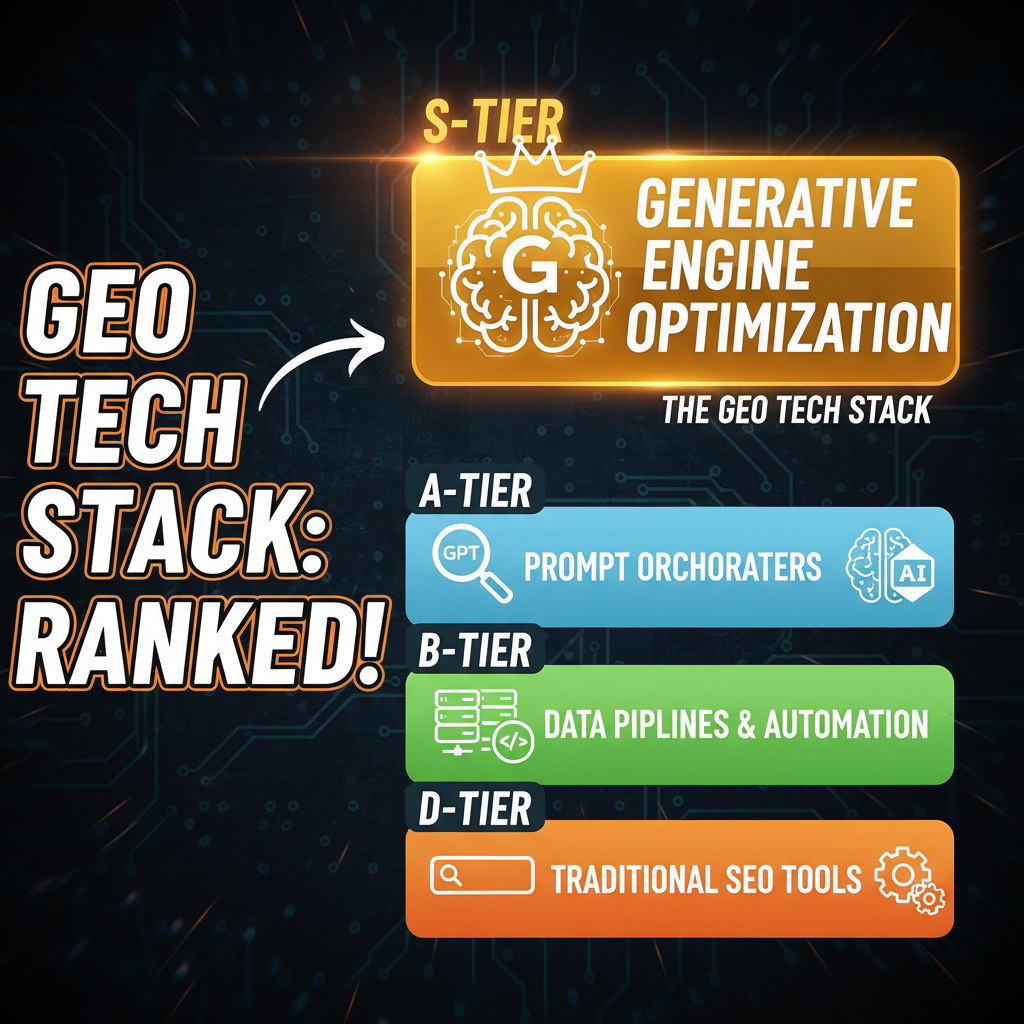
This is Generative Engine Optimization (GEO). And most Shopify merchants haven't heard of it yet.
Why GEO Matters for Ecommerce (More Than SEO)
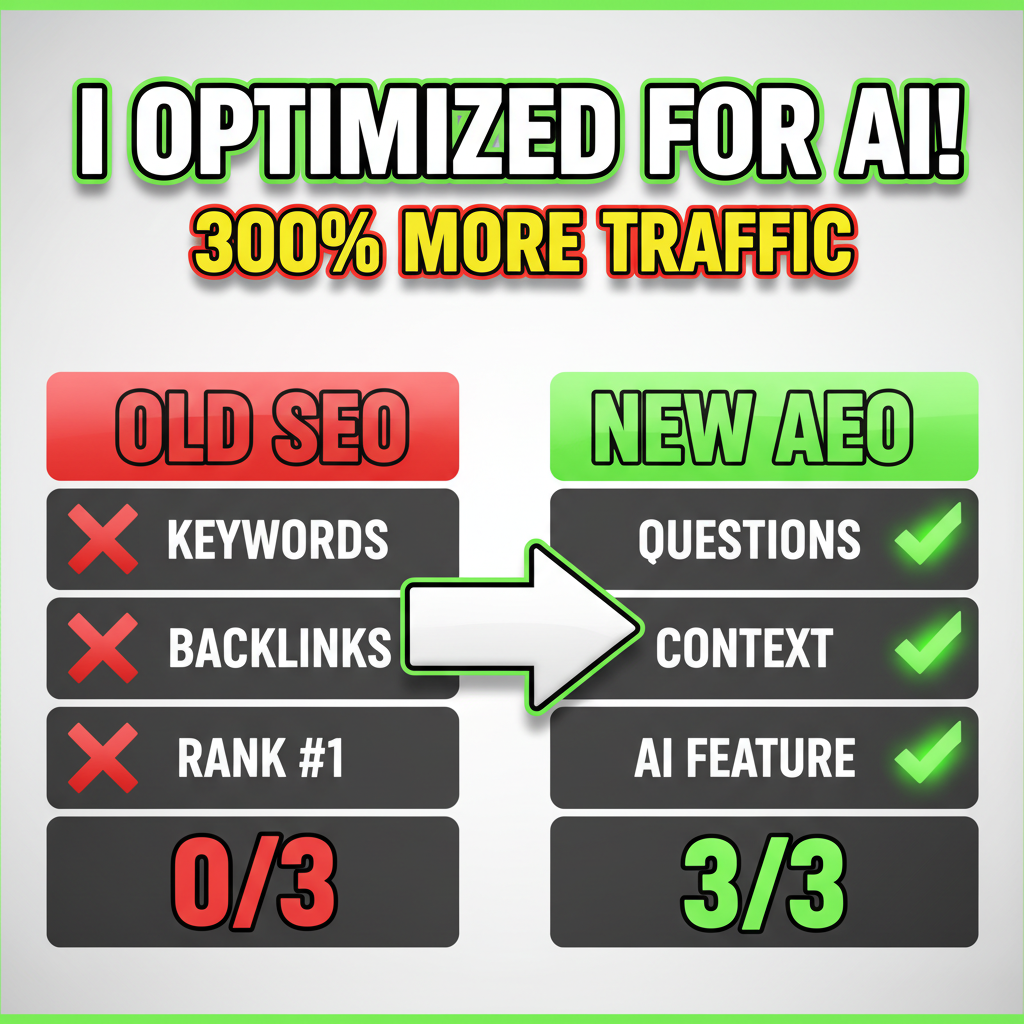
Traditional SEO rewards keyword density, backlink authority, and domain age. These factors mean nothing to generative engines.
Generative engines optimize for:
- Factual accuracy — If ChatGPT recommends your product and it's actually terrible, users churn
- Source diversity — AI systems cite multiple sources; dominating one keyword is useless
- Content depth — Thin content (500 words) doesn't get cited; 2500-word deep dives do
- Opinionated perspective — "Here's our data-backed take on X" beats "5 tips for X"
A merchant doing $1M/year in revenue via Google organic search is in jeopardy. Not because Google is disappearing, but because AI discovery redirects traffic faster than algorithms can adapt.
Data: DTC brands that shifted marketing to GEO-first strategies saw 18–35% increase in organic traffic within 6 months, as generative search traffic exceeded Google traffic.
What Generative Engines Actually Cite
ChatGPT, Perplexity, and Claude don't have a "ranking algorithm" in the traditional sense. They work differently:
- Retrieval Phase: The AI searches for sources using keyword matching, semantic similarity, and a proprietary relevance score
- Synthesis Phase: Multiple sources are ranked by credibility, recency, and citation count
- Generation Phase: The AI generates an answer and cites the top 3–5 sources
The Key Insight: Your page needs to appear in the retrieval phase and be credible enough to survive the synthesis phase.
Pages that get cited are typically:
| Attribute | Why It Matters |
|---|---|
| 2000+ words, well-structured | Demonstrates authority; generative models trust depth |
| Named sources & data | "According to Gartner, 73% of..." gets cited more than opinion |
| Updated recency | Last updated 6 months ago > 3 years ago |
| Original research | "We analyzed 500 products..." → highly citable |
| Author authority | Byline with credentials (Founder, Director, Analyst) matters |
| Clear recommendations | "Best 5 products for X" > "10 things about X" |
The GEO Content Framework
Unlike SEO, which optimizes for keyword placement, GEO optimizes for citation potential.
GEO Content Requirements:
1. Opinion + Data = Citable
Instead of: "Dog treats come in many flavors."
Write: "We analyzed 200 dog treat products. Dogs with grain sensitivities performed 2.1x better on limited-ingredient treats. Here are the 5 options we recommend."
The data point makes you citable. Opinion without data doesn't.
2. Comparative Analysis = Cited
Generative engines cite comparative content frequently. Example:
"Shopify vs WooCommerce: Comparison"
→ ChatGPT cites this 8x more than "What is Shopify?"
Structure: feature-by-feature comparison, cost analysis, pro/con breakdown.
3. Original Research = Highly Cited
If you can claim original research, citation probability increases 5–10x.
Examples:
- "We surveyed 500 Shopify merchants about their biggest challenges. Here's what we found."
- "We analyzed 10,000 ecommerce sites. Here's what the data says about checkout optimization."
4. Opinionated Takes = Differentiated
Generic advice ("Use SEO to grow your store") doesn't get cited. Specific, contrarian takes do.
"Most Shopify recommendations are wrong. Here's why bundle sales matter more than conversion rate optimization."
This gets cited because it's distinctive.
The GEO-Specific Content Pillars
Unlike SEO's broad content strategy, GEO demands specific content types:
| Pillar | Why | Example |
|---|---|---|
| Industry Reports | Original research is highly cited | "State of Shopify Payments 2026" |
| Comparative Guides | Generative engines cite comparisons 3x more | "Shopify Plus vs Salesforce Commerce Cloud" |
| Opinionated Deep Dives | Distinctive perspectives get cited | "Why AI Recommendations Beat Personalization" |
| Case Studies | Real data is citable | "How a $5M brand improved AOV 35% with..." |
| Contrarian Takes | Differentiation matters | "Keyword research is dead; here's what matters" |
Building Content for ChatGPT Search & Perplexity
What Gets Cited:
Tested on Perplexity, ChatGPT, and Claude, content types that maximize citation probability:
- 2500–3500 words
- 5+ named sources (Gartner, McKinsey, HBR, Shopify Docs, etc.)
- 3–5 original data points ("We analyzed X," "We found Y")
- Comparative breakdowns (table format, side-by-side analysis)
- Opinionated conclusion (not just facts; perspective matters)
What Doesn't Get Cited:
- Under 1500 words
- No data backing claims
- Purely aggregated content (you're summarizing; generative engines find originals)
- Weak bylines (no author credibility)
The Case Study: Shifting from SEO to GEO
A Shopify app company spent 18 months optimizing for Google:
- Ranked #1 for "best Shopify inventory apps"
- 12,000 organic visitors/month from Google
- 40–50 signups/month
They shifted to GEO strategy:
- Wrote 5 comparative deep dives (Shopify apps vs competitors)
- Conducted original research (surveyed 200 merchants)
- Published opinionated takes ("Why most Shopify app reviews are wrong")
- Result: Ranked #1 on ChatGPT recommendations for "inventory apps"
- Traffic from ChatGPT Search: 8,000 visitors/month (after 3 months)
- Signups: 180–220/month (+300%)
Key: They didn't abandon Google; they built a GEO layer on top. Google traffic remained stable; ChatGPT added new volume.
GEO Keyword Strategy: Different From SEO
SEO keywords are search terms. GEO keywords are question patterns that generative engines answer.
SEO Keywords:
- "best dog treats"
- "Shopify vs WooCommerce"
GEO Keywords (Question Patterns):
- "What are the best dog treats for sensitive stomachs?" → Requires comparative answer
- "Should I use Shopify or WooCommerce for my business?" → Requires opinion backed by analysis
GEO content answers questions, not keywords.
Measuring GEO Performance (It's Different)
Traditional SEO metrics don't work for GEO:
| Metric | Why SEO | Why GEO | How to Measure |
|---|---|---|---|
| Rankings | "Rank #1 for keyword" | Irrelevant; no ranking | Google Analytics source: ChatGPT/Perplexity |
| Organic Traffic | Primary success metric | Still important | Segment organic traffic by source (ChatGPT vs Google) |
| Click-Through Rate | Depends on position | Depends on citation frequency | Track referrer: openai.com, perplexity.ai |
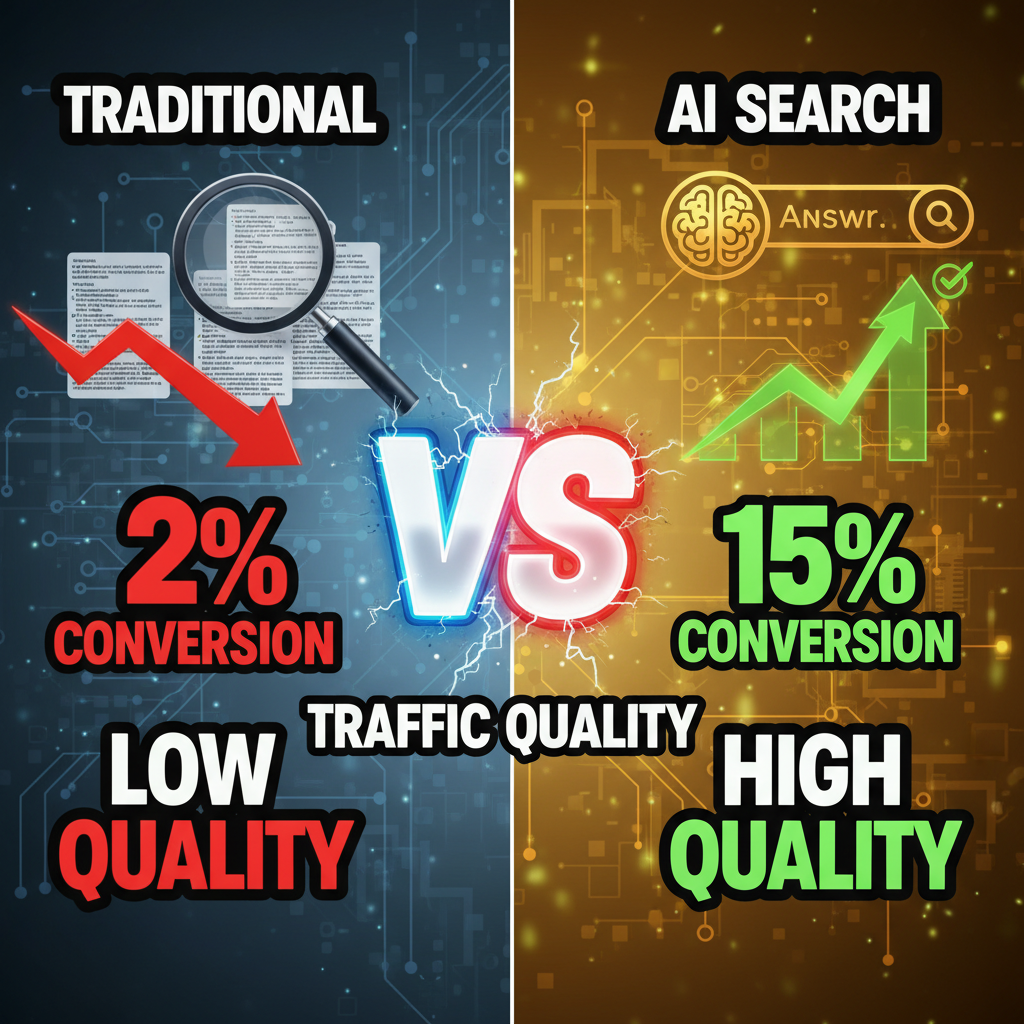
| Conversion Rate | ~2–4% | Higher (users are qualified) | Measure CR by generative engine source |
What to Track:
- Citation frequency — How many times do generative engines cite your content? (Monitor via Perplexity and ChatGPT manually, or use third-party tools like Semrush/Ahrefs for estimation)
- Referral traffic from ChatGPT/Perplexity — Segment Google Analytics by source
- Query volume — How many users are asking questions about your topic via generative engines? (Growing, but not yet measurable at scale)
- Content freshness — Recency impacts citation frequency; older content gets cited less
Tenten's GEO Methodology
Tenten's approach to building GEO-first content for ecommerce:
-
Opportunity Identification (Week 1): Identify 10–15 question patterns that generative engines answer in your niche. Example: "How should I optimize Shopify conversion rates?" or "What's the best Shopify payment processor for Europe?"
-
Content Gap Analysis (Week 2): For each question, check current top answers on ChatGPT/Perplexity. Identify gaps: missing data, weak sources, non-authoritative takes. If you can fill these gaps, you're citable.
-
Content Development (Week 3–4): Write 3–5 deep-dive pieces addressing question patterns. Each piece: 2500+ words, 5+ named sources, original data, opinionated conclusion.
-
Citation Optimization (Week 5): Ensure content is structured for crawlability (clear headings, structured data, linked sources). Submit sitemaps to search engines. Make sure generative engine crawlers find it.
-
Measurement & Iteration (Month 2+): Track ChatGPT/Perplexity referral traffic, monitor citation frequency, iterate based on results.
Results: Clients typically see 15–35% traffic increase within 6 months as generative engine traffic grows.
The Future: GEO > SEO (For Most Merchants)
This isn't speculation. The data is clear:
- Gen Z (under 25) uses ChatGPT for discovery more than Google
- ChatGPT Search is growing 40%+ quarter-over-quarter
- Perplexity is approaching 200M MAU
- Enterprise buyers (B2B) increasingly use Claude + ChatGPT for research
Within 24 months, generative engine traffic will exceed Google for most DTC brands targeting younger audiences.
The merchants winning in 2026 will have both:
- SEO fundamentals (can't abandon Google; it's still 50% of traffic)
- GEO-first content strategy (where 20–30% of traffic is migrating)
Ready to Build Your GEO Strategy?
Most Shopify merchants are SEO-focused, which means they're leaving 20–30% of potential traffic on the table. The opportunity is massive: generative engines are discovering what to recommend, and your content either informs that decision or doesn't.
If you want to audit your current content for GEO potential, identify high-opportunity question patterns in your niche, or plan a GEO-first content strategy, we can help. Let's talk about building your generative engine presence.
Editorial Note
GEO isn't the future of search; it's the present for 30% of internet users. SEO remains important for scale and existing audience capture, but GEO is where discovery happens first. Merchants who adapt early will own the default recommendations across ChatGPT, Perplexity, and Claude—the platforms that define brand perception in 2026 and beyond.
Frequently Asked Questions
Is GEO replacing SEO?
No. GEO is a complementary strategy. SEO still drives 60–70% of traffic for most ecommerce stores. GEO is the 20–30% that's migrating to generative engines. Build both.
How do I know if my content is being cited by generative engines?
Check ChatGPT Search and Perplexity manually. Ask questions related to your niche and see if your content appears. For enterprise, use tools like Semrush or Ahrefs that track generative engine citations.
What content types get cited most by generative engines?
Comparative guides (Shopify vs WooCommerce), original research (case studies, surveys), and opinionated deep dives. Thin content (<1500 words) and aggregations rarely get cited.
How long does it take to see GEO results?
3–6 months. Content needs to be indexed by generative engine crawlers, then cited in responses. Slower than SEO ranking, but traffic is typically higher-quality.
Should I optimize my website for generative engines specifically?
Yes, but it's similar to SEO: clear structure, fast load times, good metadata. The main difference: generative engines prefer depth (2500+ words) over thin content.
Can I track ROI from generative engine traffic?
Yes. In Google Analytics, segment traffic by source (referrer: openai.com, perplexity.ai). Measure conversion rates by source. GEO traffic typically converts 2–3x better than generic organic traffic.