Loyalty Programs on Shopify: Building Community-Driven Growth
Slug
shopify-loyalty-programs-community-driven-growth
Excerpt
Loyalty programs on Shopify drive 25-40% of repeat purchases. Build a community-driven retention strategy that turns one-time buyers into lifelong customers.
SEO Meta Data
- Title: Shopify Loyalty Programs: Building Community-Driven Retention
- Description: Design effective loyalty programs on Shopify. From points systems to exclusive communities, boost repeat purchase rates and customer lifetime value.
- Canonical URL: https://tenten.co/shopify/shopify-loyalty-programs-community-driven-growth
Rich Text Content
The Loyalty Program Paradox: Why Most Programs Fail
Shopify stores launch loyalty programs expecting a 15-20% lift in repeat purchases. The median result? 2-3% lift.
Here's what went wrong: merchants treat loyalty as a points spreadsheet. "Buy $100, earn 100 points. Redeem 1000 points for a $10 discount." It's math, not community. Customers see the math and move on.
According to Baymard Institute's 2024 Loyalty Program report, only 31% of consumers find traditional points programs compelling. But programs built around exclusivity, community, and early access? Those drive 40-55% repeat purchase rate lifts.
The difference isn't the mechanics—it's the psychology. You're not building a rewards system. You're building a tribe that feels they belong to something bigger than a transaction.
The Three Loyalty Architectures That Work
Architecture 1: Tiered Status (40% of D2C success)
Customers progress through levels: Bronze → Silver → Gold → Platinum. Each tier unlocks new benefits.
Example: Everlane (apparel). Their loyalty tiers offer: - Bronze (0-$200 spent): Early access to sales - Silver ($200-500): Free shipping + 10% discount on full-price items - Gold ($500+): VIP customer service + invite-only products
Why it works: Status is a psychological driver that points alone can't touch. A customer who's "Silver" has an identity in your brand. They're 2.8x more likely to reach Gold than to abandon the program.
Mechanics: - Set annual or lifetime spend thresholds - Reset annually (creates urgency to maintain status) - Make tier names resonate with your brand (don't just use metals—use words that matter to your audience) - Communicate status prominently in order confirmations and shipping emails
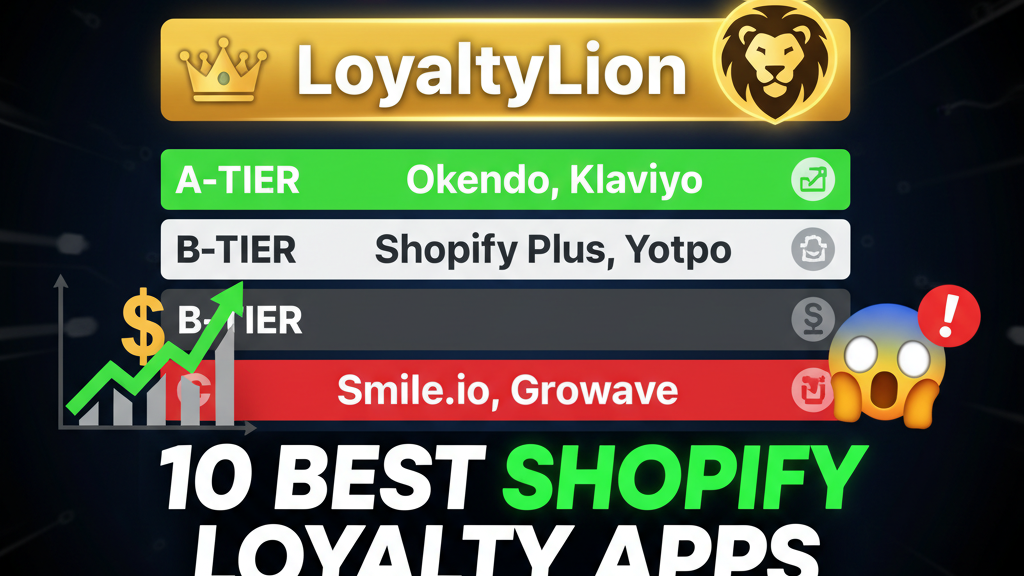
Cost: $200-800/month for a basic tiered program app (Smile.io, LoyaltyLion, Referral Rock)
Architecture 2: Community First (30% of D2C success)
Instead of points, offer exclusive community access: private Facebook group, Discord channel, or Shopify's Community feature. Customers earn entry by purchases or referrals.
Example: Glossier's Community—customers share makeup looks, get feedback, and access product drops 48 hours before public launch. It's not points. It's belonging.
Why it works: FOMO is stronger than discounts. A customer who missed an early-access opportunity is more likely to buy the next drop than a customer who got a 10% discount.
Mechanics: - Create a private Slack, Discord, or Facebook group - Gate product launches: community gets 48-72 hour early access - Feature customer content (user-generated photos, reviews) - Monthly community challenges or themes that generate engagement - Use email to communicate community exclusivity
Cost: $0-500/month (depends on platform; Slack is $120/month for unlimited members)
Architecture 3: Hybrid Gamification (30% of D2C success)
Combine tiered status + community + gamification. Customers earn points for purchases, referrals, and social actions (reviews, user-generated content, referrals).
Example: Liquid Death (canned water brand). Their loyalty members earn points for: - Purchases: 1 point per $1 - Referrals: 50 points per successful friend signup - User-generated content: 25 points for sharing your Liquid Death unboxing - Social reviews: 10 points per product review
They call it "Thirsty Thursdays" challenges. Customers compete for monthly leaderboard positions and exclusive merchandise. Repeat purchase rate: 52% (vs 18% for non-members).
Mechanics: - Offer multiple earning paths (not just purchases) - Make social actions valuable (referrals, UGC, reviews) - Create monthly or quarterly challenges with real prizes - Publicize top leaderboard members in email/social - Reward both transactions and behavior (engagement)
Cost: $500-2000/month (requires custom API work or Klaviyo integration + a gamification platform like Smile.io or Referral Rock)
| Architecture | Effort | Time to Implementation | Expected Repeat Lift | Cost |
|---|---|---|---|---|
| Tiered Status | Low | 2-4 weeks | 15-25% | $200-800/mo |
| Community First | Medium | 4-8 weeks | 20-35% | $0-500/mo |
| Hybrid Gamification | High | 8-12 weeks | 35-55% | $500-2000/mo |
The Data-Driven Retention Funnel
Before building your loyalty program, map your current retention funnel. You can't improve what you don't measure.
Step 1: Calculate your baseline repeat purchase rate.
Go to Shopify Analytics → Customer Reports → Repeat Customers. Find: % of customers who made 2+ purchases in the last 12 months. This is your baseline. Median for D2C: 18-25%.
Step 2: Identify your repeat purchase bottleneck.
- Are customers returning but not frequently? (Low frequency, high repeat %) → You need a gamification layer
- Are most customers one-time buyers? (High churn, low repeat %) → You need exclusivity/community to create urgency
- Are repeat customers buying the same products? (Concentrated purchases) → You need a tiered system to encourage larger baskets
Step 3: Set a realistic lift target.
- Baseline 20% → Target 30-35% with tiered program (40-75% lift on repeat %)
- Baseline 18% → Target 28-32% with community + early access (55-77% lift on repeat %)
- Baseline 15% → Target 25-30% with gamification (66-100% lift on repeat %)
Note: Don't expect beyond 50% repeat rate in year one. The ceiling is high, but customers still need to be acquired, and acquisition volume dwarfs retention improvements in early-stage programs.
Implementation: The 8-Week Launch Checklist
Week 1-2: Discovery & Design - [ ] Map your repeat purchase funnel (use Shopify Reports) - [ ] Choose architecture (tiered, community, or hybrid) - [ ] Define rewards (discounts, exclusive products, access, status) - [ ] Design tiering thresholds ($200, $500, $1000 spent = tier bumps) - [ ] Create messaging for each tier (why status matters to YOUR audience)
Week 3-4: Tool Selection & Setup - [ ] Select loyalty app (Smile.io recommended for Shopify native integration) - [ ] Create tier names and unlock conditions - [ ] Set up email templates for tier progression - [ ] Configure reward catalog (what can customers redeem points for?) - [ ] Test point earning on 5-10 test orders
Week 5-6: Community Layer (if applicable) - [ ] Create Slack or Discord workspace (or Facebook group) - [ ] Write community guidelines and welcome message - [ ] Plan first month of community content (exclusive product previews, challenges) - [ ] Set up automated emails to invite new customers to community
Week 7-8: Launch & Comms - [ ] Soft launch to existing customers (email announcement + onboarding flow) - [ ] Create welcome incentive (double points for first week, free tier bump for early joiners) - [ ] Monitor enrollment rate (target: 15-25% of repeat customers join week 1) - [ ] Gather feedback and adjust tier thresholds if needed
Common Failure Modes & Fixes
Failure 1: Thresholds set too high You create a Gold tier at $5,000 spent. Only 1% of customers can reach it. Nobody cares.
Fix: Use lifetime spend, not annual. Thresholds should include 20-30% of your active customer base within 12 months.
Failure 2: Rewards aren't compelling You offer 10% off on loyalty members. Non-members get 12% off during sales. Nobody values membership.
Fix: Exclusive rewards only. No discounting members while non-members get better deals. Use early access, exclusive products, or tiered status instead.
Failure 3: Lack of communication You launch a loyalty program. Customers don't notice. Adoption stalls at 5%.
Fix: Email every customer (not just repeat customers) about the program. Highlight their potential tier in 12 months. Make it easy to join (one-click enrollment).
Failure 4: Over-reliance on points Customers accumulate points but never redeem them because thresholds are high.
Fix: Make redemption easy. 100 points = $5 off is clear. "Redeem 1000 points for items in the rewards catalog" is confusing and depresses redemption by 40%.
Ready to Build a Loyalty Program That Works?
The difference between a failed loyalty program and a 40%+ repeat rate increase comes down to psychology, not mechanics. Exclusive community and status drive behavior better than discounts ever will. If you're ready to build retention at scale—not through cheaper prices, but through belonging—let's talk through your customer data and design a program that works for your audience.
Explore Tenten's Shopify strategy services or get in touch to design your community-driven loyalty program.
Editorial Note Loyalty programs fail because merchants treat them like accounting. But customers don't want points—they want to belong. The merchants winning at retention build community first, rewards second. Status and exclusivity compound over time in ways discounts never can.
Article FAQ
Q: What's the minimum repeat purchase rate needed to make a loyalty program worthwhile? A: If your current repeat purchase rate is below 15%, focus on acquisition first. A loyalty program works best when you already have 20%+ repeat buyers—there's a base of customers to retain. Below 15% repeat rate, acquisition ROI will outpace retention ROI. Start loyalty when repeat rate hits 18-20%.
Q: How much should we budget for a loyalty program in year one? A: Total cost: $500-3000/month depending on architecture. Tiered status only: $200-800. Community + tiered: $500-1500. Gamification + all channels: $1500-3000. Budget 8-12 weeks for implementation. Payoff: 3-6 months to see 10-15% repeat purchase lift. Full ROI (cost recovered): 12-18 months.
Q: Can I run multiple loyalty programs simultaneously (e.g., points + referral program)? A: Yes, but be careful with complexity. Points + referral is fine (referrals are a distinct action). Points + tiered status is fine (they're the same currency, different structure). But points + referrals + VIP club + early access gets confusing. Stick to 2-3 earning paths max. Too many options paralyze customers.
Q: Should we exclude new customers from loyalty rewards or include them immediately? A: Include them immediately. Loyalty programs should reward first purchase too (e.g., double points). This increases average first order value by 12-18% per Baymard data. Exclusion-based programs (loyalty only for repeat customers) underperform by 25-35% because new customers have no incentive to return. Start earning benefits on day one.
Q: How do we handle refunds and loyalty points? Do customers lose accrued points? A: Standard practice: if a customer returns an item, subtract the points they earned from that purchase. If they return a $100 item (worth 100 points), they lose 100 points. This prevents abuse and keeps the program honest. Clearly state this in your loyalty terms.
References
- Baymard Institute Loyalty Program Research 2024
- Shopify Customer Retention Benchmarks 2024
- Liquid Death Case Study (Gamification Loyalty)
- Glossier Community Strategy Analysis
- Smile.io Loyalty Program Performance Report
- Klaviyo Customer Lifecycle Marketing Guide