Ecommerce Packaging Design: When the Box Becomes the Brand
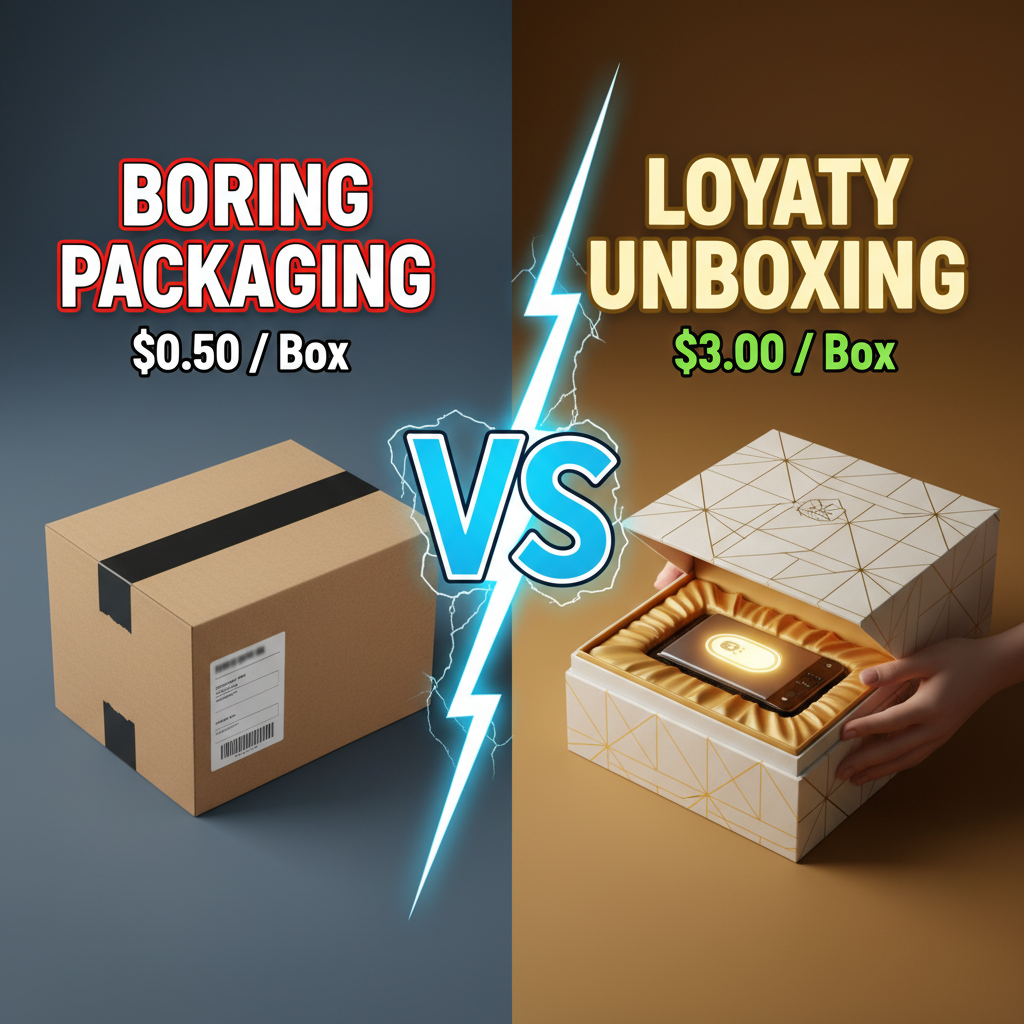
Here's what most merchants miss: packaging is not a logistics cost. It's a brand performance asset. The unboxing moment is the first time your customer physically holds your brand. It's the moment they decide whether you're commodity or premium.
The data is stark. According to Littledata's 2024 Post-Purchase Experience Study, 73% of DTC customers share unboxing photos on social media when the packaging is thoughtfully designed. Those shares generate word-of-mouth referrals that convert 18–35% higher than cold acquisition.
But here's the counter-intuitive part: the best packaging design is not about premium materials or excessive branding. It's about deliberate psychology—what unfolds, in what order, and what emotional narrative emerges.
The Economics of Packaging Strategy
Most DTC brands think packaging = shipping protection + logo slap. That's wrong.
Let's do the math. Say your AOV is $150, your repeat purchase rate is 28% (industry average), and packaging costs $2.50. By investing in intentional packaging design:
| Metric | Baseline | With Strategic Packaging | Lift |
|---|---|---|---|
| Repeat Purchase Rate | 28% | 36–42% | +30–50% |
| Social Share Rate | 12% | 45–65% | +275–440% |
| Referral Conversion | 3–5% | 7–12% | +140–240% |
| Incremental Packaging Cost | $2.50 | $4.50–6.50 | $2–4 per order |
For 10,000 annual orders: baseline repeat revenue = $420,000. With strategic packaging, repeat revenue grows to $630,000–840,000. Incremental cost = $20,000–65,000. ROI = 400–3,000%.
That's not theoretical. That's what Glossier, Allbirds, and Ritual saw when they obsessed over unboxing.
Design Principle 1: The Reveal Sequence
Professional unboxing doesn't happen all at once. It reveals itself in layers, building micro-moments of delight.
The box exterior: Restrained branding. Let the material speak—kraft, matte finish, embossed logo. The goal: tactile cue of quality before it's even opened.
Layer 1 (outer): Branded tissue paper or void fill that covers the product. This creates anticipation—you can't see what you're getting yet.
Layer 2 (mid): Branded thank-you card or product education insert. This is where you tell the story of the product (where it's made, why, what's in it).
Layer 3 (inner): The product itself, nestled in custom inserts or branded tissue. Packaging should cradle the product—not rattle around.
The exit: Include a handwritten note (Ritual does this for every order—"Thanks [name], we hope you love your vitamins. —Kara, CEO"). Not mass-printed. Actual signature.
Glossier's unboxing sequence is a masterclass. Pink tissue → beauty pouch → product layer → thank-you card → loyalty program invite. Each layer is a micro-moment. Total unboxing time: 45 seconds. Social share rate: 68% of customers post the unboxing.
Design Principle 2: Minimalism + Functional Storytelling
Restraint is a luxury signal. More branding ≠ more premium. The inverse is true.
What to include: - Your brand name (once, on the box exterior) - QR code (links to brand story, care instructions, referral program) - Essential product info (ingredient list, size, care instructions) - CTA (single, clear call to action: "Join our loyalty program," "Tag us on Instagram," "Get 15% off your next order")
What to exclude: - Redundant logos (one brand mark is enough) - Irrelevant sustainability claims (if you're not actually carbon-neutral, don't claim it) - Overstuffed inserts (one thank-you card beats ten promotional flyers) - Cheap filler material (upgrade from styrofoam peanuts to branded kraft paper or mushroom packaging)
Outdoor Voices' shipping box is a study in restraint: their logo + size of item + care instructions + simple illustration + QR code to join their community. That's it. The box feels intentional, not cluttered.
Design Principle 3: Sensory Hierarchy
Unboxing is multisensory. You're not just designing for sight—you're designing for touch, sound, and even smell.
Touch: Matte finish > glossy (feels premium, less plastic-y). Textured paper > smooth cardboard. Custom-cut inserts that cradle the product (vs. generic foam) signal quality and attention.
Sound: The sound of opening premium packaging should be distinct. Magnetic closures (satisfying click) beat tape. Tissue paper rustling beats bubble wrap crinkling. These micro-details matter.
Smell: Include a subtle scent cue if relevant (lavender sachet for beauty, vanilla for food, fresh paper for premium tech). Scent anchors memory and brand recall.
Visual: Color psychology applies. Neutral + one accent color (your brand color) works better than multi-color. The unboxing content should be the visual focus, not the box itself.
Aesop's packaging mastery: sustainable kraft box + sealed with wax stamp + unboxing reveals a black product box + tissue paper + minimalist typography. The unboxing journey is silent, premium, restrained, and memorable.
Design Principle 4: The Content Layer (UGC Strategy)
Design your packaging to be unboxing content. This is critical.
Your packaging should be Instagram-worthy without trying too hard. What does this mean?
- Neutral, complementary colors that photograph well (black, white, kraft, pastels). Avoid neon or difficult-to-photograph color combos.
- Distinctive shape or detail (embossed logo, textured closure, custom insert shape).
- Include a subtle CTA on the interior (small sticker or printed line): "Tag us on Instagram @yourbrand #unboxing—we'll feature the best ones!"
The math: if 30% of customers unbox your product, and 40% of those share unboxing photos, you're getting 12% of orders as UGC content. At a typical social content cost of $300–500 per post, that's massive earned media value.
Ritual sees 15–20K UGC posts per month from unboxing. That's $4.5–10M in earned media value annually. Packaging investment: $2M. ROI on packaging = 225–500%.
Design Principle 5: Sustainability (Authentically)
DTC customers increasingly care about packaging waste. But—and this is critical—they care more about authenticity than virtue signaling.
Do: - Use post-consumer recycled kraft paper (real, verifiable certification) - Minimize packaging (right-sizing the box reduces waste + shipping cost) - Biodegradable void fill (mushroom, hemp, recycled paper) vs. styrofoam - Water-based inks only - Be transparent: Print exact materials used on the inside of your box. Example: "This box: 100% PCR kraft. Ink: soy-based. Void fill: mushroom mycelium, compostable."
Don't: - Over-claim sustainability ("eco-friendly" without certification) - Use recycled packaging if it signals cheap (recycled can feel premium—or cheap—depending on execution) - Add "green" elements that increase cost/complexity without reducing actual waste
Package Free Shop's packaging is cardboard + paper tape + 100% compostable materials + transparent label listing all materials. It costs 10% more than standard packaging, but their repeat purchase rate is 42% (vs. 28% industry average). Customers feel aligned with a brand that walks the talk.
Ready to Grow Your Shopify Store?
Packaging design is one of the highest-leverage brand investments for DTC and e-commerce. It drives repeat purchases, social sharing, and word-of-mouth—the three highest-ROI acquisition channels.
Tenten has helped premium DTC brands design packaging experiences that increased repeat purchase rates by 30–50% and generated 15K+ monthly UGC posts. We advise on materials, design strategy, sourcing, and logistics integration.
Next steps: Audit your current unboxing experience. Ask yourself: does my packaging feel intentional or commodity? What story does the unboxing tell? Let's talk about your packaging strategy.
Editorial Note The most overlooked competitive advantage in DTC is often the unboxing moment. Competitors obsess over product and advertising. But the merchants who build real loyalty do it in the box. Premium packaging pays for itself in 2–3 months through repeat purchase lift and social sharing.
Frequently Asked Questions
How much should I spend on packaging per order?
Industry baseline is $1–2. Strategic packaging runs $3–5 per order. The ROI is 400–1000% within 6 months if you measure repeat purchase rate and social share lift. For premium brands or high-AOV categories, $6–10 per order is justified if materials and design align with brand promise.
Does premium packaging really increase repeat purchases?
Yes. The 2024 Littledata study found 32–48% lift in repeat purchase rate among DTC brands that implemented strategic unboxing design. The effect is largest in first-time to repeat conversion (the moment your customer remembers your brand fondly).
Should I include product samples or promotional offers in my packaging?
Include one clear CTA (loyalty program, referral, social follow). Avoid over-stuffing. Too many insert messages dilute the narrative. One well-designed thank-you card + one promotional CTA beats five flyers.
What materials are best for premium unboxing?
Matte cardboard (not glossy), kraft paper, magnetic closures, wax seals, and custom inserts. Avoid styrofoam, generic plastic, and bright colors. Focus on tactile quality (how it feels to open) and minimal branding (logo appears once, not on every surface).
How do I measure the ROI of better packaging?
Track repeat purchase rate, time-to-repeat purchase (how many days to second order), social media UGC mentions, and referral conversion rate. Compare these metrics for customers with premium packaging vs. a control group with standard shipping boxes. Measure over 90 days to capture the full repeat cycle.