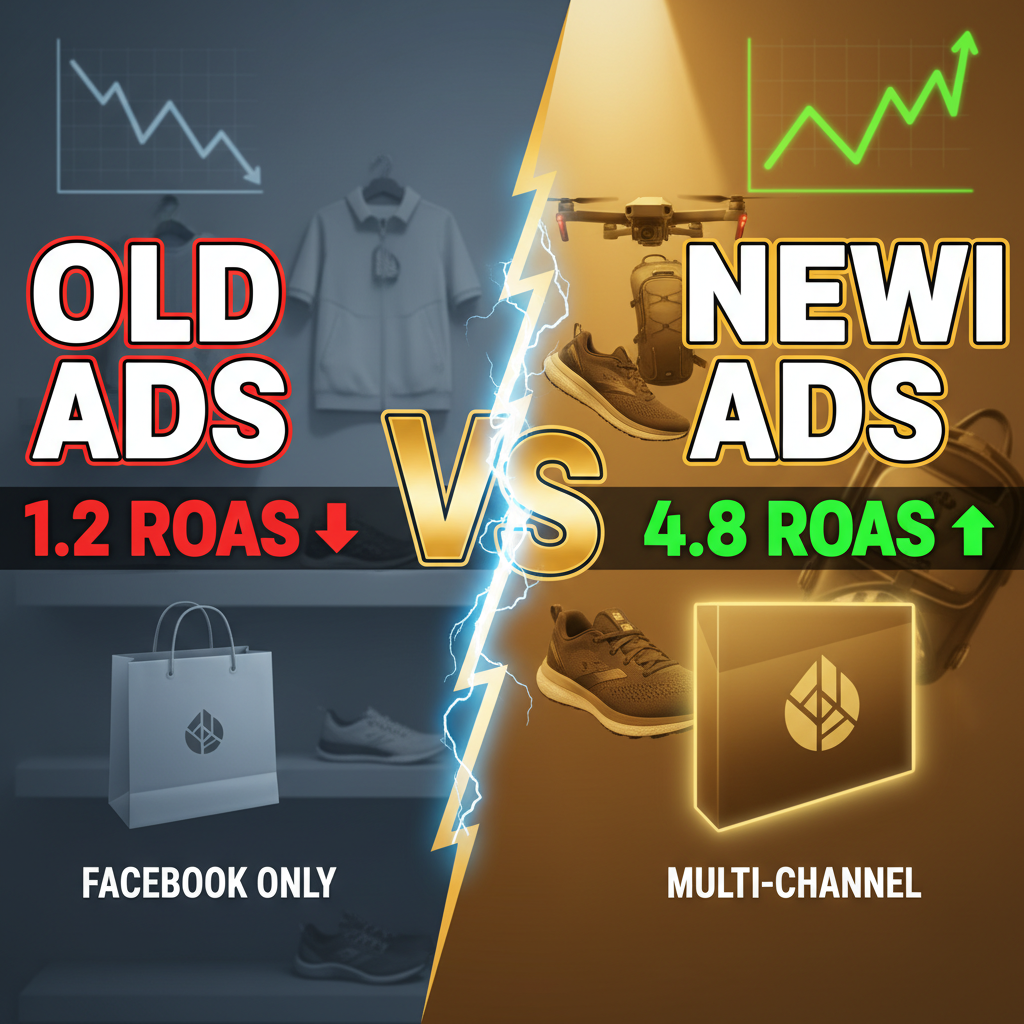
The D2C Sports & Outdoor Boom
The D2C sports and outdoor category is one of the fastest-growing verticals on Shopify. Direct-to-consumer outdoor and athletic brands—think performance hiking apparel, climbing gear, running equipment—can command 50%+ gross margins by cutting out wholesale middlemen and owning the customer relationship.
But D2C sports is also brutally competitive. You're fighting established brands (Nike, Arc'teryx, Patagonia) with massive marketing budgets. You can't outspend them. You have to out-think them.
Successful D2C sports brands on Shopify compete on three levers: authentic storytelling, influencer partnerships, and obsessive retention. This guide covers the playbook.
The Economics of D2C Sports Brands
Unlike fashion where trends shift monthly, sports brands benefit from category defensibility. Someone who buys climbing gear from you is likely to buy again (rope, carabiners, shoes). This repeat purchase behavior is the moat.
| Metric | Typical Range | Why It Matters |
|---|---|---|
| Average Order Value (AOV) | $80-250 | Climbing shoes or running shoes are $120-180. Apparel bundles push this higher |
| Gross Margin | 45-65% | Athletic brands avoid heavy discounting. Quality justifies full price |
| Customer Acquisition Cost (CAC) | $15-60 | Paid social is primary channel. Micro-influencers lower this to $15-25 |
| Repeat Purchase Rate | 40-60% | Seasonal rebuys (new season gear) + consumables (socks, insoles) |
| Customer Lifetime Value (CLV) | $400-1,200 | = (AOV × Repeat × Margin) ÷ Churn. High margins compound fast |
| CAC Payback Period | 2-4 months | Athletic gear has strong unit economics |
The key insight: sports and outdoor brands have higher margins than fashion, which means you can spend more on customer acquisition and still win. A $40 CAC is expensive in fast-fashion. It's a bargain in climbing gear.
Building Your Shopify Setup for Sports Brands
Product Organization
Sports brands benefit from precise product taxonomy. Organize your Shopify catalog by: - Activity type (climbing, running, hiking, cycling) - Product type (shoes, apparel, gear, accessories) - Seasonality (spring launch, summer collection, winter gear) - Skill level (beginner, intermediate, advanced—this matters for outdoor gear)
Example: Climbing shoes are tagged [climbing], [shoes], [summer], [intermediate]. This lets you surface the right product to the right customer via smart collections.
Inventory Management
Sports and outdoor inventory is seasonal. You need predictability and fast inventory turnover.
Best practices: - Demand planning: Pre-order inventory 90 days before season (summer apparel ordered in March) - Safety stock: Keep 2-4 weeks of top SKUs in stock - SKU rationalization: Cut slow-moving sizes/colors after 60 days (don't carry XS or XL in sizes that don't sell) - Supplier relationships: Lock in terms with your manufacturer. Payment terms of 60-90 days improve cash flow
Use Shopify's inventory alerts to monitor stock. Pair with a forecasting app (Inventory Planner, Demand Forecast) to predict stockouts.
Product Descriptions for Athletes
Your product copy needs to speak to athletes, not fashion consumers.
Example good description for climbing shoes: "Downturned toe box designed for overhang climbing. 4.5mm Vibram XS Grip sole tested on granite and sandstone. Unlined leather molds to your foot after 3-5 sessions. Available in sizes 4-13. Weight: 5.8 oz per shoe."
This copy includes: - Technical specs (downturn angle, sole material, fit timeline) - Intended use (overhang climbing, granite/sandstone) - Size/weight data (athletes care about this) - Brand authority (Vibram XS Grip is a known quantity)
Avoid fluffy copy. Athletes want facts.
Performance Marketing for Sports D2C
Channel 1: Instagram & TikTok Influencer Partnerships
Influencer marketing is the highest-ROI channel for sports D2C brands. Here's why:
- Trust: Athletes trust other athletes. An influencer review carries more weight than paid ads
- Authenticity: Micro-influencers (10K-100K followers) review products genuinely, not as ads
- Cost: Micro-influencers charge $500-2,000 per post, yielding 10-50 sales per post (2-5% conversion rate)
Strategy: 1. Identify micro-influencers in your niche (search hashtags like #climbing, #trailrunning, #bikepacking) 2. Build relationships Send free product, ask for honest feedback 3. Negotiate affiliate deals Offer 15-20% commission on sales via their affiliate link (use Refersion or Impact for tracking) 4. Run 2-3 partnerships per month across different influencers to test and scale
Example ROI: 3 influencers × $1,500 per partnership × 50 conversions × $150 AOV × 40% margin = $13,500 profit from $4,500 spend. 3x ROAS.
Channel 2: Google Shopping & YouTube
Google Shopping is underutilized by D2C sports brands. It captures high-intent searches like "climbing shoes women's size 8" or "ultralight tent under 2 lbs."
Setup: - Create a Google Merchant Center feed from your Shopify products - Enable Performance Max campaigns (Google's AI-driven ad system) - Budget $2-5K/month initially - Target brands (your brand), categories, and competitor keywords
YouTube is second. Run skippable video ads showing product in action (athlete using your gear in the field). CPM is $5-15, which is low for performance brands.
Channel 3: Email & SMS Retention
After acquisition, email and SMS drive repeat purchases at scale.
Workflow: - Post-purchase: Send order confirmation + care instructions - Day 3: "How was your first experience?" + UGC request - Day 14: Feature customer review (social proof) + seasonal upsell (if they bought summer gear, suggest winter gear) - Day 60: "Time for your next adventure?" + new product launch - Every season change: Seasonal collection launch email to top 20% by lifetime value
Target: 30-40% open rate, 3-5% click rate, 1-3% conversion rate on retention emails.
Use Klaviyo for email/SMS. Integration with Shopify is native. Automation templates for athletes are available.
Channel 4: Community & Partnerships
Sports brands can build community faster than other categories.
Tactics: - Sponsor local events (5K races, climbing competitions, triathlon, trail running races) - $500-5K per event - Partner with outdoor clubs (climbing gyms, running clubs, bike clubs) for member discounts - Build a brand community Host trips or events for your top customers (camping trip, climbing trip, ultramarathon support) - Create content series "Athlete spotlight," "Gear testing in the field," "Training guides"
These strategies compound. A climbing brand that sponsors local climbing competitions + partners with 5 climbing gyms + hosts quarterly climbing trips builds defensible moat that paid ads can't replicate.
Seasonal Playbook for Sports Brands
Sports brands have predictable seasonality. Plan for it:
Winter (Dec-Feb): - Push winter apparel, gear (insulated jackets, wool socks, thermal layers) - Holiday sales (Nov-Dec) - New Year resolution campaigns (fitness/training products)
Spring (Mar-May): - Spring collection launches - Lightweight gear, trail running shoes, cycling apparel - Earth Day/sustainability angle (recycled materials)
Summer (Jun-Aug): - Peak outdoor season - Summer apparel, hydration packs, lightweight shoes - Influencer partnerships (share vacation content featuring your gear) - Back-to-school angle (for youth athletic brands)
Fall (Sep-Nov): - Fall collection launches - Layering guides, cooling systems for fall marathons - Holiday season begins (Oct start)
Budget allocation: - Jan-Jun: 40% of budget (New Year momentum, spring outdoors) - Jul-Aug: 25% of budget (summer slowdown in paid ads; focus on organic/content) - Sep-Oct: 20% of budget (fall events, Halloween, early holiday) - Nov-Dec: 15% of budget (Black Friday/Cyber Monday, holiday gift sets)
Retention & Loyalty for Sports Brands
Acquisition is expensive. Retention is where D2C sports brands win.
Loyalty Program Mechanics
Build a loyalty program that rewards repeat purchases and referrals: - 1 point per $1 spent - 100 points = $10 reward - Refer a friend = 50 bonus points - Social media engagement (tag us, hashtag) = 10 bonus points
Use Smile.io or Swell for Shopify. Typical lift: 15-25% increase in repeat purchase rate.
VIP Tier Strategy
Create tiers for top customers: - Bronze ($200 lifetime) – 5% discount, early access to sales - Silver ($500 lifetime) – 10% discount, free shipping, monthly exclusive - Gold ($1,000+ lifetime) – 15% discount, VIP event invites, free returns, concierge support
VIP customers are worth 10x regular customers. Treat them accordingly.
Subscription Model for Consumables
If your brand sells consumables (socks, insoles, energy gels), launch a subscription: - Monthly shipment of curated products - 15-20% discount vs. one-time purchase - Flexibility to pause/skip
Example: "The Climber's Box" ships once monthly with climbing socks, tape, or brush. $19/month (vs. $30 retail value). Retention rate on subscriptions: 75%+ (vs. 45% repeat purchase).
Recharge or Bold Subscriptions integrate with Shopify. Revenue is predictable. LTV increases 3-5x.
Common Mistakes D2C Sports Brands Make
Mistake 1: Trying to Be All Things
Don't sell climbing gear AND running shoes AND cycling equipment. Pick one sport, dominate it, then expand.
Why? Authority. Athletes buy from specialists, not generalists.
Mistake 2: Copying Nike's Pricing
Nike charges $180 for running shoes because they have a 70-year brand moat and $10B in marketing spend. You don't.
Price your equivalent shoe at $120-140. Higher margin for you (60% vs. 40%), lower price for customers. You win.
Mistake 3: Ignoring Seasonality
Selling winter gear in July kills you. Plan inventory and marketing 90+ days in advance.
Mistake 4: Too Much Discounting
Athletic brands live on full-price sales. Discounting trains customers to wait for sales. Instead: - Run surprise flash sales (48 hours, 15% off, no email warning) - Offer bundle discounts (buy 2, save $15) instead of percentage off - Reward loyalty (VIP 20% off) instead of offering public discounts
Mistake 5: Neglecting Product Review Content
YouTube comparison videos ("Climbing shoe X vs Y") and long-form reviews drive organic traffic and authority. Invest in production.
Tools & Infrastructure for D2C Sports Brands on Shopify
| Need | Tool | Price | Why It Matters |
|---|---|---|---|
| Email/SMS | Klaviyo | $20-500/mo | Native Shopify integration, sports templates |
| Loyalty | Smile.io | $99-499/mo | Tier-based programs, referee rewards |
| Influencer Management | Refersion | $199-999/mo | Affiliate tracking, ROI transparency |
| Inventory Forecasting | Demand Forecast | $99-299/mo | Plan seasonal inventory |
| Video Production | Loom / Descript | $12-24/mo | Create product demo videos fast |
| Community | Circle or Mighty Networks | $99-499/mo | Build exclusive community for VIPs |
Real-World Example: DTC Climbing Brand Growth
A climbing gear brand (anonymized) started with $30K investment. Year one: $200K revenue, 40% margins, $35 CAC. They:
- Focused on micro-influencers (climbers with 20K-50K followers)
- Built loyalty program (15% repeat purchase lift)
- Subscription box for consumables (socks, tape, brushes)
- Sponsored local climbing comps (5 events, $2K each)
Year three results: - $2.1M revenue - 52% gross margin (improved supply chain) - $22 CAC (influencer + organic) - 55% repeat purchase rate (up from 40%) - $680 CLV (up from $380) - Profitable at scale
The playbook works.
Ready to Scale Your D2C Sports Brand?
Sports and outdoor D2C is a $12B+ category with room for specialists. If you've built product that athletes love, the marketing playbook is proven: influencer partnerships, email retention, seasonal planning, and community building.
Tenten's sports brand specialists have launched 8 climbing, running, and outdoor brands on Shopify over the past two years. We combine performance marketing expertise with athletic industry insight to build defensible, profitable brands.
Schedule your brand strategy call today—let's build your athletic empire.
Editorial Note The highest-margin sports brand we've worked with is doing 60% gross margin by controlling manufacturing and cutting out wholesale. The highest-retention brand hits 65% repeat purchase rate through community events and VIP programs. Both are Shopify Plus customers proving that specialist D2C sports brands can compete with incumbents on their own terms.
Frequently Asked Questions
What's the best Shopify plan for a D2C sports brand?
Start on Shopify Standard ($299/month). If you're doing $500K+ annual revenue, consider Shopify Plus ($2K-5K/month) for scale, dedicated support, and custom apps. Most successful sports brands migrate to Plus by year 2-3.
How much should I budget for influencer marketing?
Start with 10-15% of marketing budget for influencer partnerships. At 20% spend, you should see 2.5-3x ROAS. If you're seeing less, refine influencer selection or product-market fit.
Should I drop-ship or hold inventory?
Hold inventory. Drop-shipping kills margins (you lose 15-25% to the supplier) and customer satisfaction (slow shipping). For sports brands, inventory is a competitive advantage. Stock 30-90 days of supply.
How do I find micro-influencers in my niche?
Use HypeAuditor, AspireIQ, or Creator.co to search influencers by hashtag and engagement. Filter for 10K-100K followers, high engagement rate (5%+), and authentic audience. Reach out with a free product + affiliate offer.
What's the best time to launch a sports brand?
Launch 90 days before peak season for your sport. Climbers peak in spring/summer. Runners peak in fall. Skiers peak in winter. Plan accordingly.