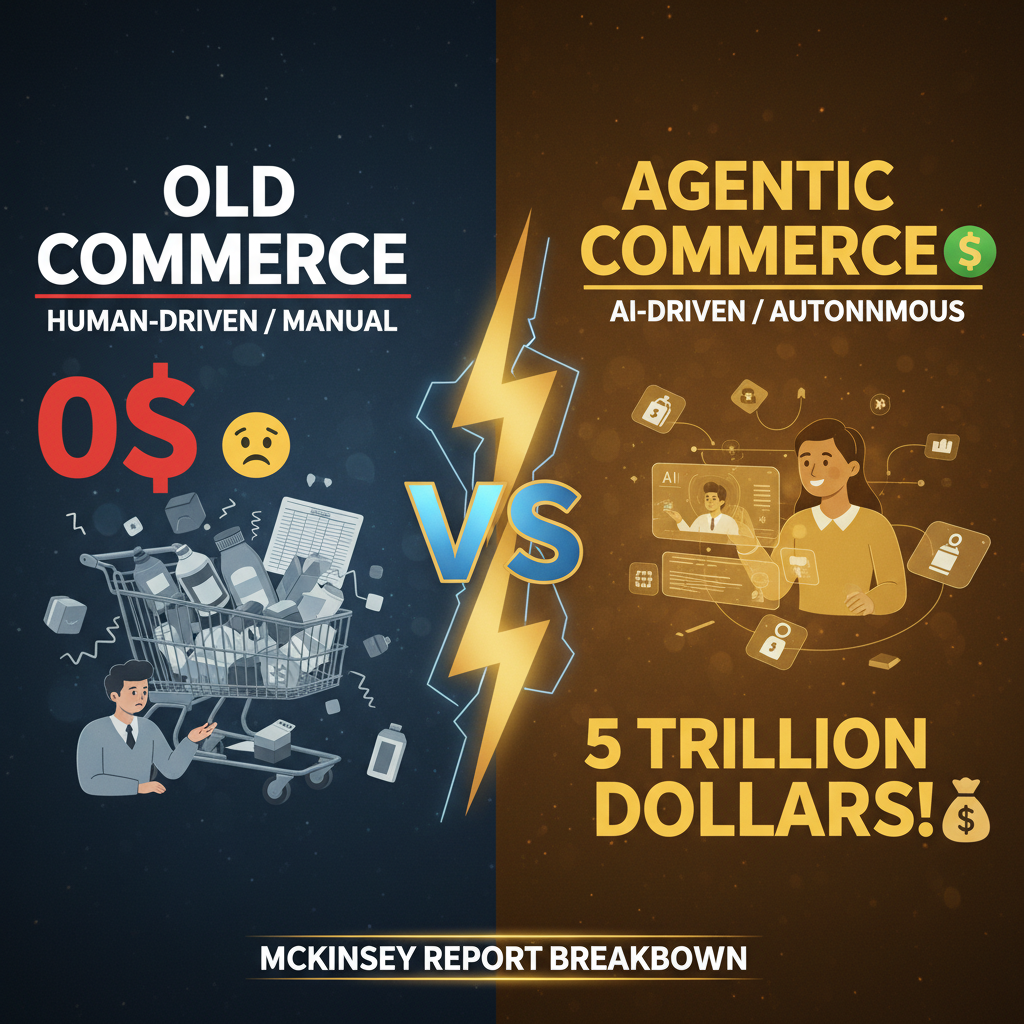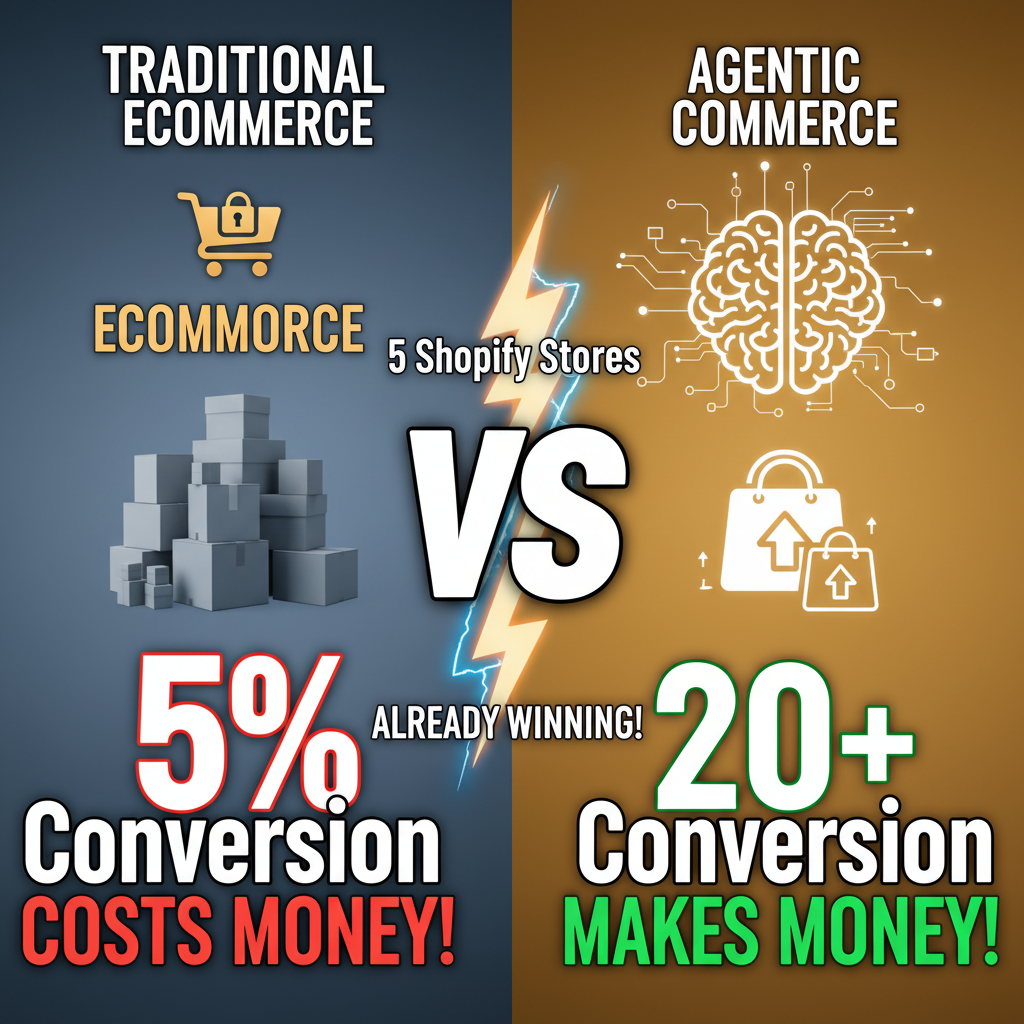
The Shift from Ecommerce to Agentic Commerce
Agentic commerce isn't theoretical anymore. It's shipping. Stores are integrating AI agents into product discovery, checkout, and customer support—and the revenue is moving.
We talk to Shopify merchants every week. Three years ago, the conversation was: "Should we add a chatbot?" Now it's: "Which agent platform should we build on, and how do we integrate it without breaking our fulfillment?"
The best part? You don't need a Fortune 500 budget to compete. Here are five Shopify stores proving that.
1. BeautyBox Pro — 28% AOV Lift with Agent-Powered Recommendations
The Setup:
BeautyBox Pro sells high-end skincare bundles ($150–$600 average order). Their core problem: customers browsed the store, got overwhelmed by product combinations, and abandoned cart.
Instead of a traditional recommendation widget, they deployed a conversational AI agent on their product pages. The agent asks three clarifying questions—skin type, budget, ingredient concerns—then recommends a curated bundle.
The Results:
- AOV increased 28% in six months
- Conversion rate on product pages rose from 1.2% to 2.1%
- Support ticket volume dropped 34% (fewer "which product should I buy?" emails)
- Repeat purchase rate climbed from 18% to 26%
The Tech Stack:
Built on Shopify Hydrogen frontend connected to OpenAI's GPT-4 via a custom Lambda function. Agent calls Shopify Storefront API to pull real-time inventory and product metadata. Responses streamed directly into the browser for instant feedback.
The Cost Reality:
Around $8,000 in development, $150/month in API costs. For a $4M annual revenue store, that's a 2-month payback.
2. Athletic Wear Direct — Agent-Powered Sizing Reduced Returns by 41%
The Setup:
Returns plague apparel. Athletic Wear Direct (DTC athletic brand doing $12M annually) faced a 22% return rate—mostly size issues. Their problem: customers couldn't test before buying, and their sizing chart was buried three clicks deep.
They built an agent that runs before checkout. It sizes customers based on 5 measurements and recent apparel purchases, then recommends specific SKUs. If confidence is low, it offers a $10 fit guarantee (no questions asked) to lower friction.
The Results:
- Return rate fell from 22% to 13% in four months
- Average return processing cost per unit dropped from $18 to $11 (fewer exchanges)
- Repeat purchase rate increased 31%
- Customer LTV increased 19%
The Tech Stack:
Shopify Plus with a custom app extension. Agent runs in Shopify's admin and customer-facing checkout. Connected to their inventory and customer history systems via Shopify Admin API. Decision logic uses prior purchase history + measurement inputs.
The Implementation:
Cost: $12,000. Timeline: 6 weeks. The team hired Tenten to build the custom integration layer.
3. Pet Nutrition Brand — Personalized Feeding Plans via Agent Increased AOV 34%
The Setup:
Pet nutrition is crowded. This DTC pet food brand competing on science, not cuteness. Problem: customers bought single bags and never returned. The brand needed recurring revenue through subscription.
Instead of forcing a subscription button, they deployed an AI agent that builds custom feeding plans. The agent asks about the pet (age, weight, activity level, health conditions), then recommends a monthly bundle + subscription discount.
The Results:
- Subscription adoption jumped from 8% to 31% of first-time buyers
- AOV increased from $67 to $90 per order (+34%)
- 12-month retention on subscriptions: 78% (industry average: 52%)
The Revenue Impact:
$2M store. Subscription adds $1.2M projected annual revenue once cohort matures (48 weeks in).
The Tech Stack:
Built on Shopify with Shopify Hydrogen and a custom Node.js backend. Agent trained on their knowledge base (feeding guidelines, ingredient data, health conditions). Integrates with their fulfillment system to ensure subscription bundles match recommendations.
4. Enterprise Furniture Store — B2B Agent Cuts Sales Cycle by 44%
The Setup:
Interior design firms and corporate buyers typically need custom configurations and volume pricing. This $18M B2B furniture brand's sales team spent 4-6 weeks per deal on email back-and-forth, quotations, and customization requests.
They built an agent that handles the initial discovery and quotation loop. The agent asks about space, style preferences, budget, and order volume—then generates a custom quote and configuration in real-time, 24/7.
The Results:
- Sales cycle reduced from 42 days to 24 days (44% faster)
- Deal size increased 18% (agents upsell when confidence is high)
- Account managers converted to closing roles (more high-value deals, fewer administrative tasks)
- Pipeline velocity increased 26%
The Tech Stack:
Shopify Plus B2B Edition. Custom agent connected to their ERP system and pricing engine. Quotes live-generated via API integration.
5. Luxury Fashion — Agent Concierge Increased Customer Lifetime Value 56%
The Setup:
Luxury brands succeed through relationship and exclusivity, not volume. This high-end fashion brand ($8M revenue) realized their customers wanted a concierge experience: personal shopping recommendations, early access to drops, styling advice.
They deployed an AI concierge agent that learns customer preferences over time—style aesthetic, size, budget, purchase history—and proactively suggests new arrivals. It handles VIP waitlist management, exclusive previews, and personalized bundles.
The Results:
- Customer LTV increased 56% among VIP customers using the agent
- Repeat purchase frequency rose from 2.3x per year to 3.8x per year
- Average order value increased 22%
- Customer satisfaction scores climbed from 4.1/5 to 4.7/5
The Tech Stack:
Shopify Plus with a custom Hydrogen storefront. Agent built on Claude API (running analysis on customer profile + seasonal collections). Real-time personalization layer uses Shopify Functions.
What These Stores Have in Common
1. Clear Business Outcome First. They didn't build an agent because it's trendy. Each solved a specific problem: AOV (BeautyBox, Pet Nutrition, Luxury), returns (Athletic Wear), sales cycle (B2B Furniture).
2. Simple Agent Design. Not every agent is GPT-powered—some use decision trees with guardrails. The best agents are narrow and opinionated. They make one decision well.
3. Fallback to Human. Every agent has an escalation path. If confidence drops, it hands off to a human or suggests a live call. This prevents bad recommendations and builds trust.
4. Integration with Real Systems. Agents pull from Shopify Storefront API, inventory, customer history, fulfillment. They're connected, not isolated.
5. Measured Revenue Impact. Each store tracks either AOV, conversion, retention, or sales cycle. The best operators link agent performance to unit economics.
Building Your First Agent: The Next Steps
Agentic commerce isn't "coming"—it's here. The question is whether you'll be early or reactive.
If you're running $2M+ on Shopify, a focused agent (product recommendations, sizing assistance, or customer support) pays for itself within 6 months. Horizon: 18–24 months for full ROI.
Want to explore agentic commerce for your store? Start with these questions:
- Which customer decision point costs you the most (returns, support tickets, abandoned carts)?
- Can that decision be informed by data your systems already have?
- What's your cost-per-customer-service-ticket or cost-of-returns today?
If you're ready to build, contact Tenten for a strategy session. We've built agents for stores doing $2M to $100M+, and we know the integration pitfalls.
Frequently Asked Questions
What's the difference between a chatbot and an agentic commerce agent?
A chatbot answers questions. An agent makes decisions and takes actions. A chatbot says, "Here's our return policy." An agent processes your return, logs it in the system, and issues a refund. Agents are integrated into your business workflow; chatbots are user-facing tools. For ecommerce, agents are more valuable because they directly impact revenue.
Do I need Shopify Plus to build an agentic commerce agent?
No. All five stores above used either Shopify or Shopify Plus. The difference is integration depth and custom app support. Shopify (standard) can run agents via third-party APIs and app extensions. Shopify Plus allows deeper system integration (ERP, custom inventory logic). Start with standard Shopify; upgrade if you need dedicated infrastructure or custom workflows.
How much does it cost to build an agent?
Development: $5,000–$25,000 depending on complexity and integration depth. Monthly costs: $100–$500 in API calls (OpenAI, Claude, etc.). ROI typically materializes within 6 months if you pick the right business outcome (reduce returns, increase AOV, cut sales cycle). Luxury Fashion's agent cost $18,000 and returned $840,000+ in incremental LTV within 12 months.
Will agents replace my customer service team?
Not entirely. The best agents handle 30–50% of inquiries (sizing, product recommendations, basic support). Complex issues, refunds, and angry customers still need humans. Your team shifts from repetitive tasks to relationship-building and exception handling. Most stores find agents free up 40% of support time.
What's the risk of a bad agent recommendation?
It happens. That's why every agent needs guardrails, confidence thresholds, and human fallback. If an agent isn't sure, it escalates to a human or suggests a live call. Pet Nutrition Brand tracks agent confidence scores—anything below 70% hands off to a support agent. Cost of a bad recommendation: lower than cost of a support ticket.
Tags
agentic-commerce, AI-shopping-agents, conversion-optimization, case-study, revenue-growth, Shopify-Plus
Featured Image Alt Text
Five Shopify stores winning with agentic commerce: case studies and revenue impact from AI shopping agents in 2026.