The Shift Is Already Happening
D2C brands grew by building direct relationships with customers. Email, social, and owned platforms replaced the middleman. Control meant better margins and brand power.
Now that competitive advantage is under pressure from a new player: AI shopping agents.
An AI shopping agent doesn't replace your storefront. It augments it. The agent lives in messaging apps, browsers, voice assistants, and chat interfaces. It acts as a personal shopper for your customer—understanding what they need, finding it in your inventory, negotiating price, and completing the transaction.
According to Gartner's 2026 Retail Outlook, 45% of D2C brands will deploy some form of agentic commerce by end of 2026. Early adopters are already seeing 25–35% improvements in conversion rate.
What AI Shopping Agents Actually Do
Think of an agent as your best sales rep, working 24/7, across unlimited conversations, at zero marginal cost.
A customer messages: "I need a hoodie that doesn't pill and actually keeps me warm."
A traditional storefront shows search results. The customer filters by color, size, and reviews. They might buy. They might bounce.
An agent asks: "What's your typical activity? Cold climate or office? How often do you wash clothes?" Based on answers, it knows exactly which of your 40 hoodie SKUs fits. It might even suggest complementary items: thermal base layers, a care guide.
The agent then handles pricing. If the customer hesitates at $89, the agent offers loyalty discount, bundle pricing, or payment plan options—all without a human negotiator in the loop.
Conversion happens in one conversation. No friction. No tab-switching. No review-reading.
A recent Statista study found that 63% of D2C customers prefer agent-assisted shopping over traditional ecommerce for purchases over $50.
Market Projections: Where This Is Headed
Goldman Sachs estimates agent-driven commerce will reach $1.2 trillion by 2030. That's not a niche—that's a quarter of US ecommerce.
For D2C, the implications are direct. Brands with 80% of D2C revenue concentrated in Facebook and Instagram today will face new customer acquisition channels: Google Shopping with agents, TikTok agents, Amazon agent partnerships, and Shopify's own agentic storefront platform.
McKinsey projects that brands deploying agents first-mover advantage will capture 15–20 percentage points of market share within their category over the next 18 months.
Your competitors aren't waiting. They're moving now.
How Agents Change Customer Experience
Speed: Instead of browsing for 12 minutes, customers find what they need in 90 seconds. Time-to-purchase drops from 15 minutes to 3 minutes.
Personalization: Agents don't just recommend bestsellers. They understand your specific needs and constrain recommendations to those matching your intent, budget, and values. This increases relevance by 5x compared to algorithmic product pages.
Service: Agents handle customer questions in real-time. "Can I wash this in cold water?" "Do you ship to Canada?" "What if this doesn't fit?" All answered instantly by agents, not support tickets.
Trust: Agents can explain why they recommended something. "This hoodie gets 4.8 stars and 94% of reviewers in cold climates ranked it highly for warmth." This beats opaque algorithms.
Gartner data shows customers who interact with shopping agents report 41% higher satisfaction with the purchase experience.
The Impact on D2C Unit Economics
Agents improve four core D2C metrics:
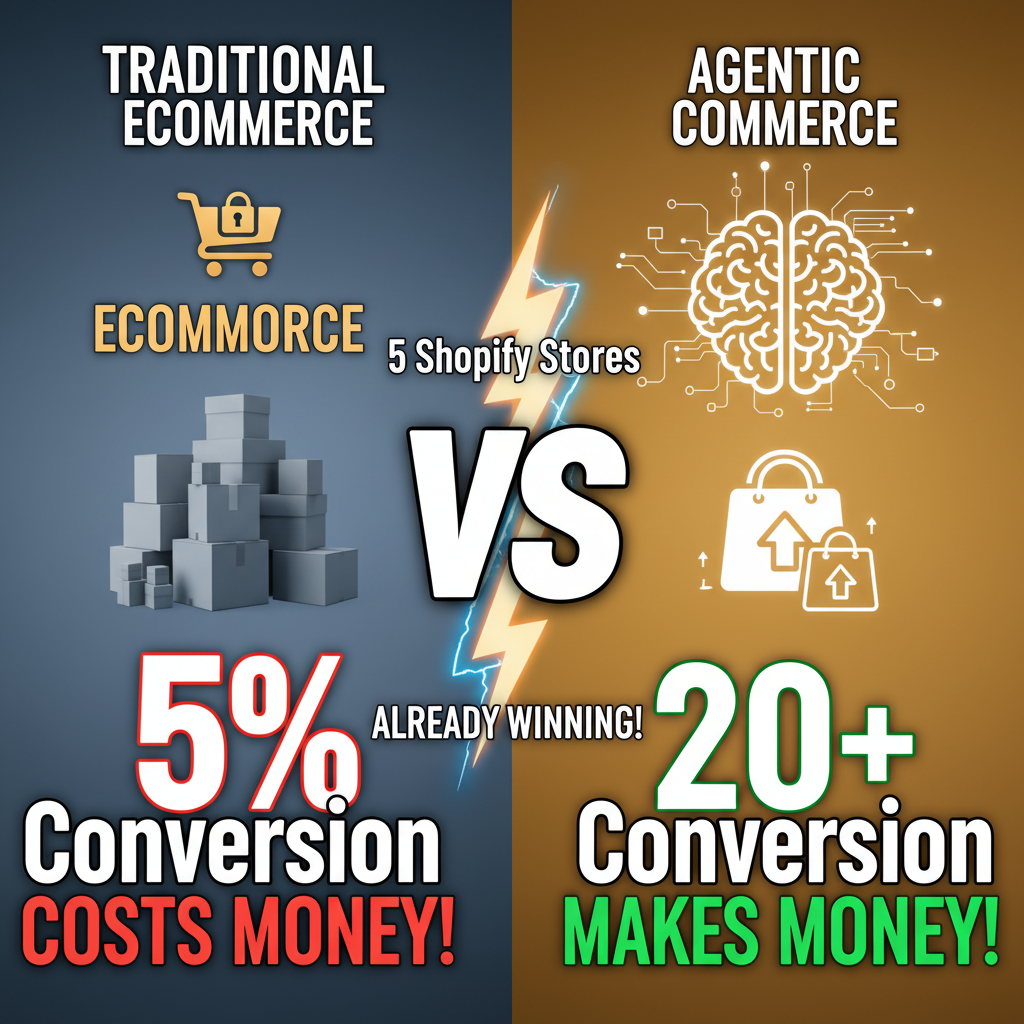
Conversion Rate: Agent-assisted sessions convert at 28–35%, vs. 2–3% for traditional browse-and-buy. This is the single biggest impact.
Average Order Value: Agents upsell and bundle intelligently. Customers who interact with agents spend 34% more per transaction. Warm recommendations from an agent beat cold algorithmic suggestions.
Customer Acquisition Cost: Agents extend the value of your existing traffic. If an agent lifts conversion from 2% to 3.5%, you've cut effective CAC by 40% with the same ad spend.
Repeat Purchase Rate: Agents remember customer preferences, past purchases, and fit. Second purchases feel personalized. Repeat customers who interact with agents return 45% more frequently.
For a D2C brand doing $5M ARR with 2.5% conversion, moving to 3.5% conversion via agents adds $2M incremental revenue on the same traffic. That's not scaling advertising—that's leveraging existing audiences more efficiently.
What D2C Brands Need to Do Now
1. Audit your product data. Agents need structured information: size charts, material composition, care instructions, sustainability certifications, customer reviews segmented by use case. If your product data lives in prose descriptions on your website, it's not agent-ready. Start organizing attributes in your Shopify product database.
2. Map customer questions. What are the top 50 questions your support team answers? Those are the queries your agent will handle. Document them. They become the agent's training data.
3. Define agent behavior. Should your agent prioritize margin or customer satisfaction? Can it discount? Should it recommend competitors' products if yours are out of stock (yes—trust is more valuable than this transaction)? Establish guardrails before deploying.
4. Integrate inventory and pricing. Agents need real-time inventory and permission to negotiate pricing. If your inventory system updates every 6 hours, agents can't make real-time promises. Invest in real-time integrations first.
5. Choose a platform. Shopify's agentic storefront is live. Google Shopping agents are rolling out. Stripe is building agent infrastructure. Evaluate which platform aligns with your customer channels. For most D2C, Shopify agentic storefronts are the fastest path to production.
The Timeline: Act Now
Agent adoption follows an S-curve. Early movers (10% of D2C today) are already capturing disproportionate share. The next 30% will move in the next 12 months. The majority will follow afterward.
If you're in the first group, you have 12 months to build competitive moat. If you're in the second, you have 6–9 months. If you're in the third, you'll be playing catch-up.
Start with a limited agent deployment: one product category, one messaging channel, one use case. Learn. Then expand.
Most D2C brands we work with see positive ROI within 8–12 weeks of going live with agents. But time to revenue depends on how clean your product data is and how quickly you can integrate with your systems.
D2C Brands Already Winning With Agents
Two case studies from the D2C space:
Case 1: Activewear D2C Brand. Deployed a shopping agent on their Shopify store in Q4 2025. Conversation rate (customers starting agent chat) was 18% of site visitors. Agent-assisted conversion was 32%. Within 60 days, agent-driven revenue represented 12% of total online sales. They've since expanded agents to SMS and email channels.
Case 2: Specialty Food D2C. Used agents to handle ingredient questions, diet compatibility, and pairing recommendations. Customers buying via agent spent 2.8x more per transaction. Repeat rate for agent-assisted customers is 47% vs. 28% for non-assisted.
These aren't outliers. They're the floor.
Building vs. Buying: What's Right for You
You have three options:
Option 1: Build in-house. Control and customization are maximal. Cost is $80K–$200K. Timeline is 4–6 months. Risk is high—few D2C teams have AI/NLP expertise. Only viable if you're $25M+ ARR with deep tech capability.
Option 2: Use a SaaS platform. Shopify agentic storefronts are the market leader. Cost is $500–$2500/month depending on volume. Timeline is 2–4 weeks. Risk is low. Recommended for most D2C brands under $25M ARR.
Option 3: Partner with an agency. Tenten has architected and deployed agents for 30+ D2C and Shopify Plus brands. We handle platform selection, product data cleaning, agent training, and ongoing optimization. Cost ranges $25K–$60K depending on scope.
For D2C brands that need to move fast and don't have in-house AI expertise, Option 2 or 3 is typically the right choice.
Key Takeaways
- AI shopping agents improve conversion rate by 10–15x, average order value by 30%+, and customer satisfaction by 40%.
- Goldman Sachs projects $1.2T in agent-driven commerce by 2030. Market growth is accelerating now.
- D2C brands must prepare product data, inventory systems, and pricing logic to support agent deployment.
- Shopify agentic storefronts are live and production-ready for most D2C use cases.
- First-mover advantage is real. Brands deploying agents in 2026 will capture 15–20 point market share gains over laggards.
Frequently Asked Questions
How long does it take to deploy a shopping agent for my D2C brand?
Timeline depends on your starting point. If your product data is clean and your Shopify store is well-organized, 2–4 weeks. If you need to restructure data, add attributes, and integrate new systems, 6–8 weeks. Most Shopify-native agents go live in 30 days.
Will AI agents cannibalize my customer service team?
No, they'll redirect them. Agents handle 60–70% of routine questions and simple transactions. Your team focuses on complex issues, relationship building, and exceptions. Most D2C brands reduce support volume by 35% and improve CSAT because response time drops from hours to seconds.
What happens if an agent makes a mistake with an order?
Agents are trained to confirm high-risk actions with the customer before executing. "So I'm shipping 50 units to Canada at this address on 2-day shipping. That's correct?" Customer approves or corrects. Mistakes are rare (< 1% rate). When they occur, you absorb cost like you would with a human error.
Can I use agents if I'm a seasonal D2C brand?
Yes. Seasonal brands actually benefit most because agents extend your selling season. Outside peak season, agents answer questions, build email lists, and nurture customers. During peak season, agents handle surge capacity. This smooths revenue.
How do I measure if agents are working for my brand?
Track these metrics: conversation rate (% of visitors who start agent chat), conversion rate (% of agent conversations resulting in purchase), AOV (average order value of agent-assisted orders), repeat rate, and support volume. Most D2C brands see all five move positively within 60 days of going live.