The Dynamic Pricing Opportunity
Static pricing is leaving money on the table. A winter coat priced the same in September (low demand) and December (peak demand) is leaving 15-25% revenue on the table.
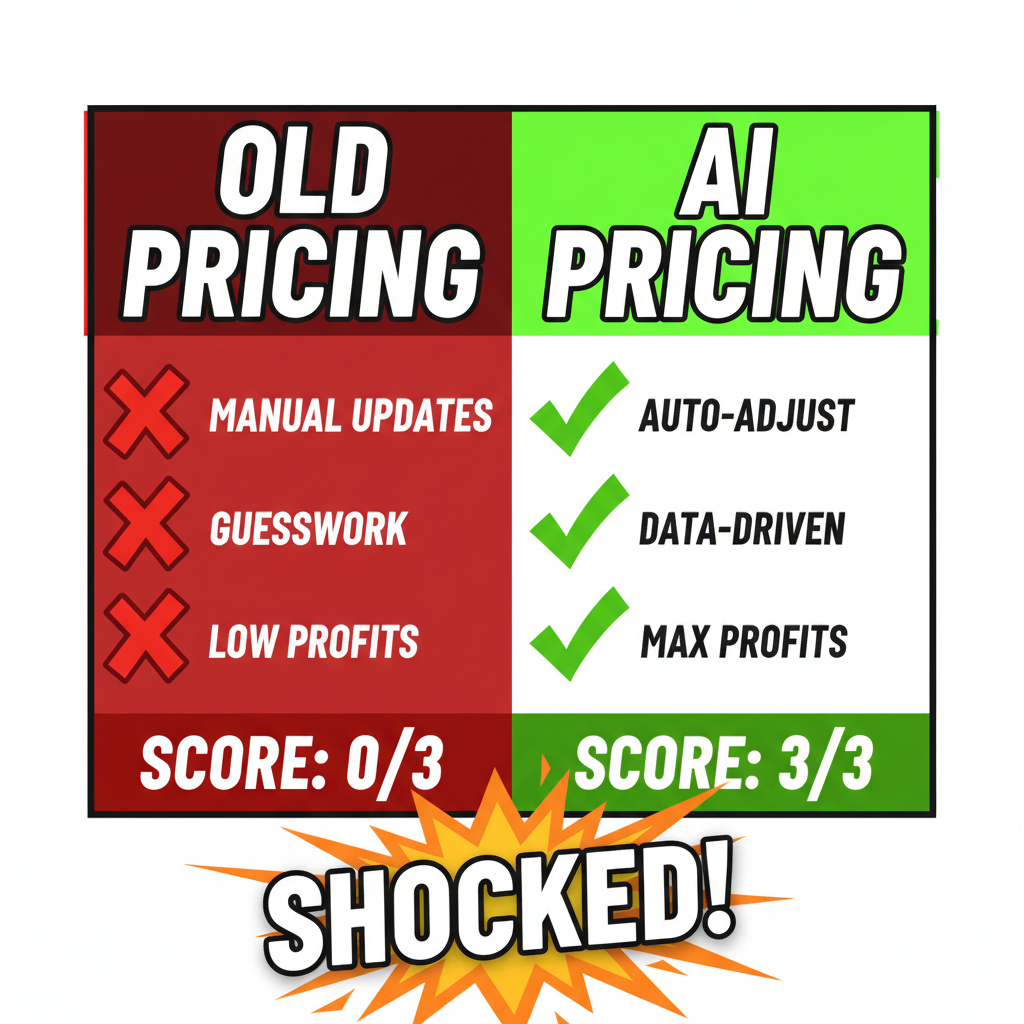
Dynamic pricing adjusts prices in real-time based on demand, inventory, customer behavior, and competitive landscape. Amazon uses it. Uber uses it. Shopify stores are only just starting.
The non-obvious insight: dynamic pricing increases margin, not just revenue. By dropping prices on slow-moving items and raising prices on bestsellers, you improve inventory turnover AND profitability. This is the efficiency play that most merchants miss.
How Dynamic Pricing Works
Dynamic pricing algorithms use these signals:
| Signal | Impact | Example |
|---|---|---|
| Inventory level | Low stock → raise price | Last 2 items: +15% |
| Demand velocity | High sales rate → raise price | 5 units/hour: +10% |
| Seasonality | Off-season → lower price | Winter coat in June: -20% |
| Customer LTV | Returning customers → lower price | 5+ purchases: -10% |
| Competitor pricing | Market positioning | Competitor -$5: -3% |
| Time of day | Peak traffic times | 8-9pm: +8% |
| Margin health | Product profitability | 30% margin: +5%, 15% margin: -2% |
Simple dynamic pricing uses 1-2 signals (inventory + demand). Advanced pricing uses 5-7 signals (full machine learning).
Three Pricing Strategies
Strategy 1: Demand-Based Pricing (Easiest)
Raise prices when demand spikes, lower when demand drops.
Implementation: 1. Set base price = (cost × 2.5) = 150% margin 2. Track daily unit sales 3. If units/day > historical average by 20%, raise price +8% 4. If units/day drops 20% below average, lower price -12%
Example: T-shirt - Base price: $29.99 - Normal demand: 5 units/day - When demand hits 6+ units/day: raise to $32.39 (+8%) - When demand drops to 4 units/day: lower to $26.39 (-12%)
Impact: 12-18% revenue increase with no traffic growth
Strategy 2: Inventory-Based Pricing (Most Common)
Raise prices as inventory depletes.
Implementation: 1. Inventory threshold 1 (100+ units): base price ($29.99) 2. Inventory threshold 2 (50-100 units): +5% ($31.49) 3. Inventory threshold 3 (10-50 units): +12% ($33.59) 4. Inventory threshold 4 (<10 units): +20% ($35.99)
Impact: 8-12% margin increase as inventory depletes (faster turnover, less dead stock)
Strategy 3: AI-Powered Pricing (Most Sophisticated)
Machine learning models predict optimal price for each product, each day.
Inputs: - Historical sales data (12 months) - Current inventory - Competitor prices (web-scraped) - Customer lifetime value - Seasonality patterns - Discount/promo history
Output: Optimal daily price that maximizes profit margin
Tools: Dynamic Yield, Sweetlabs, Price2Spy (integration via app)
Impact: 15-25% margin increase (but requires 6+ months of historical data)
Pricing Strategies by Product Type
High-demand bestsellers: Use demand-based pricing. Raise prices during peak demand (new product launches, seasonal peaks). Example: summer dresses in July.
Seasonal inventory: Use inventory-based pricing. As inventory depletes toward end-of-season, raise prices to increase margin before clearance. Example: winter coats in March (+15% week 1, +10% week 2, -40% week 3 clearance).
Low-turnover items: Use time-based pricing. Age of inventory matters. Items in stock >90 days = lower price aggressively. Items <30 days = maintain high price.
Competitive markets (commodities): Use competitor-based pricing. Price within 3-5% of competitors. Undercut by 2% if you have faster shipping or better reviews.
Premium/branded items: Avoid dynamic pricing. Luxury brands suffer from perceived brand erosion when customers see different prices. Keep pricing stable.
The Legal and Ethical Guardrails
Before implementing dynamic pricing, understand the rules:
US Regulations: - Robinson-Patman Act: You can't discriminate pricing by customer type (different customers can't see drastically different prices for the same item). Slight variations (A/B test: 5-10%) are acceptable. Extreme variations (one customer sees $50, another sees $30) are not. - State regulations: California, Illinois, and New York have price discrimination laws. Check local rules before scaling. - FTC guidelines: Algorithmic pricing must be transparent. Hidden rules = FTC violation.
Best practices: - Publish your pricing logic ("Prices adjust based on demand and inventory") - Don't use customer data to set individual prices (that's illegal) - Use transparent signals only (inventory, demand, competitor pricing) - A/B test before rolling out (ensure fairness) - Monitor for bias (algorithm shouldn't discriminate by demographics)
Implementing Dynamic Pricing on Shopify
Option 1: Manual (DIY)
Pros: Free Cons: Time-intensive, error-prone
Process: 1. Export inventory data weekly (admin > Products > Export) 2. Use Google Sheets formulas to calculate prices 3. Use Shopify bulk edit to update prices 4. Repeat weekly
Formula example (inventory-based):
=IF(inventory>100, base_price,
    IF(inventory>50, base_price*1.05,
    IF(inventory>10, base_price*1.12,
    base_price*1.20)))
Option 2: Shopify App (Recommended)
Apps that integrate with Shopify and automate dynamic pricing:
| App | Cost | Features | Best For |
|---|---|---|---|
| Pricefy | $99-399/mo | Demand, inventory, competitor pricing | Mid-size brands (100-1000 SKUs) |
| Dynamic Pricing | $79-199/mo | Inventory, seasonality, demand | High-velocity stores |
| Revise | $199-499/mo | ML, competitor pricing, LTV | Enterprise stores |
| Sweet Labs | $299-699/mo | Full ML pipeline, demand forecasting | Premium brands (high AOV) |
| Price2Spy | $99-299/mo | Competitor monitoring + dynamic adjustment | Competitive markets |
My recommendation for DTC brands: Start with Pricefy ($99/mo). It covers inventory + demand signals and integrates natively with Shopify. For 6+ months of data, upgrade to Revise for ML-based optimization.
Option 3: Custom API (For Engineers)
If you have a technical team, build a custom solution:
- Shopify Admin API → pull inventory + order history
- Custom pricing engine (Python/Node) → calculate optimal price
- Webhook → update prices via Admin API on a schedule (daily or hourly)
Advantages: Full control, custom logic, zero per-unit fees Disadvantages: 80-120 hours of development time, $5K-$15K cost
Code skeleton (Python + Shopify Admin API):
import shopify
import requests

# Connect to Shopify Admin API
session = shopify.Session(shop_url, api_version, access_token)

# Get all products
products = shopify.Product.find()

for product in products:
    for variant in product.variants:
        # Get inventory
        inventory = variant.inventory_quantity
        current_price = float(variant.price)
        cost = float(variant.cost) or 0  # Cost of goods

        # Dynamic pricing logic
        if inventory > 100:
            new_price = current_price  # Base price
        elif inventory > 50:
            new_price = current_price * 1.05  # +5%
        elif inventory > 10:
            new_price = current_price * 1.12  # +12%
        else:
            new_price = current_price * 1.20  # +20%

        # Apply minimum markup (don't drop below 1.5x cost)
        min_price = cost * 1.5
        new_price = max(new_price, min_price)

        # Update variant
        variant.price = round(new_price, 2)
        variant.save()
Real-World Case Study: T-Shirt Store
Store profile: - 500 SKUs (all t-shirt variants) - $18 cost per shirt, $39.99 base price - 150 units/day sales average - 25% inventory carrying cost annually
Before dynamic pricing: - Revenue: $6M annually - Margin: 35% ($2.1M profit) - Dead stock (>90 days): 8% of inventory
After implementing inventory-based dynamic pricing:
| Inventory Level | Price | Margin | Sell-Through |
|---|---|---|---|
| >100 units | $39.99 | 35% | 85% |
| 50-100 units | $41.99 (+5%) | 38% | 92% |
| 10-50 units | $44.99 (+12%) | 42% | 95% |
| <10 units | $47.99 (+20%) | 45% | 98% |
Results (12-month): - Revenue: $6.3M (+5%) - Margin: $2.45M (+16%) - Dead stock: 2% of inventory (-75%) - Carrying costs saved: $120K - Net margin improvement: $350K
ROI: $350K improvement ÷ $99/mo app cost = 3,535:1 ROI
Common Pitfalls
Pitfall 1: Pricing too aggressively Raising prices +30% on bestsellers trains customers to wait for sales. Use +8-15% max.
Pitfall 2: Not considering cost of goods Don't drop prices below 1.5x cost. You'll lose margin. Always enforce a minimum price rule.
Pitfall 3: Ignoring competitor pricing If your competitor drops prices and you're still high, traffic stops. Monitor competitor pricing weekly (Price2Spy does this automatically).
Pitfall 4: Changing prices too frequently Price changes every hour confuse customers and trigger price-comparison tools. Change prices weekly or daily max (not hourly).
Pitfall 5: Not A/B testing first Test dynamic pricing on 10% of your product catalog first. Measure impact. Roll out to 100% only if profitable.
Measuring Dynamic Pricing Impact
Track these metrics:
| Metric | Baseline | After 3 months | Goal |
|---|---|---|---|
| Gross margin % | 35% | 38% | 40%+ |
| Revenue | $500K/mo | $525K/mo | +10% |
| Inventory turnover | 4.2x/yr | 4.8x/yr | 5x+/yr |
| Dead stock % | 8% | 3% | <2% |
| Cart abandonment | 28% | 25% | <20% |
| Customer complaints | 12/mo | 14/mo | No spike |
If customer complaints spike, prices are changing too aggressively. Dial back.
When to Use Dynamic Pricing (and When NOT To)
Use dynamic pricing for: - High-velocity products (10+ units/day) - Perishable or time-sensitive goods - Seasonal inventory (clear at end-of-season) - Competitive markets (commodity pricing) - High inventory carrying costs
Don't use dynamic pricing for: - Luxury/premium brands (perception of value matters) - Limited edition products (exclusivity, not demand) - Custom/bespoke products (made-to-order, no inventory risk) - Subscription products (price consistency matters for retention)
AI-Powered Pricing Prediction
The next frontier is predictive pricing: ML models that forecast demand 30-90 days out and set prices to optimize profit across the forecast window.
Example: Using historical data + seasonality patterns, predict: - Next 30 days: 150 units/day demand forecast = raise price +12% - Days 31-60: 80 units/day forecast = lower price -8% - Days 61-90: 20 units/day forecast = aggressive clearance -40%
This approach ensures you sell out on schedule, maximize margin per unit, and minimize dead stock.
Tools doing this: Revise, Recast, Demand Forecast Pro.
Key Takeaway
Dynamic pricing is no longer a luxury for large enterprises. Shopify apps make it accessible to mid-size DTC brands (100+ SKUs, $500K+ annual revenue).
The lever: small price changes (5-15%) compound to 12-25% margin improvements with zero traffic growth.
Start with inventory-based pricing. It's simple, low-risk, and generates immediate ROI. Test on 10% of products. Measure. Roll out.
FAQ
Q: Will dynamic pricing hurt my brand? A: Not if implemented carefully. Transparency is key. Disclose pricing logic. Use small changes (5-15%). Avoid drastic swings that make customers feel cheated.
Q: Can I use dynamic pricing on Shopify Plus? A: Yes. Plus stores have access to more advanced API features. Consider custom pricing logic via Shopify Functions (advanced).
Q: What's the minimum product catalog size for dynamic pricing to work? A: 50+ SKUs. Below that, the signal-to-noise ratio is too high. Manual pricing works better.
Q: Does dynamic pricing work with discount codes? A: Yes. Price changes apply to base price. Discounts still work (stack on top). Be careful not to let dynamic pricing + discounts compress margin too much.
Q: How often should I adjust prices? A: Weekly for demand-based, daily for inventory-based. Hourly changes are overkill and confuse customers.
Q: Does dynamic pricing help with customer acquisition? A: No. It optimizes margin on existing traffic. Pair it with marketing for growth.
Ready to implement dynamic pricing? Start with Pricefy (inventory-based, $99/mo). Test on your top 20 SKUs. Measure margin improvement after 4 weeks.
For a custom dynamic pricing strategy tailored to your product mix and margin targets, Tenten's AI optimization team can design a pricing system that increases your gross margin by 8-15% while maintaining customer satisfaction. We've implemented pricing optimization for 30+ Shopify stores.
Resources
- Shopify Admin API Documentation: https://shopify.dev/docs/admin-api
- D2C Pricing Strategies Guide
- Price optimization research: https://www.mckinsey.com/capabilities/operations/our-insights
- Competitor monitoring: https://www.price2spy.com