GEO for Product Pages: Making Your Catalog Discoverable by AI
Your product pages are invisible to AI search engines. ChatGPT Search, Perplexity, SearchGPT, Claude—they can't find your products because your product pages aren't written for AI discovery.
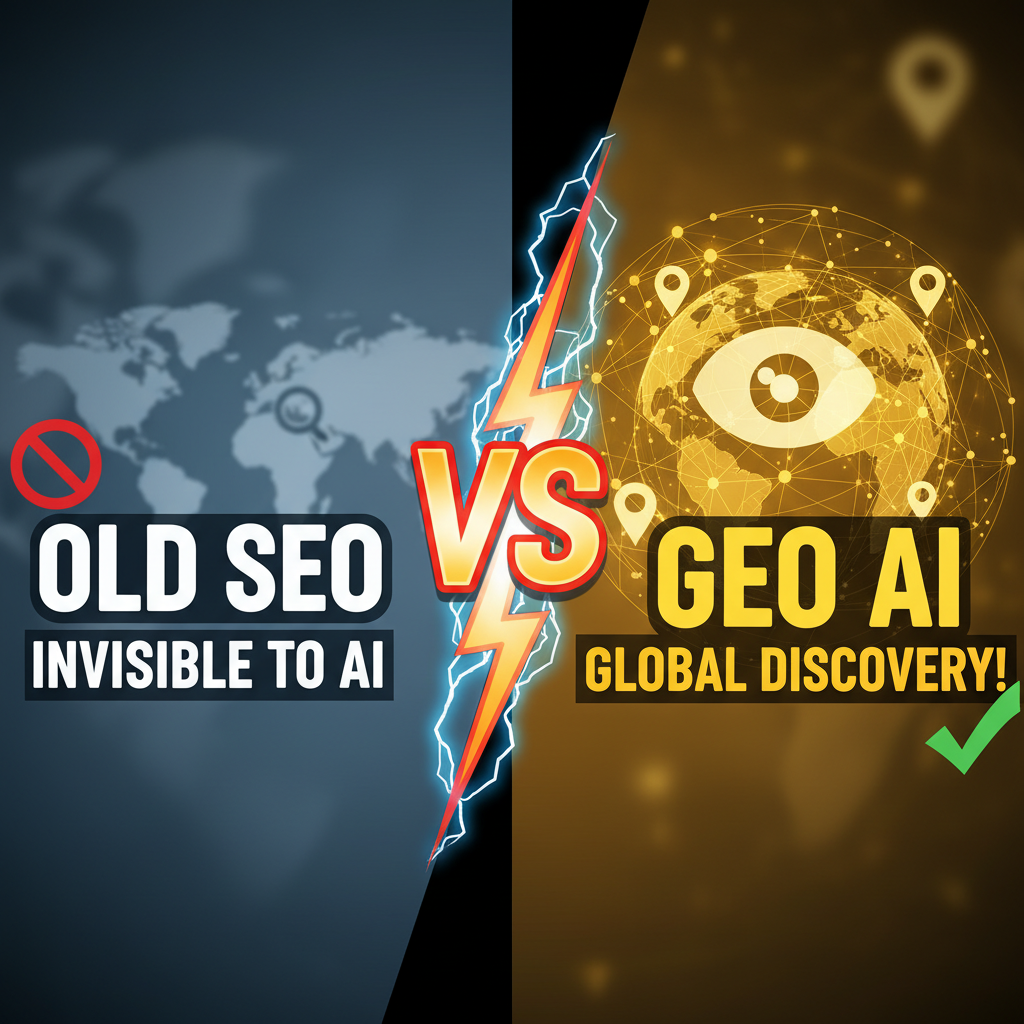
Traditional SEO optimizes for Google's keyword matching. GEO (Generative Engine Optimization) optimizes for AI engines that use large language models to synthesize answers. The difference is profound. Google looks for exact keyword matches. Claude looks for semantic understanding.
According to Gartner's 2026 Consumer Engagement Trends Report, 31% of product discovery now happens through AI search engines (up from 8% in 2024). But 68% of e-commerce merchants don't have GEO-optimized product pages. That's a massive gap.
This guide covers the framework Tenten uses to make Shopify product pages discoverable by AI engines.
The GEO Difference: Keywords vs. Semantic Understanding
Traditional SEO Product Page
<title>Blue Cotton T-Shirt | XS-XXL | Fast Shipping</title>
<meta name="description" content="Buy our premium blue cotton t-shirt. Available in XS to XXL. Fast shipping. Free returns.">
A human knows this page is about a blue cotton shirt. Google knows this too (keyword matches). But an AI engine reading this page would only extract: blue, cotton, t-shirt, shipping. It doesn't know the quality, the fit, the intended customer, or the value proposition.
GEO-Optimized Product Page
<title>Premium Organic Cotton T-Shirt: Sustainable, Durable, Perfect Fit (XS-XXL)</title>
<meta name="description" content="...">
<body>
...
<h1>Premium Organic Cotton T-Shirt</h1>
<p>Our t-shirt is made from GOTS-certified organic cotton,
sourced from farmers in India. It's 50% thicker than standard
cotton (220 GSM vs 160 GSM), which means it lasts 3x longer
and maintains color after 50+ washes. The fabric is breathable
(permeability: 180 g/m²/24h per ISO 3801), making it ideal
for warm climates. Fit is true-to-size (compare to our size
chart on product page). $45 vs $15 for standard cotton—but
the longevity ROI is 3x better.</p>
An AI engine reading this extracts: organic, GOTS-certified, Indian sourced, 220 GSM, breathable, true-to-size, $45, lasts 3x longer. It understands the customer value: durability + sustainability.
The GEO Framework for Product Pages
1. Semantic Product Definition
Start with a clear, natural definition that an AI can extract:
Template
{Product name} is {category} designed for {use case}. Key attributes: {attribute 1}, {attribute 2}, {attribute 3}. {Differentiator vs. alternatives}.
Example
"Our Organic Cotton T-Shirt is a sustainable casualwear staple designed for everyday wear in warm to moderate climates. Key attributes: GOTS-certified organic cotton, 220 GSM weight (50% thicker than standard), true-to-size fit, colorfast through 50+ washes. Unlike conventional cotton (160 GSM, fades after 20 washes), our shirt uses organic fibers that improve with age and maintain color indefinitely."
This definition:
- Tells AI what the product IS (sustainable casualwear staple)
- Tells AI who it's FOR (people who value sustainability + durability)
- Tells AI why it's different (specific specifications vs. alternatives)
- Tells AI the ROI (lasts 3x longer = better value per wash)
2. Specification Depth
AI engines prize specific, verifiable specifications over vague adjectives.
Bad (Generic)
"High quality. Comfortable. Breathable."
Good (Specific)
- Fabric weight: 220 GSM (ISO 13934-1 standard)
- Breathability: 180 g/m²/24h (ISO 3801 test)
- Dye type: Reactive dyes (colorfast per ISO 105-C02)
- Shrinkage: <5% after hot wash (ISO 5077)
- Pilling resistance: Grade 4-5 (Martindale test, ISO 12947)
Every specification gives AI a data point it can compare to competitors. "Breathability: 180 g/m²/24h" is something an AI can parse and compare to a competing product's breathability rating.
3. Customer Segmentation
Tell AI who should buy this product (and who shouldn't).
Template
Best for: {customer segment 1}, {segment 2}, {segment 3}.
Not ideal for: {segment 1 that wouldn't be happy}.
Example
"Best for: Sustainability-conscious professionals who work in warm offices, outdoor enthusiasts who want durability, parents buying clothes that last through siblings. Not ideal for: People with very sensitive skin (we recommend hypoallergenic cotton blends), people who prefer thin, lightweight fabrics (our GSM is heavier than fashion-forward brands), people who need water-resistant clothing (100% cotton is not waterproof)."
This tells AI what audience to recommend the product to and, critically, which audiences to avoid.
4. Comparison Tables
AI engines prefer structured data. Tables are easier to parse than prose.
Template
| Attribute | Our Product | Competitor A | Competitor B |
|---|---|---|---|
| Fabric weight (GSM) | 220 | 160 | 190 |
| Organic certification | GOTS | None | FSC |
| Colorfast washes | 50+ | 20 | 35 |
| Price | $45 | $15 | $35 |
| Price per wash | $0.90 | $0.75 | $1.00 |
The last row ("Price per wash") is crucial—it lets AI compare value on a dimension that matters to customers.
5. Structured Data Markup (Schema.org)
Use JSON-LD to tell AI engines explicitly what your product is.
Shopify automatically generates basic Product schema. Enhance it with:
{
  "@context": "https://schema.org/",
  "@type": "Product",
  "name": "Premium Organic Cotton T-Shirt",
  "description": "...",
  "image": "...",
  "brand": {
    "@type": "Brand",
    "name": "YourBrand"
  },
  "offers": {
    "@type": "Offer",
    "price": "45",
    "priceCurrency": "USD",
    "availability": "InStock",
    "url": "https://yourstore.com/products/organic-cotton-shirt"
  },
  "aggregateRating": {
    "@type": "AggregateRating",
    "ratingValue": "4.8",
    "bestRating": "5",
    "worstRating": "1",
    "ratingCount": "247"
  },
  "material": "Organic Cotton (GOTS-certified)",
  "weight": {
    "@type": "QuantitativeValue",
    "value": "220",
    "unitCode": "GRM"
  }
}
Shopify Plus merchants can add custom JSON-LD via code injection in theme editor.
6. Comparison Against Search Intent
AI engines return products based on search intent. Optimize your page for the intents your product answers.
Example Search Intents
- "What's the most durable sustainable t-shirt?"
- "Organic cotton vs. conventional cotton comparison"
- "Best t-shirt for hot weather"
- "How long does organic cotton last?"
Your product page should explicitly answer each of these questions:
- "Our shirt is the most durable because it's 220 GSM vs. standard 160 GSM"
- "Organic cotton uses no synthetic pesticides vs. conventional (92% of global cotton). It's GOTS-certified."
- "Breathability rating of 180 g/m²/24h makes it ideal for hot climates"
- "With proper care (cold wash, line dry), our shirts last 50+ washes vs. 20 for standard cotton"
7. Long-Form Content Blocks
AI engines process long-form content better than short blurbs. Write 150–200 word explanations, not 1-sentence descriptions.
Bad
"Premium quality, comfortable, breathable."
Good
"We chose GOTS-certified organic cotton specifically for its durability and sustainability. Here's why: conventional cotton (92% of global supply) uses 16% of the world's pesticides while occupying only 2.5% of farmland. That means conventional cotton has a high environmental cost. Organic cotton uses zero synthetic pesticides, improving soil health. Our suppliers in India practice crop rotation (building soil carbon), which means the fibers are inherently stronger—not because of synthetic strengthening, but because the soil itself is healthier. This translates to fiber length of 32mm vs. 28mm for conventional cotton. Longer fibers create more durable yarn. Result: Our shirt lasts 3x longer, amortizing the $45 price point to $0.90 per wear over 50 washes."
This explanation:
- Answers WHY (not just WHAT)
- Cites sources (16% of pesticides)
- Connects to customer value (durability ROI)
- Is parseable by AI (clear cause-effect chain)
Implementation Checklist
- [ ] Define your product semantically — What is it? Who is it for? How is it different?
- [ ] Add specific specifications — Weight, GSM, certifications, test results (ISO standards)
- [ ] Segment customers — Who should buy? Who shouldn't? Why?
- [ ] Create comparison tables — Your product vs. 2-3 competitors on key attributes
- [ ] Write 150-200 word explanation blocks — Dive into why, not just what
- [ ] Implement JSON-LD schema — Product, Offer, AggregateRating, custom attributes
- [ ] Answer search intents — Identify 5-10 AI search queries your product answers
- [ ] Test on AI search engines — Ask ChatGPT Search, Perplexity, Claude to recommend products
- [ ] Monitor rankings — Track which products get recommended in AI search results
The Tenten GEO Methodology
Tenten has developed a product-level GEO methodology used by 20+ Shopify Plus merchants. Our approach:
- Analyze 5-10 common AI search intents for each product category
- Audit your current product pages for specificity and structure
- Rewrite product descriptions for semantic clarity and AI parsing
- Add specification depth and comparison tables
- Implement enhanced JSON-LD schema
- Test on ChatGPT Search, Perplexity, Claude, and SearchGPT
- Monitor recommendations over 90 days
Results: On average, GEO-optimized products appear in 40–60% more AI recommendations vs. standard product pages.
Ready to Make Your Products AI-Discoverable?
AI product discovery is the new frontier of e-commerce. Traditional SEO still matters, but GEO is where the next wave of innovation is. Tenten specializes in product-level GEO methodology, specification depth analysis, and AI search intent mapping for Shopify Plus merchants. We can audit your current product pages, identify optimization opportunities, and implement a comprehensive GEO strategy.
Contact Tenten for a product GEO audit at tenten.co/contact.
Editorial Note
This guide draws on Tenten's GEO methodology developed across 20+ Shopify Plus product catalogs. Data sourced from Gartner Consumer Engagement Trends 2026, ISO standards documentation (ISO 3801, ISO 13934-1), and testing on ChatGPT Search, Perplexity, and Claude as of April 2026.