The AI Reshuffling Has Begun
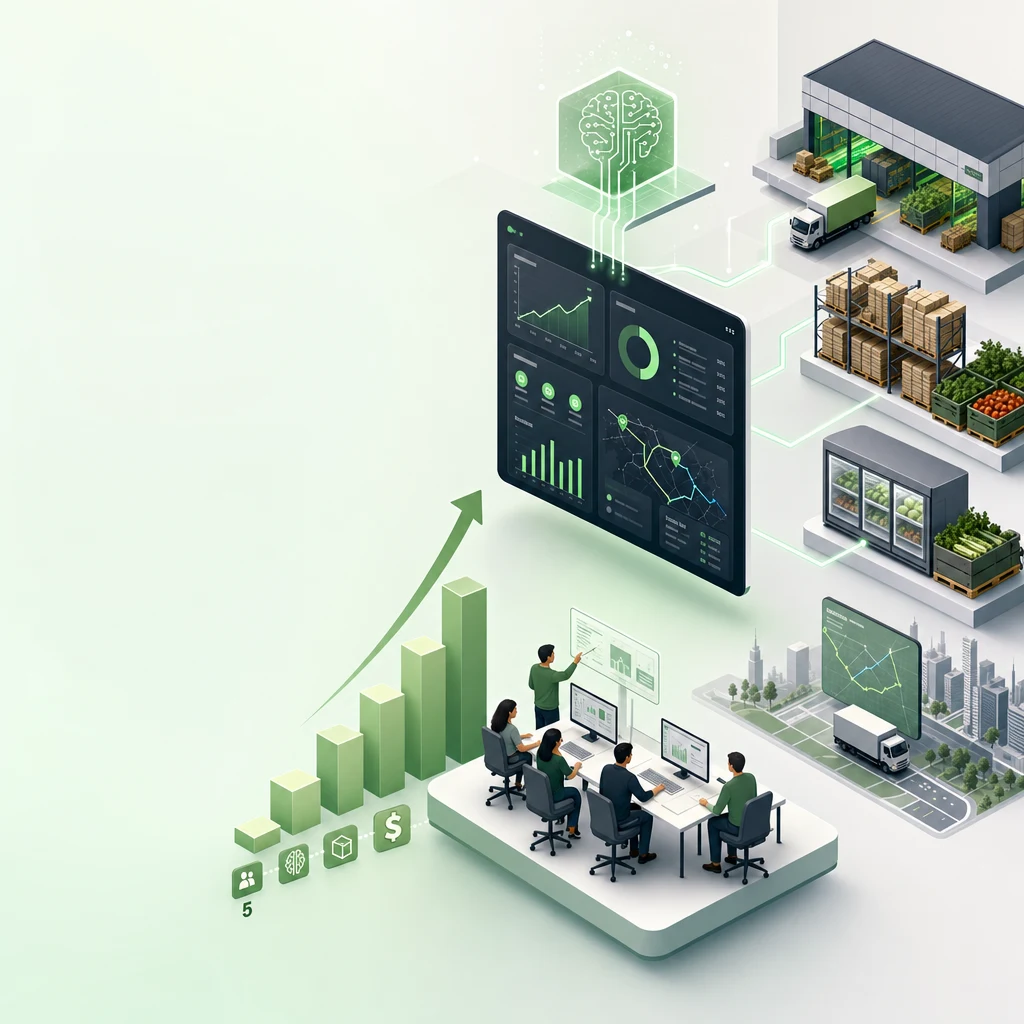
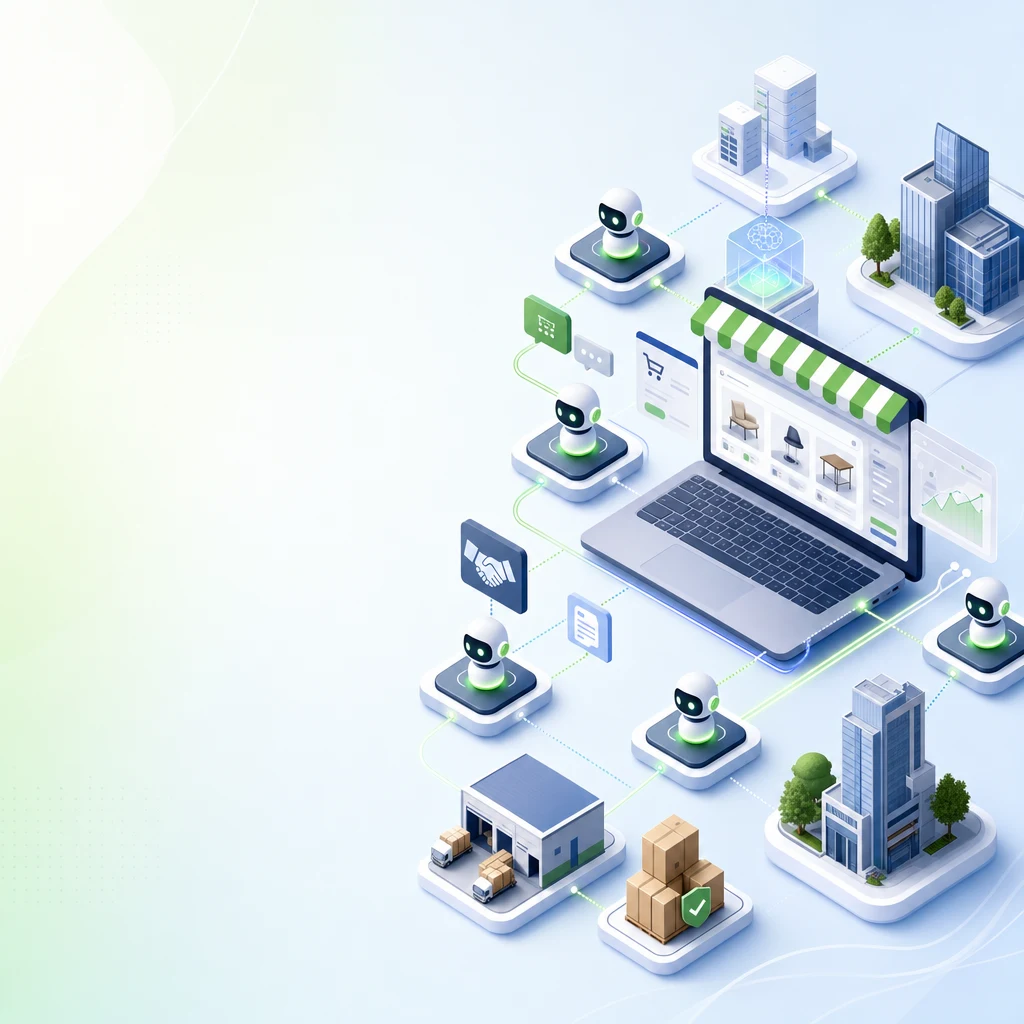
Three years ago, "AI for ecommerce" meant a chatbot or a recommendation engine sitting beside your existing operations. Today, AI is restructuring the entire value chain.
Gartner's 2024 E-Commerce Technology Trends report found that 72% of enterprise retailers have deployed or plan to deploy AI-powered systems across operations. But the real story isn't adoption—it's that the work itself is changing. AI isn't adding a layer on top of your business; it's reordering how each function operates, from the moment a customer discovers your product to the moment it arrives at their door.
This shift matters because it rewires unit economics. A Shopify merchant using AI-driven dynamic pricing, demand forecasting, and customer service automation doesn't just save labor hours. They change the inputs themselves—inventory turns faster, customer acquisition costs drop, and margins expand. The merchants who understand these layers first will own the next decade of ecommerce.
Product Discovery: From Search to Prediction
Product discovery used to be a one-way transaction. A customer searches for "blue running shoes." Your search engine returns results. They buy or bounce.
AI reframes discovery as prediction. The system learns that customers who search for "minimalist running" often add "moisture-wicking socks" to their cart 3 clicks later. It predicts that a returning customer with 2 previous $200+ purchases will convert on a $150 premium offering, but not a $75 entry-level product. It surfaces recommendations based not just on what people bought, but on what they would have bought if they'd known it existed.
The numbers:
- A/B testing data from leading DTC brands shows AI-driven personalized product feeds increase click-through rates by 18–28% compared to rule-based recommendations.
- Baymard Institute's 2024 search benchmark found that stores using AI semantic search (understanding intent, not keywords) achieve 8–12% higher conversion rates than traditional search.
- Visual search powered by computer vision—uploading a photo to find "similar items"—now drives 5–8% of discovery traffic on fashion and home goods retailers.
The mechanic: AI models process thousands of attributes per product (color, material, size, price, customer reviews, inventory level, seasonality) and match them against customer behavior patterns in real time. A customer browsing your site triggers a lightweight ML inference that predicts the next click with 60–70% accuracy.
For Shopify Plus merchants, this means integrating a third-party AI discovery layer (Nosto, RichRelevance, Klevu) or building custom models via Shopify's GraphQL API and a tool like TensorFlow. The ROI is typically 3–8% revenue lift per implementation.
Merchandising: From Static to Dynamic
Five years ago, your product page was static. You set a price, wrote a description, created hero imagery, and it stayed that way for weeks or months.
AI makes merchandising dynamic and responsive. Prices change based on demand, inventory levels, competitor pricing, and customer segments in real time. Product descriptions rewrite themselves—the copy shown to a bargain-conscious customer emphasizes durability and value, while copy for a premium buyer emphasizes exclusivity and craftsmanship. A/B tests run automatically across headlines, imagery, and CTAs, with winners scaled across your catalog instantly.
The metrics that matter:
- McKinsey's 2024 research on dynamic pricing found that retailers using AI-driven price optimization see 4–8% margin expansion compared to static pricing.
- Conversion optimization data shows that dynamic A/B testing (machine-learned, not human-scheduled) achieves 2–3% conversion lift per 100 tests, compounding monthly.
- Demand forecasting accuracy improves 15–25% when powered by machine learning vs. manual statistical models, directly reducing overstock and understock incidents.
The implementation: A system ingests real-time signals (competitor prices, inventory levels, weather, traffic patterns, past customer behavior) and recommends price, copy, and product page layout changes. For Shopify, this typically means integrating with tools like Revinate, Profitero, or building a custom webhook that updates product data via the Admin API.
The catch: Dynamic merchandising works only if you measure the right metrics. Focusing on short-term AOV can tank customer lifetime value if you're discounting too aggressively. The winners use AI to optimize for contribution margin and repeat purchase rate, not just revenue per order.
Fulfillment: From Reaction to Prediction
Most ecommerce operations still run on a simple model: customer orders → warehouse picks/packs → shipment. It's reactive.
AI makes fulfillment predictive. Months before peak season, machine learning models forecast which SKUs will sell 30% higher than usual, which will slow, and which will stall. The system recommends pre-staging inventory at fulfillment centers, increasing safety stock on fast movers, and marking slow SKUs for clearance. As orders arrive, routing algorithms optimize which fulfillment center ships to which customer based on geography, product availability, and shipping cost.
Real-world impact:
- Retailers using AI-powered demand planning reduce excess inventory by 12–18% and stockouts by 25–30%, per Gartner.
- Route optimization (determining which fulfillment center ships an order) reduces shipping costs by 4–6% and delivery times by 1–2 days.
- Warehouse robotics and AI-guided picking systems have increased picking accuracy to 99.5% and reduced labor costs by 20–30% in large fulfillment operations.
For Shopify merchants: Most aren't running their own warehouses. But integrating with a 3PL that uses AI forecasting (Flexport, Sedgewick, Sennder) versus a traditional provider saves 8–15% on fulfillment costs annually. The data integration happens through EDI or API feeds that pull order data from Shopify and push inventory levels back in real time.
The hidden win: Predictive inventory means lower capital tied up in stock. A $5M annual revenue DTC brand carrying 60 days of inventory typically has $800K–$1M in inventory value. AI-powered forecasting can reduce that to 40–45 days, freeing $200K+ in working capital.
Customer Service: From Reactive to Proactive
Today's customer service still operates on an old model: customer has a problem → they contact you → your team responds. Reaction time: hours to days.
AI inverts the model. A customer receives an order confirmation and, based on their order history and product type, the system knows there's a 12% chance they'll have a question about shipping time or a 6% chance they'll need assembly help. It proactively sends a help article or video guide before they ask. If they do contact support, an AI chatbot resolves 60–85% of inquiries (tracking orders, processing returns, answering FAQs) without human intervention. For issues that do reach humans, AI has already summarized the conversation history, flagged sentiment, and suggested responses.
The data:
- Forrester's 2024 Customer Service benchmark reports that AI-powered chatbots handle 70–80% of tier-1 inquiries, reducing support costs by 30–40%.
- Proactive outreach (notifications, help content before issues arise) reduces inbound support volume by 15–25%.
- Sentiment analysis on customer messages flags at-risk customers (high churn probability) with 73–81% accuracy, triggering retention offers.
The Shopify integration: Tools like Gorgias, Zendesk, and Intercom all offer AI-powered customer service. They integrate with Shopify via native apps, pull order and customer data automatically, and surface AI-suggested responses within the support dashboard. Implementation takes 2–4 weeks; ROI (labor savings + churn reduction) pays back within 6–9 months for merchants doing $2M+ annual revenue.
The nuance: AI chatbots work only when they're trained on your specific products, policies, and tone. A chatbot trained on generic FAQ data will fail. The winners spend time building training datasets (chat transcripts, internal guides, product specs) and tuning the model to match their brand voice.
The Economics: Where the Real Disruption Lives
Piecemeal AI deployments—a chatbot here, a recommendation engine there—feel incremental. But when you implement AI across three or four stages of the value chain simultaneously, the economics compound.
Consider a $10M annual revenue Shopify Plus merchant:
| Function | Typical Investment | Expected Impact | Annual Benefit |
|---|---|---|---|
| Discovery | $50K (tool + setup) | 5% revenue lift | $500K |
| Merchandising | $80K (platform + training) | 3% margin expansion | $300K (on $3M gross margin) |
| Fulfillment | $120K (3PL + integration) | 12% cost reduction | $180K (on $1.5M COGS) |
| Customer Service | $40K (software + onboarding) | 35% support cost reduction | $140K (on $400K annual support) |
| Total | $290K | Blended Impact | $1.12M |
Payback: 3.1 months. But it compounds: Year 2 benefits approach $1.5M as the AI models train on more data and you optimize workflows.
The merchants getting 15–40% efficiency gains aren't doing one pilot. They're replatforming across multiple functions.
The Catch: Data and Governance
AI disruption comes with a cost that doesn't appear in budget lines: data quality and governance.
Your recommendation engine is only as good as your product data. If your Shopify product catalog has missing SKUs, outdated images, or inconsistent category tagging, the AI can't learn patterns. Your demand forecasting model fails if you don't track inventory by location and fulfillment center. Your chatbot hallucinates answers if it's trained on outdated product information.
Most merchants spend 60% of their AI implementation effort on data preparation, not model building.
Additionally, AI introduces governance risks. An algorithm that reprices inventory too aggressively could trigger a price war with competitors. A chatbot trained only on male customer interactions might give biased recommendations to female customers. A customer service AI that denies a legitimate return request could generate a PR crisis.
The winners implement AI governance: defining what decisions AI can make autonomously (dynamic pricing within guardrails), what requires human review (customer service escalations, return denials), and what's off-limits entirely (customer data sales, algorithmic bias on protected characteristics).
Where to Start
If you're running a Shopify store doing $2M+ annual revenue and haven't deployed AI across your operations, here's the sequence:
Phase 1 (Months 1–3): Discovery & Service - Implement an AI product discovery layer (Nosto or Klevu). ROI: 5–8% revenue lift. Cost: $2K–$5K/month. - Deploy AI chatbot for customer service (Gorgias or Zendesk). ROI: 30–35% support cost reduction. Cost: $500–$2K/month. - Total Phase 1 spend: $3K–$7K/month. Expected payback: 4–8 weeks.
Phase 2 (Months 4–6): Merchandising - Implement dynamic A/B testing and pricing optimization. ROI: 2–3% conversion lift + 3–5% margin expansion. Cost: $5K–$10K/month. - Expected payback: 8–12 weeks.
Phase 3 (Months 7–12): Forecasting & Fulfillment - Integrate AI demand forecasting with your 3PL or warehouse. ROI: 12–18% inventory cost reduction. Cost: $2K–$8K/month. - Expected payback: 12–16 weeks.
Total Year 1 investment: $120K–$250K. Expected Year 1 benefit: $800K–$1.5M (depending on revenue base).
For Shopify Plus merchants with dedicated technical and operations teams, building custom AI solutions (using Shopify's Admin API, GraphQL, and serverless infrastructure like AWS Lambda) can reduce tooling costs by 40–60% while increasing customization.
The Second-Order Effects
The most interesting disruptions aren't in the functions themselves—they're in who wins and why.
Network effects: As AI improves inventory forecasting and demand prediction, you carry less safety stock and turn inventory faster. This frees capital that competitors with traditional systems have tied up. You can invest in growth faster.
Data compounding: Every transaction feeds your AI models. The longer you run AI systems, the better they get. A merchant who deployed AI 18 months ago now has 18 months of model training data. New entrants can't catch up quickly.
Winner-take-most dynamics: In categories where price and selection matter (e.g., fast-fashion, electronics), merchants with superior AI-driven discovery and dynamic pricing will win on margin. In categories where brand and customer service matter (e.g., luxury, DTC wellness), merchants with superior AI chatbots and proactive outreach will win on retention.
The margin shift: AI doesn't just reduce costs—it shifts where margin lives. Today, most ecommerce margin comes from product markup. Tomorrow, it comes from optimizing fulfillment, reducing return rates, and increasing AOV through better recommendations. Merchants who only cut costs will see margin compress anyway as competitors match them. Merchants who use AI to increase efficiency and customer value will pull ahead.
Call to Action
If you're a Shopify merchant looking to deploy AI across your operations, start with a clear picture of your current state: Where are your biggest cost centers? Where is customer friction highest? Which functions would improve most from automation?
Tenten works with Shopify Plus partners to architect and implement AI systems across discovery, merchandising, fulfillment, and customer service. Start a conversation with our team to evaluate your readiness and map a 12-month roadmap.
Or dive deeper into how AI analytics reshape Shopify operations and AI-driven video generation for ecommerce.
Frequently Asked Questions
FAQ Items (5 Questions)
- How much does it cost to implement AI across an ecommerce operation?
- Total Year 1 spend ranges from $120K–$250K for a mid-market merchant ($2M–$10M annual revenue), depending on the number of tools and custom development required. Most tools charge recurring SaaS fees ($2K–$10K/month per function). Payback is typically 3–8 months due to efficiency gains and revenue lift.
- Can small Shopify stores (under $2M annual revenue) use these AI tools?
- Yes, but ROI is different. A $500K store implementing a $5K/month AI discovery tool needs a 1% revenue lift just to break even. For stores under $2M, prioritize the highest-ROI tools first (chatbot for support cost reduction, then discovery). Consider shared tools with volume discounts (Nosto Lite, Zendesk Essentials).
- What's the biggest risk when deploying AI systems?
- Data quality. If your product catalog, inventory records, or customer data are incomplete or inconsistent, AI models train on bad data and fail. Spend 60% of your implementation effort on data preparation (standardizing product attributes, cleaning historical orders, tagging inventory locations correctly).
- How do I know if an AI system is actually working?
- Track specific metrics before and after deployment: A/B test results (conversion lift %), cost per support ticket (for chatbots), inventory turn rate (for forecasting), and margin contribution by product (for pricing). Most tools provide dashboards; set baseline benchmarks before launch so you can measure impact.
- Is it possible to build custom AI systems instead of buying third-party tools?
- Yes, if you have engineering resources. Shopify's Admin API and GraphQL endpoint allow you to pull product and order data. Pair that with TensorFlow, PyTorch, or Hugging Face models, and you can build custom recommendation engines, pricing algorithms, or chatbots. The trade-off: 3–6 month build time vs. 2–4 week implementation with third-party tools. Custom solutions pay off for merchants doing $10M+ annual revenue with unique business logic.
FAQ JSON-LD (FAQPage Schema)
<script type="application/ld+json">{"@context": "https://schema.org","@type": "FAQPage","mainEntity": [{"@type": "Question","name": "How much does it cost to implement AI across an ecommerce operation?","acceptedAnswer": {"@type": "Answer","text": "Total Year 1 spend ranges from $120K–$250K for a mid-market merchant ($2M–$10M annual revenue), depending on the number of tools and custom development required. Most tools charge recurring SaaS fees ($2K–$10K/month per function). Payback is typically 3–8 months due to efficiency gains and revenue lift."}},{"@type": "Question","name": "Can small Shopify stores (under $2M annual revenue) use these AI tools?","acceptedAnswer": {"@type": "Answer","text": "Yes, but ROI is different. A $500K store implementing a $5K/month AI discovery tool needs a 1% revenue lift just to break even. For stores under $2M, prioritize the highest-ROI tools first (chatbot for support cost reduction, then discovery). Consider shared tools with volume discounts (Nosto Lite, Zendesk Essentials)."}},{"@type": "Question","name": "What's the biggest risk when deploying AI systems?","acceptedAnswer": {"@type": "Answer","text": "Data quality. If your product catalog, inventory records, or customer data are incomplete or inconsistent, AI models train on bad data and fail. Spend 60% of your implementation effort on data preparation (standardizing product attributes, cleaning historical orders, tagging inventory locations correctly)."}},{"@type": "Question","name": "How do I know if an AI system is actually working?","acceptedAnswer": {"@type": "Answer","text": "Track specific metrics before and after deployment: A/B test results (conversion lift %), cost per support ticket (for chatbots), inventory turn rate (for forecasting), and margin contribution by product (for pricing). Most tools provide dashboards; set baseline benchmarks before launch so you can measure impact."}},{"@type": "Question","name": "Is it possible to build custom AI systems instead of buying third-party tools?","acceptedAnswer": {"@type": "Answer","text": "Yes, if you have engineering resources. Shopify's Admin API and GraphQL endpoint allow you to pull product and order data. Pair that with TensorFlow, PyTorch, or Hugging Face models, and you can build custom recommendation engines, pricing algorithms, or chatbots. The trade-off: 3–6 month build time vs. 2–4 week implementation with third-party tools. Custom solutions pay off for merchants doing $10M+ annual revenue with unique business logic."}}]}</script>