Five days to a working prototype
Frame one product or service question, choose a direction, build only what the test needs, and observe the result inside one working week.


Design Sprint / CX
Define the problem, explore directions, build a realistic prototype, and put it in front of real users before committing to full development.
A focused workshop, a realistic prototype, user evidence, and a clear next step.
Five-day working rhythm
day 1
Define the challenge, goal, and problem worth solving.
day 2
Collect ideas, vote, and draw the storyboard.
day 3
Turn the chosen direction into a testable experience.
day 4
Put it in front of real users and record the evidence.
day 5
Synthesize the evidence and define the next investment.
A structured week that takes one product question from sketch to user-tested prototype.
Frame one product or service question, choose a direction, build only what the test needs, and observe the result inside one working week.
The sprint makes assumptions, votes, prototype scope, and user behavior visible. The evidence can still tell the team to stop or rethink the idea.
Decision-makers, designers, engineers, and researchers use one question and hear the same sessions, so the next backlog has a written rationale.
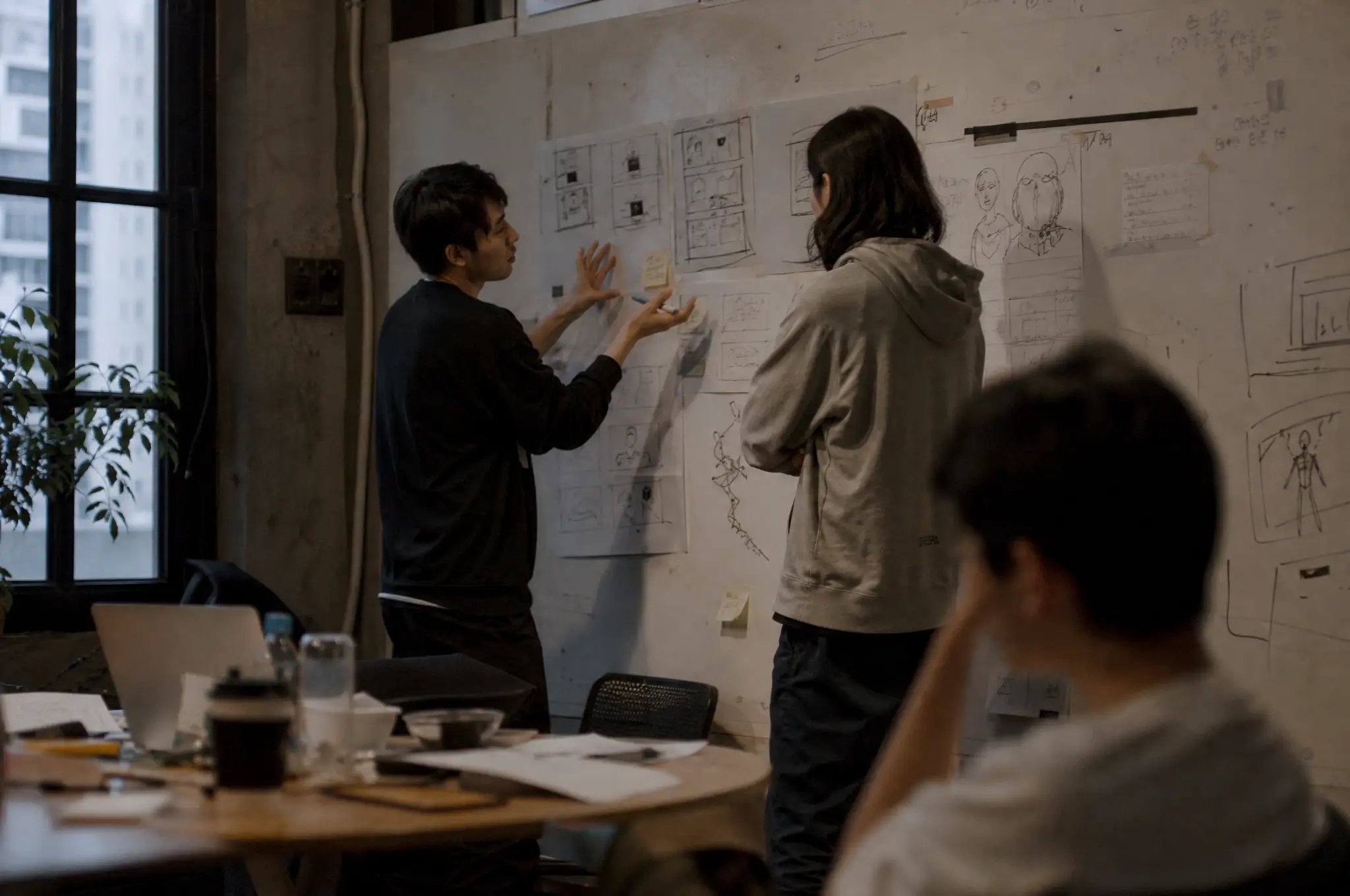
Why a sprint
One question drives the week: how fast can we put this idea in front of the market? The sprint strips out the procrastination and ego that stretch normal agency projects, ours included.
The sprint's pace builds QA into every step. You test before you build, which cuts cost and screens out the features your users would never touch.
The sprint week
The documented sequence runs Monday to Thursday: understand the challenge, choose a direction, build the prototype, then test it with five real users and turn what they said into next steps.
Monday
Define the challenge, set the goal, and identify where a solution could work. The team leaves day one focused on a single problem worth solving.
One challenge and one measurable goal
Tuesday
Collect ideas, vote, and keep the strongest. Sketch storyboards and outline the prototype so the concept exists on paper before anyone opens a design tool.
A voted storyboard and prototype plan
Wednesday
Build the prototype and turn the sketches into something people can click. Refining here reduces risk before any real development starts.
One realistic prototype ready to test
Thursday
Put the prototype in front of five users and watch closely. We analyze the sessions and define next steps, so development starts in the right direction.
Five user sessions of direct feedback
User evidence returns to the next product decision
You leave with a prototype, direct feedback, and a team aligned on what to build next.
FRIDAY RECEIPT
Five days is the working format, not a promise that every product question will be solved. The sprint is successful when the team can show what it tested, what people did, and why the next investment changed.
GOOD FIT
One important uncertainty, access to decision-makers, and users who can test a realistic scenario.
NOT A SHORTCUT
A sprint does not replace foundational research, production engineering, compliance review, or a backlog with no product decision behind it.
Monday
One decision, the people affected, the current evidence, and the constraint that makes it worth testing.
Tuesday
Competing approaches stay visible; the team records why one direction earns the prototype.
Wednesday
Only the interactions needed to answer the sprint question are built at realistic fidelity.
Thursday
The team watches the same behavior and records patterns instead of debating second-hand summaries.
Friday
Proceed, revise, or stop, with findings, unresolved risks, and the next owner written down.
What founders and product teams usually ask before booking a sprint.
We are pretty good at improving the user experience of a product. Tell us what you are working on and we will reply within one business day.
Schedule your discovery call