Compare
Which approach fits our situation?
Product facts, constraints, alternatives, and a canonical owner.

GEO · AI search operations
Tenten turns buyer questions, first-party evidence, entity relationships, and editorial ownership into a maintained source system. The work improves what AI systems can find and understand without pretending anyone controls what they cite.
Working artifact
Compare
Product facts, constraints, alternatives, and a canonical owner.
Verify
Named cases, first-party documents, dates, and review status.
Act
A clear decision path, responsibilities, and a real destination.
Priority requires a useful buyer decision, an accountable source, and a human reviewer.
Point of view
More pages do not fix contradictory facts, unclear entities, weak evidence, or missing ownership. We first decide which questions matter, what the organization can support, where each answer belongs, and who can approve it.
Rule 01
A claim enters a draft only when its source, date, and owner are visible.
Rule 02
Names, relationships, and canonical pages stay consistent across the site and distribution channels.
Rule 03
AI answers are recorded as dated observations. They are not treated as a permanent rank or a causal result.
Rule 04
A named editor and subject owner review facts, framing, and destinations before anything goes live.
The operating system
Each stage leaves a reviewable artifact. Human approval sits inside the workflow, while citation checks remain dated observations that guide the next decision.
01
Decision
Which buyer questions matter enough to earn a maintained answer?
Artifact: Intent, market, decision stage, source gap, and priority.
Human gate
The client owner confirms business relevance.
02
Decision
Which claims can the organization support today?
Artifact: Source URL or document, date checked, claim status, and evidence owner.
Human gate
A subject-matter owner confirms the facts and permitted use.
03
Decision
Where should each answer live, and how should entities connect?
Artifact: Canonical pages, entity relationships, question clusters, internal links, and structured-data opportunities.
Human gate
Brand and web owners approve names, relationships, and destinations.
04
Decision
What is the clearest complete answer the evidence supports?
Artifact: A source-linked brief and draft with unresolved points left visible.
Human gate
The editor and subject owner approve the language.
05
Decision
Which owned destinations deserve this answer, and in what form?
Artifact: A live-page checklist plus approved web, newsletter, social, or video packages.
Human gate
The page owner signs off the live URL and each reuse context.
06
Decision
What did selected AI surfaces answer and cite at this point in time?
Artifact: Platform, prompt, date, answer summary, cited sources, and visible gaps.
Human gate
The analyst labels the record as observation, not ranking proof.
07
Decision
What should stay, change, be investigated, or be retired next?
Artifact: Change history, evidence behind the decision, owner, and next review point.
Human gate
Tenten and the client approve the next action before the cycle repeats.
Reviewable artifacts
These are operating records, not presentation furniture. They show why a topic was chosen, which evidence supports it, who approved it, what was published, and what the team learned.
Artifact
What must be visible
Owner
Artifact
Required fields
Buyer question, intent, market, decision stage, source gap, and priority rationale.
Owner
Growth or marketing owner
Artifact
Required fields
Claim, first-party or named source, date checked, confidence, usage note, and subject owner.
Owner
Subject-matter owner
Artifact
Required fields
Canonical entity names, relationships, destination pages, question clusters, and internal links.
Owner
Brand and web owners
Artifact
Required fields
Approved draft, reviewer, live URL, release date, distribution variants, and change note.
Owner
Editor and page owner
Artifact
Required fields
Dated prompt, platform, answer summary, cited URLs, absent sources, and limitations.
Owner
GEO analyst
Artifact
Required fields
Observed change, plausible explanation, evidence, decision, next action, and review owner.
Owner
Client and Tenten leads
Editorial and distribution experience
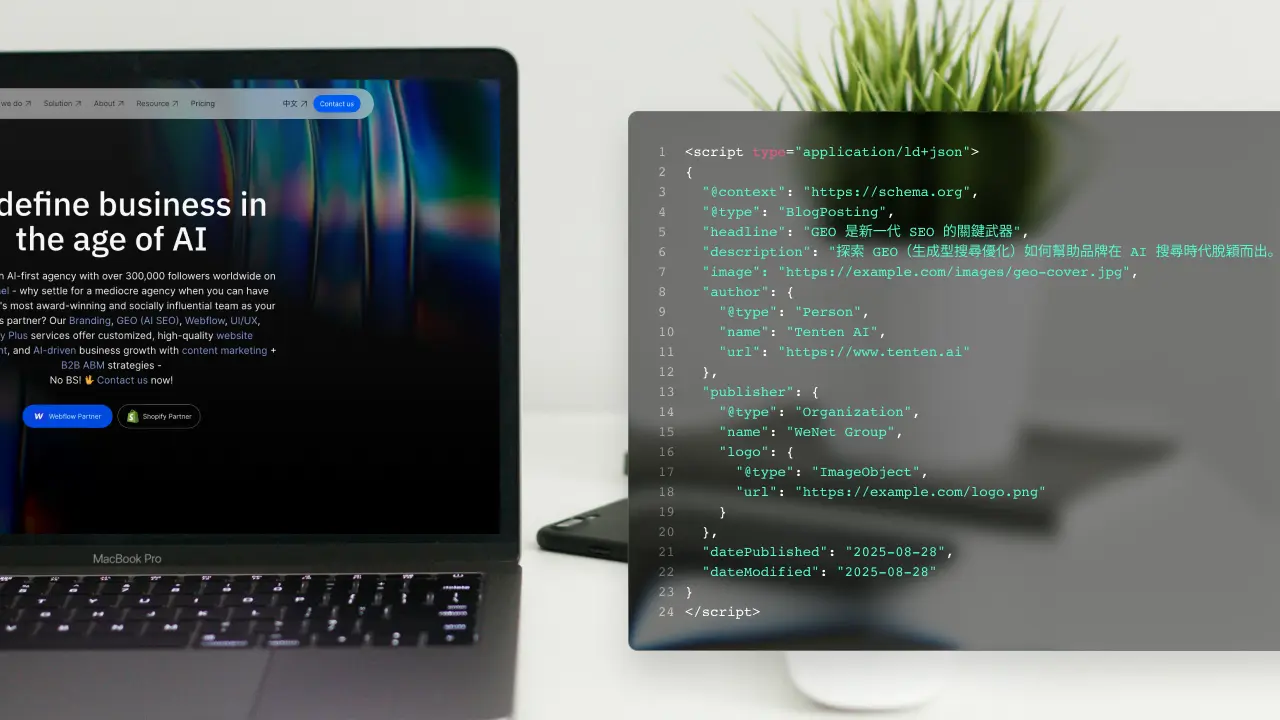
Tenten operates its own AI-focused editorial channels. We use that experience to shape questions, review evidence, adapt approved material for different formats, and keep distribution tied to the same source record. It is editorial experience, not a shortcut to an AI outcome.
01
Operating owned AI media gives our team direct experience choosing useful questions, editing source-backed answers, and maintaining a coherent point of view.
02
One approved source can become a web page, newsletter, social post, or video only when its evidence and context still hold in the new format.
03
Channel response and citation observations feed the learning log. Neither is presented as proof that one publication caused a business result.
Named case evidence
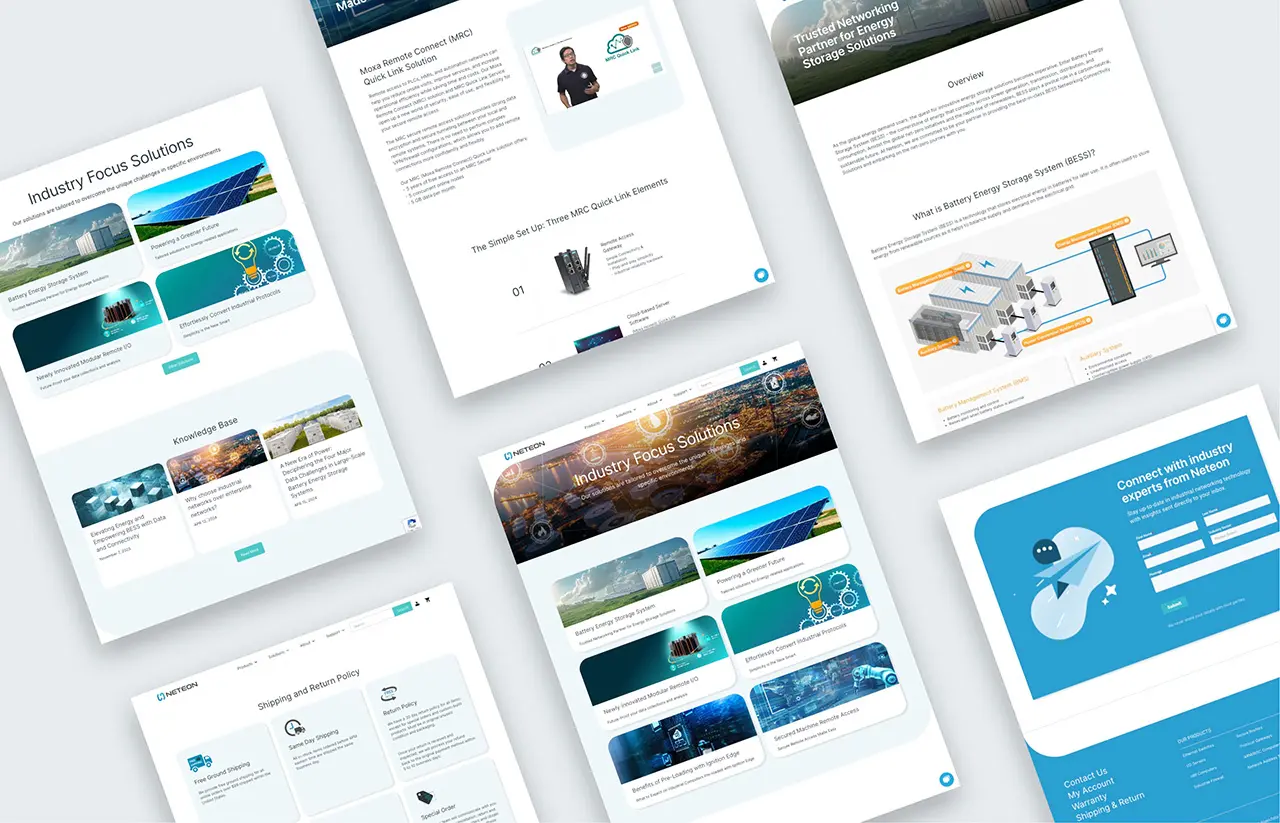
For Neteon, Tenten applied AI across the website experience, SEO, customer management, and content automation. The source case reports an 86%+ SEO ranking gain after the revamp. That is Neteon's named result, not a forecast or minimum for another brand.
Fit and trade-offs
Good fit
Your team has real expertise and is ready to make its evidence, decisions, and approvals maintainable.
Product pages, PDFs, sales decks, and specialist knowledge do not yet form one maintained source system.
Marketing, product, legal, or subject experts can approve facts and explain where uncertainty remains.
The goal is to improve source quality and decision usefulness across the site and owned channels, then learn from observation.
Trade-offs
The system favors source quality, explicit ownership, and careful observation over volume or certainty theatre.
Output follows the query landscape and available evidence. A quota can create pages that add no useful answer.
No agency controls whether an AI system cites or orders a source. We improve the source system and document what selected surfaces show.
The client supplies source access and named reviewers. Tenten keeps the evidence, drafts, publication records, and learning log moving.
Next step
A discovery call starts with the buyer decision, the evidence you already trust, and the people who can own approval. That is enough to see whether a GEO operating system fits.
Schedule your discovery callUseful inputs for the call