Why UGC Converts Better Than Brand Ads
Most Shopify brands spend $10K-$50K on professional product photography. Then they run those polished images as ads. Customers scroll past immediately.
User-generated content performs differently. A 30-year-old creator holding your product in her kitchen converts better than a $5K photoshoot. Why? Because it looks real. Audiences trust peer recommendations more than brand messaging.
The data backs this up. UGC ads achieve 3.5x higher conversion rates than branded ads, according to Statista's 2025 e-commerce advertising benchmark. Click-through rates run 2-4x higher. Cost per acquisition drops 40-60% compared to professional creative. That's not marginal improvement. That's a completely different lever.
The insight most brands miss: UGC isn't cheaper because it's worse. It performs better because it looks less polished. Authenticity is the product. Scale it correctly and you outcompete brands with 10x your ad budget.
The UGC Ecosystem: Platforms, Pricing, and Quality Tiers
UGC creators fall into three tiers. Understanding the difference saves you months of wasted testing.
| Tier | Typical Cost | Turnaround | Quality | Best For | Examples |
|---|---|---|---|---|---|
| Platforms (Batch) | $300-$800/batch | 5-7 days | 6-8 videos | Testing new products fast | Insense, Billo, Klear |
| Freelance Creators | $200-$500/video | 3-10 days | Variable | Scaling winners, niche audiences | TikTok, Instagram DMs |
| Agencies/Studios | $1K-$3K/video | 2-4 weeks | 9-10/10 | Brand consistency, high volume | Dedicated UGC agencies |
Platforms like Insense and Billo let you batch-order 6-10 videos for $300-$800. You upload a brief, creators submit options, you pick winners. Turnaround is 5-7 days. Downside: creators don't know your product intimately. Upside: fast iteration and lower risk per test.
Freelance creators cost $200-$500 per video but require direct management. You find them on TikTok, DM creators with your ideal aesthetic, negotiate rates. Turnaround depends on their workload. The win here: creators who genuinely love your product category shoot better UGC. A fitness supplement brand creator who uses protein powder daily makes more convincing ads than someone who's never heard of it.
Agencies charge $1K-$3K per video but handle everything: casting, scripting, shooting, editing, compliance review. Use agencies when you're scaling from $50K→$500K in monthly ad spend and need consistent quality across 50+ video variations. Smaller budgets make this overkill.
Sourcing Creators: Where Real UGC Happens
Most brands source UGC creators wrong. They post on Upwork. They get mediocre work. They conclude UGC "doesn't work for us."
The real game: source niche creators who already use products like yours.
Strategy 1: Reverse-Engineer Your Audience
Search TikTok, Instagram, and YouTube for creators in your niche. A supplement brand? Search "fitness transformation," "gym routine," "protein review." A skincare brand? Search "acne journey," "skincare routine," "dermatologist reaction." Don't search "looking for UGC creators." That attracts generalists.
Look for creators with: - 10K-500K followers (sweet spot for quality + responsiveness) - High engagement on relevant content (5%+ comment rate) - Product reviews or authentic usage of competitor products - Clear aesthetic alignment with your brand
Strategy 2: Reach Out Via DM
Send a professional DM with three things: 1. The offer: "We want to sponsor your content with $[X]" 2. The product: Samples shipped to them (2-3 weeks before filming) 3. Creative freedom: "Create a video naturally—no script, just your honest take"
Most creators respond. Their rate? Typically $250-$500 per 15-30 second video. Negotiate for multi-video deals: $1K for 4 videos saves 20% per unit and smooths their workflow.
Strategy 3: Use Creator Platforms for Guaranteed Supply
Platforms like Billo, Insense, Klear, and Trend connect you with vetted creators. Cost: $50-$150 per creator application fee, plus $200-$500 per final video you choose to license. Advantage: They handle vetting, contract paperwork, and payment. You submit a brief, creators submit 6-10 options, you pick your winners. No negotiation, no DM chasing.
Use platforms for fast validation on new products. Use direct outreach for scaling winners.
Writing a Winning UGC Brief: The Mechanical Rules
A bad brief produces bad UGC. Creators need clarity on four things: product benefits, target persona, filming style, and compliance boundaries.
Element 1: The Product Angle Don't say: "Create a video about our protein powder." Say: "Our protein mixes in cold water in 5 seconds without a shaker. Show the quick mixing, taste it, compare to your usual routine (showing it's faster)."
Identify one specific benefit or unique moment. That becomes the UGC hook.
Element 2: Your Target Customer Define the person: "35-55 year old female, fitness enthusiast, busy professional, wants quick meal solutions." Include pain point: "She's tired of the chalky taste and weird texture of most proteins."
Creators shoot better when they know who they're talking to. They naturally adjust authenticity, tone, and pacing.
Element 3: Aesthetic & Filming Style Specify format: "15-second vertical video, shot on phone, natural lighting, casual home setting." If you need multiple angles: "Close-up of the jar, then POV of you drinking it, then your reaction."
Avoid jargon. Use reference videos. Say: "Style it like this TikTok [link]" or "Tone similar to this YouTube creator [link]."
Element 4: Compliance & Boundaries State clearly: "No medical claims (e.g., don't say 'cures' or 'heals'). Don't mention competitors by name. This is a sponsored post, so include #ad or #sponsored."
Inexperienced creators miss compliance. Experienced ones expect it. Being explicit saves rounds of revisions.
Template Brief (adapt for your product):
Product: [Name & Link]
Benefit Focus: [One specific benefit]
Target Person: [Age, lifestyle, pain point]
Format: [Duration, orientation, setting]
Style Reference: [Video link or description]
Compliance Notes: [Claims to avoid, disclosures required]
Deadline: [Date you need final video]
Testing & Scaling: The Numbers Behind Profitable UGC
Not all UGC converts equally. You'll generate 10 videos, maybe 3 become winners (ROAS > 2:1), and the rest underperform. That's normal.
Here's the playbook to move from testing to scaling:
Phase 1: Validation (Weeks 1-4)
Order 6-10 UGC videos from a platform or 3-4 creators. Cost: $1.5K-$3K total. Run each video as its own ad set with $5/day budget for 3-5 days. Track cost per acquisition (CPA), return on ad spend (ROAS), and video view retention.
Benchmark: ROAS above 2:1 is a winner. Below 1.5:1 is a test failure. 1.5-2.0:1 is marginal (test with more budget to be sure).
Phase 2: Validation to Winner (Weeks 5-8)
Increase budget on 2-3 top performers to $15-$25/day each. Run for 2-3 weeks. Confirm the ROAS holds. If it does, you've found a repeatable ad.
Phase 3: Scale Profitably (Weeks 9+)
Once you have a 2.5x+ ROAS video, order 5-8 more variations on the same product. Increase spend to $50-$100/day per video. Budget on variation, not repetition. Audiences get bored fast.
Cost math: If a video costs $300 to produce and generates $1.5K in revenue at 2.5x ROAS, your production cost is 20% of gross profit. Scale that across 20 videos in heavy rotation, refresh every 2-4 weeks, and you've built a machine.
Scaling Beyond One Product: Portfolio Strategy
Most Shopify brands have 5-50 products. Scaling UGC requires a portfolio system.
Tier your products by potential:
| Tier | Margin | Monthly Volume | UGC Videos Needed |
|---|---|---|---|
| Hero Products (20% of SKUs) | 40-60% | 100+ units/mo | 12-15 video variations |
| Consistent Sellers (50%) | 25-40% | 20-100 units/mo | 4-6 video variations |
| Long Tail (30%) | 15-25% | <20 units/mo | Test only (2-3 videos) |
Hero Products are your cash cows. They're typically your bestsellers or highest-margin items. Invest heavily. Produce 12-15 different UGC variations, split across 4-5 different creators. Rotate them weekly. Spend $50-$150/day per product.
Consistent Sellers maintain steady revenue. Invest moderately. 4-6 videos in rotation, refreshed monthly. Spend $10-$30/day.
Long Tail items are lower-volume SKUs. Test with 2-3 UGC videos at $5/day. If ROAS > 2:1, graduate to consistent seller tier. If not, pause and reallocate budget.
This structure prevents you from spreading UGC budget too thin. It also surfaces your hidden heroes—products with 30% attach rate and zero ad spend, sitting dormant until you find the right UGC angle.
The Compliance Minefield: Avoiding FTC & Platform Issues
UGC creators often skip disclosures. Platforms (Meta, TikTok) crack down hard. FTC fines range from $5K to $40K+ for undisclosed sponsorships.
Mandatory Compliance Rules:
- Disclosures: Require #ad or #sponsored in captions and as a spoken/on-screen callout in the first 3 seconds.
- No Medical Claims: Phrases like "cures," "treats," "prevents," or "proven to heal" are FTC violations. Your brief must explicitly ban these.
- No Comparative Claims: Creators can't say "better than [competitor]." They can say "I prefer this to what I used before."
- Platform Policies: Meta/TikTok have their own UGC rules. Know them. Brief creators accordingly.
For supplements, skincare, and health-related products, this matters most. Fashion and consumer goods have more leeway, but the rules apply industry-wide.
Pro Tip: Include a compliance checklist in every brief. Creators expect it and respect the clarity.
Common UGC Pitfalls: What Works, What Doesn't
What Doesn't Work: - Over-scripting. When creators read a script word-for-word, they sound robotic. - Perfect production. Overly polished UGC underperforms. Audiences trust the imperfect. - Generic benefits. "It's amazing and life-changing" doesn't convert. Specific moments do. - One creator, one product. Audiences recognize repetition and tune out.
What Works: - Authentic reaction. Creator uses the product, responds naturally, shows genuine moment. - Specific before/after. "My hands were dry. I used this. Now they're not." Clear cause-effect. - Problem-solution framing. "I hated [pain point]. This solved it in [timeframe]." - Multi-angle shooting. Show the product, the use, the result. 3 shots hit harder than 1.
Watch your top-performing UGC videos. Note the patterns. They usually have 2-3 of these elements.
Tools & Platforms for UGC Management
Once you're running 10+ UGC campaigns, management gets complex. You're tracking creator payments, video approvals, compliance, platform integrations, and performance metrics.
Creator Platforms: - Billo ($50-$150/application, $200-$500/video): Fast, vetted creators, multi-video batches - Insense (Project-based, typically $3K-$10K): Large platform, scalable, good for agencies - Klear (Influencer marketplace): Also handles UGC, useful if you're running influencer + UGC mix
Asset Management: - Frame.io: Store, organize, and review UGC videos with comments and approvals - Airtable or Notion: Track creator info, video submissions, performance, compliance notes
Ad Hoc Tracking: - Google Sheets + Looker Studio: Simple dashboard to track cost per video, ROAS by video, creator name, and performance tier
Connecting UGC to Shopify
UGC videos are final assets. Integrate them into Shopify using these tactics:
- Product Pages: Upload top-performing UGC videos directly to product pages. Shoppable video players like Zoomix or Cloudinary let customers click to cart from the video.
- Email Campaigns: Feature UGC in post-purchase and abandoned cart emails. Real customers drive conversions.
- Blog & Case Studies: Embed UGC in long-form content. It breaks up text and adds proof.
- Retargeting Creatives: Use UGC as remarketing ad sets to audiences who visited product pages but didn't buy.
The ROI compounds. One UGC video might drive $1.5K in ad revenue, then another $500 in organic discovery through email and product pages.
FAQ
Q: How long does it take to get results with UGC? A: Expect 4-6 weeks from first brief to validated winner. Weeks 1-2: creator sourcing and product sampling. Week 3: brief development. Weeks 4-5: filming and delivery. Weeks 6-7: testing and ROAS confirmation.
Q: What's the typical cost to start a UGC program? A: $2K-$5K to validate: 6-10 videos ($1.5K-$3K production) + $500-$2K testing budget. Once you have a winner, scale to $5K-$20K/month in production + ad spend.
Q: Do I need a UGC contract with creators? A: Yes. Use a simple work-for-hire agreement. Platforms like Insense and Billo handle this. For direct creator outreach, a one-page contract clarifies usage rights, payment terms, and content ownership.
Q: Should I use the same creator for multiple products? A: Only if they fit multiple niches. A fitness influencer works across supplements, activewear, and fitness equipment. But forcing a beauty creator into a tech product looks inauthentic.
Q: How often should I refresh UGC videos? A: Every 4-8 weeks. Audiences fatigue on creative. Produce new video variations while keeping top performers in light rotation.
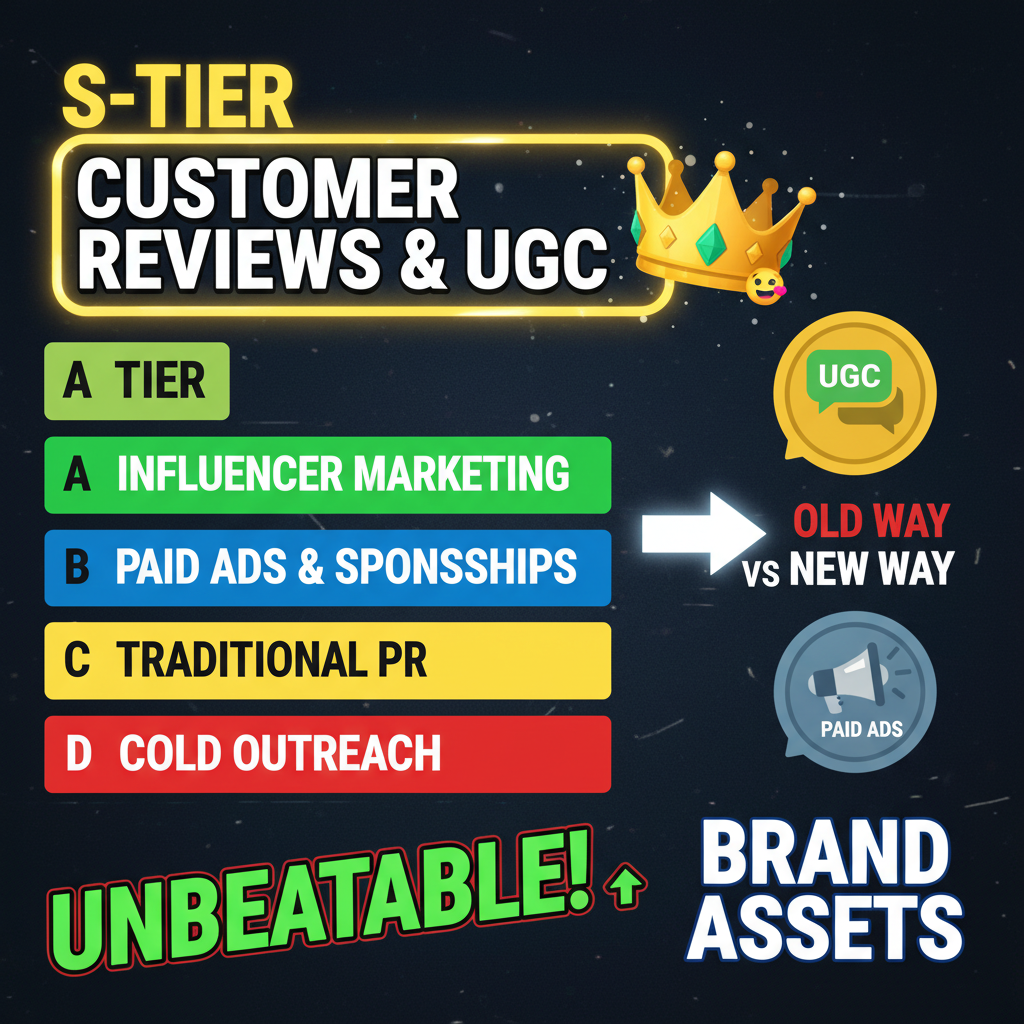
Q: What's the difference between UGC and influencer marketing? A: UGC: You own the final video asset. Creator gets paid once. You reuse it indefinitely. Influencer marketing: Creator posts to their own audience. You pay for reach/engagement, not ownership. UGC scales easier and costs less long-term.
Q: Can I use the same video across different ad platforms? A: Yes. A winning TikTok video works on Instagram Reels, Facebook, and YouTube Shorts. Adjust dimensions and add captions for each platform.
Frequently Asked Questions
Why is UGC more effective than brand ads?
Audiences trust peer recommendations over brand messaging. UGC looks authentic and less sales-y, which lowers scroll-past rates and improves conversion. Data shows 3.5x higher conversion rates compared to polished brand creative.
How much should I budget for UGC testing?
Start with $2K-$5K total: $1.5K-$3K for 6-10 UGC videos, $500-$2K for initial ad testing. Once you find a winner, scale production and ad spend proportionally.
Where do I find UGC creators?
Three channels: (1) Direct outreach via TikTok/Instagram DMs to niche creators; (2) Freelance platforms like Billo and Insense; (3) UGC agencies for large-scale production. Direct outreach is cheapest; platforms are fastest.
What makes a UGC brief effective?
Clarity on four things: (1) Specific product benefit, (2) Target customer persona, (3) Filming style and format, (4) Compliance boundaries. Avoid over-scripting. Give creators room for authenticity.
How do I measure if a UGC video is performing?
Track ROAS (return on ad spend), CPA (cost per acquisition), and video retention rate. ROAS above 2:1 is a winner. Below 1.5:1 is a test failure. 1.5-2.0:1 needs more budget to confirm.
Can I use UGC across multiple platforms?
Yes. A winning vertical video works on TikTok, Instagram Reels, and Facebook. Adjust dimensions, add captions, and adjust audio. Performance may vary by platform.
How often should I refresh my UGC video rotation?
Every 4-8 weeks. Audiences fatigue on creative. Produce new variations while keeping top performers in light rotation. A portfolio of 15-20 videos in rotation prevents burnout.
EDITORIAL NOTE: UGC flips the traditional playbook on ad production. Instead of perfecting the message, you're amplifying authenticity. The Tenten team has seen Shopify brands drop UGC production costs by 60% while doubling ROAS—simply by recognizing that the customer's voice outsells the brand voice every time.
Authority Citations
- Statista (2025): "User-Generated Content vs. Brand-Created Content in E-Commerce Advertising." https://www.statista.com — Benchmark data on conversion rates and CTR improvement.
- Meta (Facebook & Instagram): "Community Standards and Branded Content Policies." https://www.facebook.com/policies — Guidance on disclosure requirements and sponsored content rules.
- FTC (Federal Trade Commission) (2023): "Endorsements & Testimonials Guide." https://www.ftc.gov/endorsements-testimonials — Legal framework for creator disclosures and compliance.
- TikTok Creator Fund & Branded Content: https://www.tiktok.com/creators — Platform policies on UGC and sponsored content disclosure requirements.
- eMarketer (2025): "The ROI of User-Generated Content in Paid Social Advertising." https://www.emarketer.com — Metrics on cost per acquisition and ROAS improvement through UGC vs. traditional creative.