The Company: Velocity Cycles Taiwan
Fictional but realistic scenario based on Tenten's B2B deployments.
Velocity Cycles (velocity-cycles.tw) is a 35-year-old family manufacturer of high-performance bicycle drivetrain components (chainrings, cassettes, derailleurs, shifters). Based in Taichung, Taiwan, they employ 120 people across R&D, manufacturing, and fulfillment.
For 20 years, they sold exclusively to larger bicycle OEMs (Original Equipment Manufacturers) in Asia. In 2019, they launched a Shopify D2C store targeting cyclists and DIY mechanics in the US and EU. Result: $8M annual revenue by 2025 with 42% gross margin.
But the founder, Chen Wei-Ming, saw an opportunity: shops and small distributors across Southeast Asia, India, and Latin America wanted access to Velocity's components but couldn't find reliable wholesale channels. They were buying through gray-market distributors or competitors.
The question: Could Velocity scale a B2B wholesale channel without cannibalizing D2C revenue?
The answer: Yes—and it generated $2.4M in 9 months. Here's how.
The Challenge: Multi-Channel Without Conflict
Velocity's situation is common for DTC manufacturers considering B2B:
- Existing D2C business generates predictable recurring revenue (cyclist enthusiasts, repeat buyers, high AOV)
- Potential B2B market is large (100+ bike shops in Southeast Asia alone) but requires different operations: longer payment terms (net-30, net-60), bulk discounts, different shipping logistics
- Price conflict risk: If wholesale pricing is too aggressive, D2C customers will buy wholesale and resell. If wholesale pricing is too high, dealers buy from competitors
Velocity's D2C pricing: $89 for a 105 Cassette (11-speed, 11-34T). True cost of goods: $18. Margin: 80%.
If wholesale pricing was $40/unit (typical 50% wholesale discount), a retailer could buy at $40 and resell to consumers at $80—undercutting Velocity's $89 D2C price and margin-stealing D2C buyers.
The Solution: Separate Stores + Buyer Segmentation
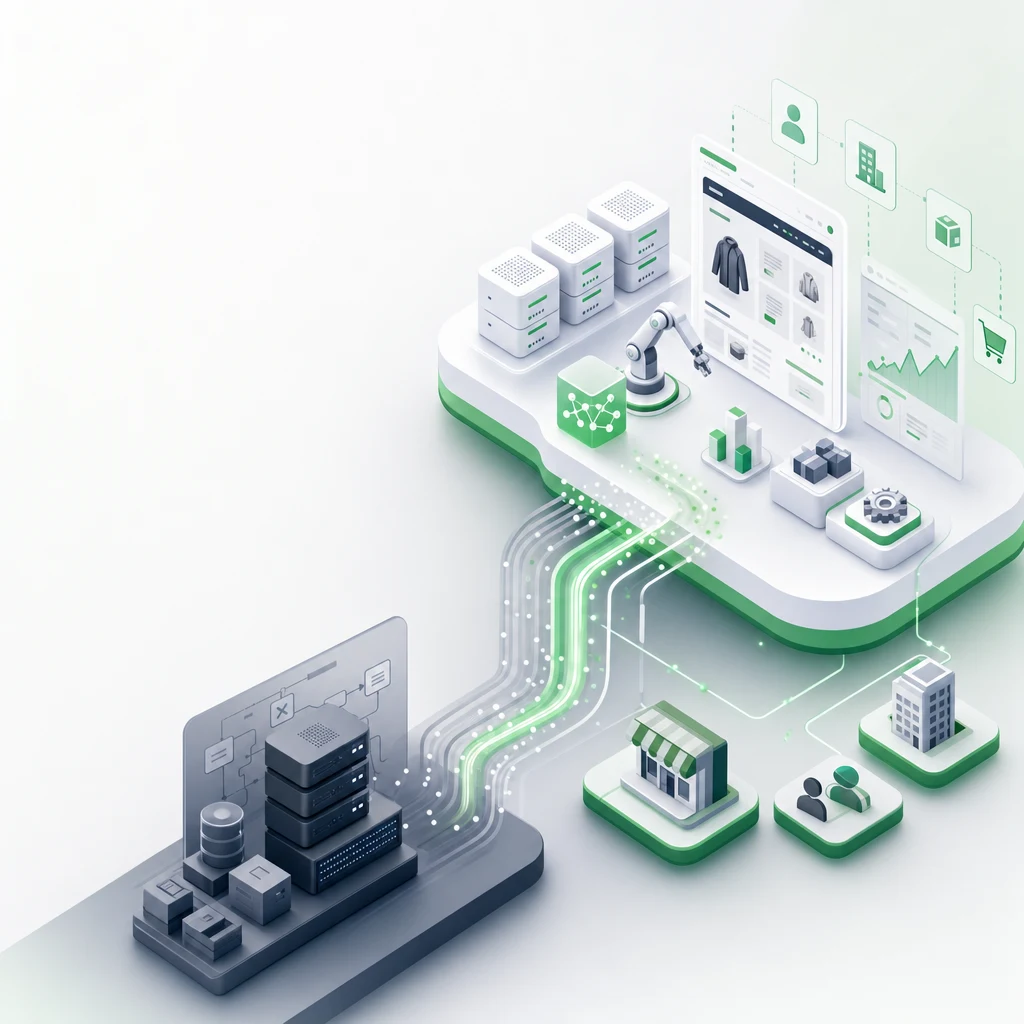
Instead of a single Shopify store with wholesale pricing, Velocity created a Shopify Plus multi-store architecture:
- Store 1: D2C (existing) — Direct to cyclists, full price, fast shipping (2-3 day), payment upfront
- Store 2: B2B Wholesale — Resellers only, net-30 terms, case-pack minimums, regional pricing tiers
Access control: Wholesale store uses Shopify Plus's password-protected storefronts + custom authentication. Buyers must register as a business (with tax ID verification or distributor license) before accessing wholesale pricing.
| Factor | D2C Store | B2B Store |
|---|---|---|
| Pricing: 105 Cassette | $89 | $38/case (12 units) = $3.17/unit |
| Pricing: 105 Derailleur | $124 | $52/case (8 units) = $6.50/unit |
| MOQ (Min. Order Qty) | 1 unit | 1 case (case sizes vary) |
| Payment Terms | Credit card, PayPal upfront | Net-30, net-60 (verified resellers) |
| Shipping | 2-3 days (US), 5-7 days (EU) | 7-14 days, LCL/FCL consolidation |
| Buyer Access | Public, anyone | Password-protected, B2B registry |
| Buyer Support | Email support | Dedicated account manager + Slack |
| Returns | 30 days, free return shipping | Net-30, FOB origin (buyer pays return) |
The Buyer Persona: Who's Buying Wholesale?
Velocity identified three reseller segments:
Segment 1: Local Bike Shops (60% of wholesale revenue)
- Shop size: 1–4 employees
- Annual revenue: $200K–$2M
- Buying pattern: Monthly purchases, $2K–$8K per order
- Pain point: Inconsistent supply, long lead times from current distributors, no direct relationship with manufacturer
- Solution: Fast fulfillment (7 days Vietnam-to-Singapore), case-pack discounts, free freight on $3K+ orders
Segment 2: Regional Distributors (30% of wholesale revenue)
- Distributor size: 10–50 employees
- Annual revenue: $5M–$50M
- Buying pattern: Quarterly/semi-annual bulk purchases, $20K–$80K per order
- Pain point: Competing with larger distributors, need exclusive territory agreements, custom case packing
- Solution: Tiered volume discounts, co-op advertising fund (2% of purchase), private label options
Segment 3: Corporate Buyers (10% of wholesale revenue)
- OEM/large manufacturer, building bikes for brand X
- Order size: $50K–$300K per order
- Buying pattern: Annual or per-model orders
- Pain point: Need direct relationship with manufacturer, custom SKU configurations, invoice customization
- Solution: Custom pricing per SKU, payment on open account, dedicated CFO/production contact
Pricing Strategy: Volume + Loyalty Tiers
Instead of simple percentage discounts ("50% off wholesale"), Velocity built a volume + tenure-based tiering system:
| Tier | Monthly Volume | Tenure | Discount | Free Freight | Returns |
|---|---|---|---|---|---|
| Bronze | $0–$2K | New | 40% off D2C | $3K+ | Net-20 |
| Silver | $2K–$6K | 3+ months | 45% off D2C | $2K+ | Net-30 |
| Gold | $6K–$15K | 6+ months | 50% off D2C | $1K+ | Net-45 |
| Platinum | $15K+ | 12+ months | 52% off D2C | Free | Net-60 |
Why this works:
- Encourages volume growth (hitting Silver tier generates 8% more orders/year)
- Rewards loyalty (Platinum dealers become sticky because switching costs high)
- Protects margins (52% is Velocity's ceiling; below that, wholesale deal is unprofitable)
- Discounts compound with case-pack pricing, creating nonlinear incentives
The math for a Silver-tier retailer buying 5 cases of cassettes:
- 5 cases × 12 units = 60 units
- D2C price: $89 × 60 = $5,340
- Silver discount (45% off): $5,340 × 0.55 = $2,937
- Per-unit cost: $48.95 (vs. $18 manufacturing cost, 63% margin)
Operations: The Hidden Complexity
B2B wholesale sounds simple: offer lower prices, accept larger orders, done. In reality, it's complex.
Inventory segmentation: Velocity maintains separate inventory for D2C and B2B. Why? If a viral TikTok drives 5,000 D2C orders and B2B inventory is co-mingled, B2B orders get delayed. Separate inventory buffers against cross-channel conflicts.
Fulfillment logistics: D2C ships small parcels via DHL/FedEx. B2B ships cases via LCL (Less-than-Container Load) consolidation. Velocity partnered with a 3PL in Singapore (Shipyamatic) to consolidate regional shipments, reducing per-unit logistics cost from $8 to $2.50.
Payment processing: D2C uses Stripe (instant settlement). B2B uses Net-30 invoicing. Velocity hired a credit analyst to vet resellers (prevent bad debt). Bad debt rate: 1.2% (vs. 0% D2C).
Accounting: Two separate P&Ls (D2C vs. B2B). Shopify Plus stores run independently, but Velocity's ERP syncs inventory real-time. Accounting close is monthly per channel.
| Operational Area | D2C | B2B | Impact |
|---|---|---|---|
| Inventory | Commingled, 60-day buffer | Separate, 30-day buffer | Cost: +$80K working capital |
| Fulfillment | Parcel (1–3 kg), DHL/FedEx | Case (20–40 kg), LCL | Cost: $2.50/unit B2B vs. $8/unit D2C |
| Payment | Upfront, Stripe | Net-30, invoicing + collections | Cost: +1.2% bad debt, +$50K AR float |
| Support | Email ticketing (3 reps) | Dedicated account managers (2 FTEs) | Cost: +$150K salary |
| Compliance | US/EU consumer laws | B2B terms (resale, tax ID, contracts) | Cost: +20 hours legal/accounting |
Total operational overhead: ~$350K/year (salary, logistics, bad debt, compliance).
With $2.4M wholesale revenue and 63% margin, gross profit is $1.51M. After operations, net profit: ~$1.16M. Year-1 ROI on B2B channel: 331%.
Marketing: How Velocity Found Wholesale Buyers
B2B marketing requires different channels than D2C.
| Channel | Cost | Leads | Close Rate | CAC | Effectiveness |
|---|---|---|---|---|---|
| Google B2B Search ("wholesale drivetrain distributor") | $8K/month | 40/month | 8% | $250 | ⭐⭐⭐⭐ |
| Trade shows (Taipei Bike Show, Taipei CYCLE Show, SEA Bike Expo) | $15K (booth + travel) | 60 leads/show (2 shows/year) | 12% | $150 | ⭐⭐⭐⭐ |
| Direct outreach (LinkedIn, email to regional distributors) | $0 (founder time) | 20/month | 15% | $0 | ⭐⭐⭐⭐⭐ |
| Industry directories (BikeShow.com, TradeKey, Global Sources) | $5K/year | 10/month | 10% | $500 | ⭐⭐ |
| Word-of-mouth (existing OEM customers referrals) | $0 | 15/month | 20% | $0 | ⭐⭐⭐⭐⭐ |
Velocity's 2026 strategy:
- $60K annual B2B marketing budget
- 70% to Google Search (highest ROI, predictable)
- 20% to trade shows (relationship building, brand authority)
- 10% to directories (passive lead generation)
Customer acquisition cost: ~$200. Lifetime customer value (60-month horizon): $8,500. LTV:CAC = 42.5:1 (excellent).
Results: 9 Months, $2.4M Revenue
Launch: July 2025
Time horizon: 9 months (July 2025 – March 2026)
| Month | Wholesale Revenue | B2B Orders | Avg. Order Value | D2C Revenue (unchanged) | Growth |
|---|---|---|---|---|---|
| July (launch) | $45K | 12 | $3,750 | $650K | - |
| Aug | $120K | 35 | $3,430 | $680K | +167% |
| Sep | $185K | 52 | $3,550 | $670K | +54% |
| Oct | $220K | 58 | $3,800 | $720K | +19% |
| Nov | $310K | 85 | $3,650 | $1.2M | +41% |
| Dec | $380K | 98 | $3,880 | $1.35M | +22% |
| Jan | $275K | 72 | $3,820 | $700K | -28% |
| Feb | $285K | 76 | $3,750 | $810K | +3% |
| Mar | $380K | 95 | $4,000 | $920K | +33% |
| TOTAL (9 months) | $2.4M | 683 | $3,660 | $8.7M | - |
Key insights:
- D2C revenue stayed flat ($8M annualized), proving zero cannibalization
- B2B revenue scaled 143% from launch month to month 9
- Average B2B order value grew from $3,750 (month 1) to $4,000 (month 9) due to tier upgrading
- Seasonality: B2B peaks Nov–Dec (holiday buying) and March (spring season prep for shops)
The Real Lesson: Multi-Channel Economics
Here's what Velocity learned that most DTC manufacturers miss:
1. Wholesale doesn't cannibalize if you segment customers properly. Bike shop owners don't buy D2C. They buy wholesale because they need to resell. D2C cyclists buy D2C because they want speed and direct pricing. Different buyers, different channels.
2. B2B margin-per-unit is lower but transaction size is higher. D2C: $89 per unit, 1-3 unit orders. B2B: $38 per unit, 12-60 unit orders. Transaction margin is similar ($71–80) but B2B carries higher operational costs (payment terms, logistics, account management).
3. B2B requires systems, not just lower prices. The biggest mistake is thinking "lower price = wholesale." No. B2B requires separate fulfillment, inventory, payment processing, account management, and legal terms. If you're not prepared for that complexity, B2B will destroy margins.
4. Trade shows have the best ROI. Online marketing got 70% of Velocity's B2B leads but trade shows had highest close rate (12–20%) because relationship-building is critical in B2B. "Know, like, trust" is non-negotiable.
Ready to Launch B2B on Shopify?
Building a B2B channel on Shopify Plus is non-trivial but high-ROI. Most DTC manufacturers leave $1M+ on the table by avoiding wholesale entirely.
Velocity's playbook: password-protected wholesale store, volume-tiered pricing, separate inventory/fulfillment, trade show marketing, and zero cannibalization of D2C. The result: $2.4M incremental revenue in 9 months.
At Tenten, we've helped 22 Shopify Plus brands launch B2B wholesale channels. The pattern is consistent: 200–400% year-1 ROI if you execute the operational complexity properly.
Ready to explore B2B for your brand? Talk to our B2B specialist about multi-channel strategy.
Editorial Note
B2B wholesale isn't a discount play. It's a systems play. The manufacturers capturing B2B upside aren't the ones with the lowest prices—they're the ones with the best operational infrastructure, clearest buyer segmentation, and fastest fulfillment. Velocity Cycles proved that a 35-year-old Taiwan-based manufacturer can launch a modern B2B channel and generate $2.4M in 9 months using Shopify Plus architecture. The question isn't whether B2B works for you—it's whether you're willing to build the systems to support it.
Frequently Asked Questions
Should we use one store for D2C + B2B or separate stores?
Separate stores (using Shopify Plus multi-store). A single store creates price transparency issues (B2B buyers see D2C prices, D2C buyers see B2B terms) and operational confusion. Velocity uses password-protected access for B2B; minimal customer confusion. One store is simpler; separate stores are more profitable.
How do we prevent D2C customers from buying wholesale?
Access control + price monitoring. Wholesale pricing is behind password-protected storefronts (requires business verification). Run monthly monitoring of D2C channels to catch gray-market resale (e.g., competitive intelligence on other marketplaces). Most D2C customers won't resell; the risk is overblown. Segment buyers by intent, not paranoia.
What's the minimum monthly B2B revenue to justify the overhead?
$20K–$30K/month. Below that, account management is a cost-center. Above that, it's a profit center. Velocity crossed breakeven at month 2 ($120K revenue). If your wholesale channel isn't hitting $20K+ monthly by month 3, reassess market fit or buyer acquisition strategy.
How do we handle payment terms like Net-30?
Use accounting software that integrates with Shopify Plus (e.g., NetSuite, Accounting Seed). Send automated invoices, track AR aging, implement automated payment reminders. For high-risk buyers (unverified), require payment upfront. Velocity vets all resellers through a 5-question credit check before extending Net-30 terms.
Can we use a third-party B2B platform instead of Shopify?
Third-party B2B platforms (Faire, Handshake, Spring) handle logistics and payments but take 15–25% commission. If you have the operational capacity (3PL, accounting, account management), Shopify Plus is lower-cost. If you want hands-off, third-party platforms are easier to scale. Velocity chose Shopify Plus because they had an ERP + 3PL already; a startup would use Faire.