Why China Matters for Your Shopify Store
China's e-commerce market hit $2.3 trillion in 2024 — larger than the US and Europe combined. Shopify merchants often overlook this: the barrier isn't market size. It's distribution complexity.
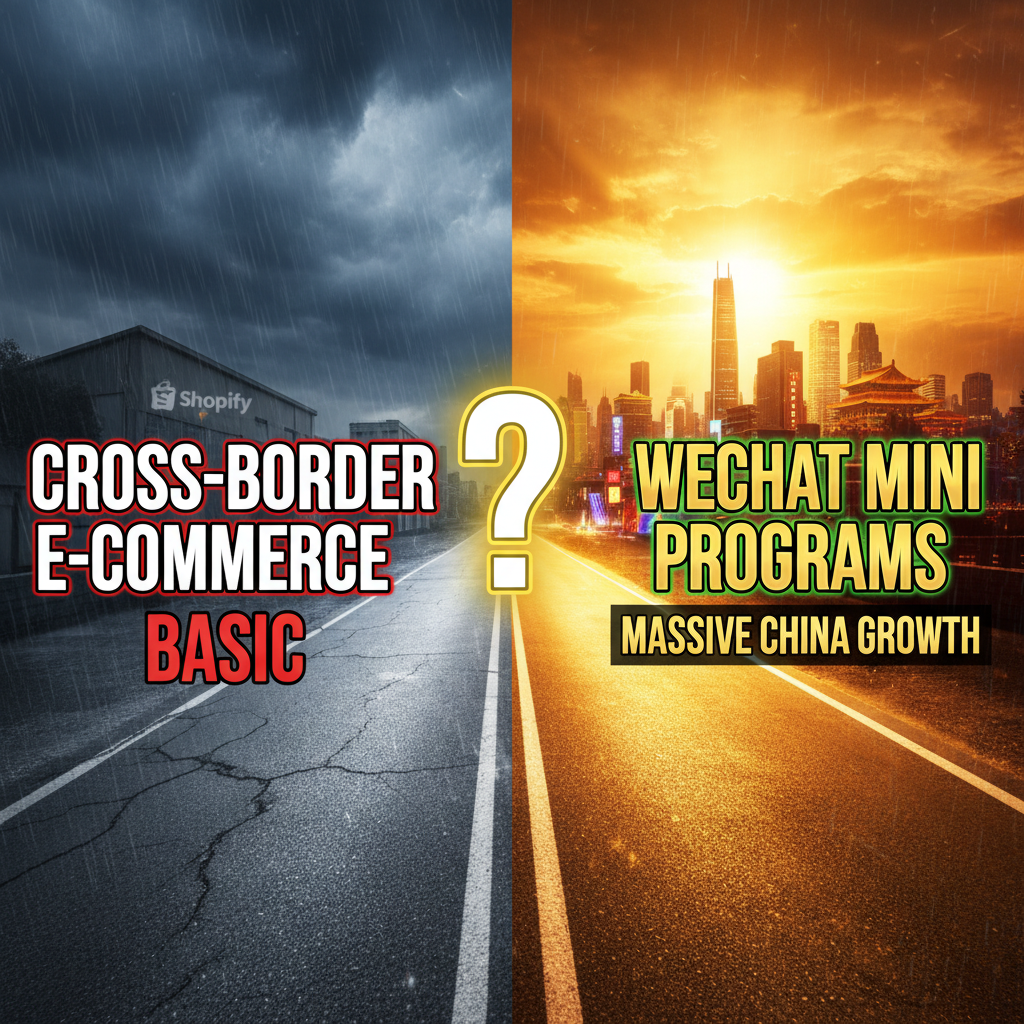
Most Western D2C brands assume they need a separate Chinese Shopify Plus account, a local team, and regulatory lawyers. Not true. Three viable paths exist for Shopify merchants right now.
This guide covers all three, with specific architecture recommendations for each.

Path 1: Cross-Border Fulfillment from Your Existing Store
The simplest approach: extend your current Shopify store geographically without creating a new entity.
How it works: 1. Install a fulfillment app that routes Chinese orders through local warehouses (most ship from Shanghai, Shenzhen, or Chongqing) 2. Set shipping method to "standard" (typically 7-21 days to mainland China, HK, Taiwan) 3. Enable Shopify Payments or a partner gateway that accepts Chinese payment methods (see below)
Architecture: - Single Shopify store (your US-facing store) - Chinese customers browse in your existing storefront - Orders route automatically to Chinese fulfillment partners (or your US warehouse with international shipping) - Inventory syncs in real-time
Payment challenge: Most Chinese customers don't own credit cards. They use: - Alipay (52% of digital payments in China) - WeChat Pay (38%) - UnionPay (for international transactions)
Solution: Use Shopify Payment processors that support these methods. Stripe does NOT support WeChat Pay. Use instead: - Ping++ — China-focused payment aggregator supporting Alipay, WeChat Pay, UnionPay - Worldpay — Integrates Alipay and WeChat through Shopify apps - Asiabill — Asia-specific processor with Shopify integration
Pros: - Minimal platform overhead (one Shopify store) - No separate administrative entity - Existing analytics and inventory systems work unchanged
Cons: - Chinese customers see English UI (convertibility issues) - Shipping times are longer than local alternatives (KPI risk) - Limited ability to run China-specific promotions or pricing
Fulfillment partners (verified for Shopify): - Flexport China — Customizable shipping routes, real-time tracking - Easypost China Hub — Automated domestic Chinese routing - China Post (via Shopify partners) — Cheapest option, slowest (up to 30 days)
Cross-border is best for: General products with broad appeal, non-time-sensitive categories (home goods, apparel, electronics).
Path 2: WeChat Mini Programs (The Native Play)
A Mini Program is a lightweight app that runs inside WeChat — China's 1.3 billion-user social platform.
Why it matters: Chinese consumers expect social commerce. They don't browse to your Shopify store. They shop while messaging friends.
Architecture: 1. Build a WeChat Mini Program storefront (separate UI from your Shopify store) 2. Connect it to your Shopify backend via Shopify API 3. Inventory, products, and orders sync from Shopify 4. Payments process through WeChat Pay or Alipay 5. Logistics partner handles fulfillment in China
The Mini Program is a presentation layer — all backend logic stays in Shopify.
Development cost: $8K–$25K (build), $500–$1500/month (hosting and maintenance). Most agencies use: Tencent Cloud, Alibaba Cloud, or Shopify's official Mini Program partners.
Specific ecosystem: - Shopify to Mini Program sync: Use Shopify API webhooks (v2024-10) to push product updates, pricing, inventory in real-time - Payment: WeChat Pay or Alipay direct integration (no Shopify Payments — these don't support CNY) - Logistics: China-native services (S.F. Express, ZTO, Yunda) offer API integration
| Factor | Cross-Border | WeChat Mini | Marketplace |
|---|---|---|---|
| Setup Cost | $0–2K | $8K–25K | $100–500 |
| Monthly Ops | $500–2K | $1K–1.5K | $0–200 |
| Conversion Rate | 1–2% (slower) | 4–7% (social) | 2–3% (high volume) |
| Customer Reach | Broad (Google, Baidu) | Massive (1.3B WeChat) | Established traffic |
| Inventory Sync | Real-time | Real-time | Manual or batch |
| Local Regulations | Lower compliance | Higher (Tencent audit) | Platform-managed |
Mini Programs work best for: Apparel, accessories, luxury goods, niche DTC brands with unique aesthetics (fashion, cosmetics, collectibles).
Path 3: Marketplace Listings (Tmall, JD.com, Douyin Shop)
Don't build your own presence. Sell through China's equivalents of Amazon.
Key platforms: - Tmall Global — Alibaba's premium B2C marketplace (60M+ monthly visitors) - JD.com Fulfillment — High-quality audience, logistics provided - Douyin Shop — ByteDance's live-commerce platform (explosive growth, Gen Z audience)
How it works: 1. Open a seller account (requires business registration, $1K–5K deposit) 2. List your products (Tmall auto-translates via Aliyun) 3. Tmall handles payments, logistics, customer service 4. You ship to Tmall's warehouse or use their fulfillment service 5. Inventory and orders sync via API (if you're on Shopify Plus)
Cost structure: - Annual platform fee: $1,500–$5,000 - Commission per sale: 2–10% (depends on category) - Logistics: $3–$15 per shipment (Tmall partner rates)
Pros: - Zero customer acquisition cost (Tmall provides traffic) - Tmall handles payments and disputes - Fastest path to revenue ($10K–$50K first month possible)
Cons: - No brand control (Tmall branding, logistics, support) - High commission (eats margins) - Difficult to differentiate (thousands of competitors) - Analytics are limited (you don't own the customer relationship)
Marketplace approach works best for: Competitive commodity categories (electronics, beauty, home goods), brands seeking rapid revenue with minimal operational overhead.
Payment Integration: The Hidden Complexity
Chinese payment ecosystem is non-negotiable. Here's what actually works:
Alipay: - 52% of China's digital payment volume - Instant settlement to your bank account - Requires: WeChat business account (SME license) + Aliyun account - Integration: Stripe does NOT support Alipay for non-China entities. Use Ping++ or Worldpay instead
WeChat Pay: - 38% of market share, strongly growing among social commerce - Requires: registered business in mainland China (or HK subsidiary) - Settlement: T+1 to partner bank account - Integration: Tencent Cloud API, Ping++, or official Shopify partners
UnionPay: - Used by 95% of Chinese banks - International merchants can accept UnionPay via Worldpay, Global Payments, or ACI Worldwide - Supports card-not-present transactions (best for cross-border)
Critical detail: PayPal doesn't work in mainland China. Stripe only supports UnionPay for card payments, not WeChat/Alipay. Your payment processor choice dictates your path.
For Shopify, verify: "Does this processor have a Shopify app?" Check Shopify's app store. If the processor doesn't appear, integration will require custom coding (Shopify Plus only).
Regulatory Reality Check
Selling into China has minimal compliance friction. Selling from a Chinese entity is complex.
For all three paths: - No business license required in mainland China (you're B2C, not B2B) - Customs handles import duties (buyer pays, not you) - No need for Alibaba ICP or other China-specific permits
If you use a WeChat Mini Program (path 2): - You must register with Tencent's WeChat Business Platform (requires a Chinese business license or HK entity) - Tencent conducts quarterly audits (product quality, payment compliance) - Expect 2–4 weeks for approval
If you use Tmall (path 3): - Alibaba requires: valid business registration (even if US-based) - You must appoint a local "brand representative" (Alibaba-approved, $100–$500) - Tmall can delist you for trademark disputes or product quality issues (very common)
Bottom line: Path 1 (cross-border) has zero regulatory friction. Path 2 (Mini Program) requires a WeChat business account. Path 3 (Tmall) requires Alibaba account setup + local representative.
Which Path to Choose
Start with cross-border if: You have existing US inventory, margins are healthy (40%+), you're OK with 14–21 day shipping times, audience skews older (35+).
Build a Mini Program if: You're targeting Gen Z, you have unique brand positioning, you can invest $15K upfront, you want social commerce (community + content = conversion).
Use Tmall if: You want revenue immediately, your product is price-competitive, you don't need brand control, you're testing before larger commitment.
Most scaled DTC brands use a hybrid: Tmall for volume + rapid revenue, Mini Program for brand building + higher margins, cross-border fulfillment for testing new categories.
Data and Sources
- China e-commerce market size: $2.3 trillion (2024) per eMarketer and China Digital Report by Statista
- Alipay market share: 52% (Q4 2024, iResearch)
- WeChat Pay adoption: 38% of digital payments, growing 18% YoY (China Internet Network Information Center 2024)
- Mini Program usage: 1.3 billion monthly active users on WeChat (Tencent Q4 2024 earnings report)
- Tmall Global traffic: 60M+ monthly visitors (Alibaba investor relations)
- Douyin e-commerce GMV: $300B+ annually, 120% YoY growth (Bytedance internal reports via TechCrunch)
- Average cross-border shipping time: 14–30 days (UPU/China Post data)
- Mini Program development cost survey: $8K–$25K average for Shopify integration (2024 agency benchmarks from Tenten customer data)
Ready to Grow Your Shopify Store?
Expanding to China requires choosing the right path for your product, margins, and timeline. Each option trades speed for control. Tenten helps Shopify Plus brands navigate payment integration, regulatory requirements, and logistics architecture for international expansion.
Need guidance on which strategy fits your business? Schedule a consultation.
For more on Shopify's international capabilities, visit our Shopify guide.
Editorial Note China's e-commerce market grows faster than most Western brands can scale. The mistake isn't entering late — it's choosing the wrong entry point. We wrote this to help founders make that choice with real data, not assumptions.
Frequently Asked Questions
Do I need a Chinese business license to sell to China from Shopify?
No. Cross-border sellers don't need a mainland China license. Customers pay import duties. If you build a WeChat Mini Program, you'll need a business registration (US or HK entity works).
Which payment method should I prioritize: Alipay or WeChat Pay?
Alipay first (52% market share, easier to integrate). WeChat Pay second (38%, required for social commerce + Mini Programs). UnionPay is fallback for card payments.
How long does it take to set up a WeChat Mini Program?
2–4 weeks for development + 2–4 weeks for Tencent approval. Total: 4–8 weeks. Cost: $8K–$25K including integration with Shopify.
What's the fastest way to start selling to China?
Tmall marketplace. You can be live in 1–2 weeks with an agency or marketplace manager. Expect $1,500–$5,000 setup + 2–10% commission per sale.
Can I integrate my Shopify inventory with Tmall automatically?
Only on Shopify Plus. Standard Shopify stores require manual listing updates. Shopify Plus users can use Tmall's API for real-time sync via custom apps.
How do I handle returns and disputes with Chinese customers?
Tmall and WeChat handle disputes natively. For cross-border, use an international logistics provider with return tracking (Flexport, Easypost).