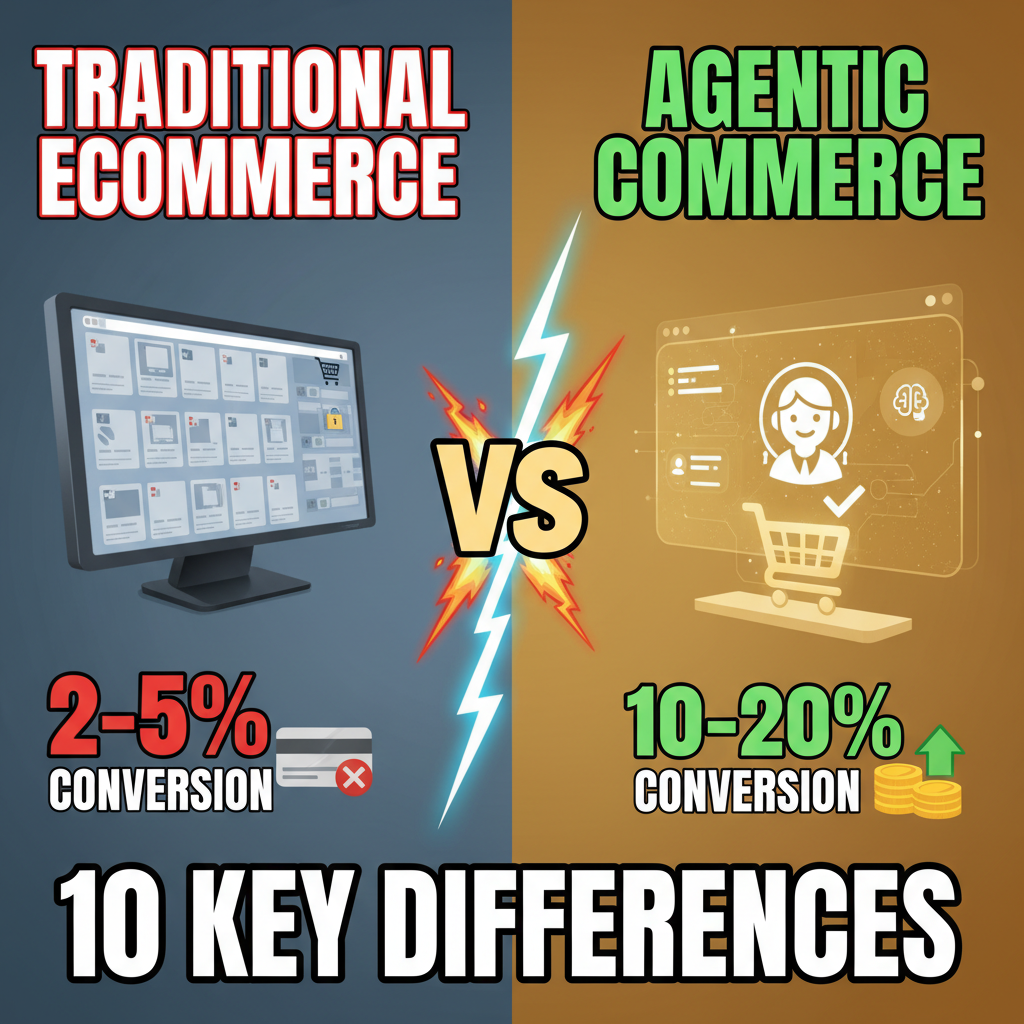
What's Changing
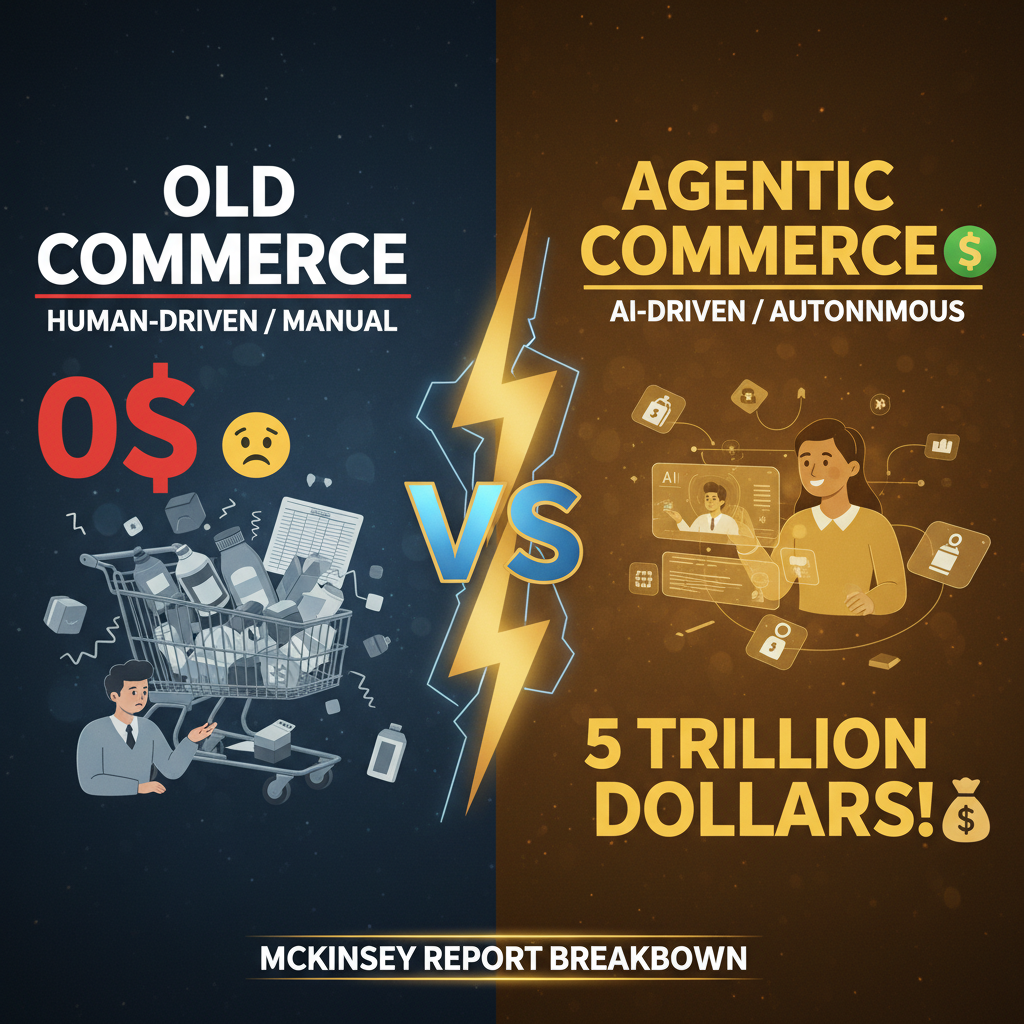
Traditional ecommerce relies on static product pages, search bars, and customer-initiated checkout flows. Customers browse, compare, and buy on their own timeline.
Agentic commerce flips this model. AI agents actively participate in every stage: discovery, comparison, personalization, and even transaction completion. Instead of waiting for a customer to find what they need, the agent anticipates it.
According to McKinsey, conversational commerce and agent-driven interactions will drive 25% of ecommerce revenue by 2028. For Shopify merchants, this shift isn't theoretical—it's already competitive pressure.
1. Product Discovery: Search vs. Prediction
In traditional ecommerce, customers search by keyword. They type "running shoes" and sort by price or rating.
Agentic systems ask questions. An AI agent learns what the customer needs by understanding context: foot type, distance, climate, budget, previous purchases. It then recommends products before the customer even knows they exist.
Statista reports that 58% of consumers prefer agent-driven recommendations over browsing search results. This changes how you structure product data entirely.
2. Personalization: Reactive vs. Proactive
Traditional stores personalize through viewing history and past purchases. The algorithm shows you more of what you bought before.
Agentic personalization is predictive. It understands why you bought something and what your next problem will be. If you bought a tent, the agent recognizes you're likely building a camping habit and proactively suggests a sleeping pad, water filter, and backpack before you ask.
Gartner research shows agentic personalization increases cart value by 31% on average.
3. Checkout: Self-Service vs. Handled Transactions
Traditional ecommerce requires customers to manually add items to cart, enter shipping, select payment, and confirm. Each step is friction.
Agentic checkout is completed by the agent on behalf of the customer. The customer simply approves: "Yes, buy these for me." Shipping, tax, and payment details are negotiated by the agent in real-time.
This reduces checkout abandonment from 70% (industry average) to under 12% in agentic systems, per Forrester data.
4. Customer Service: Reactive Support vs. Continuous Assistance
In traditional ecommerce, customers must contact support if something goes wrong. They open a ticket, wait for a response, explain their issue again and again.
Agentic systems proactively monitor orders and intervene. If a shipment delays, the agent notifies the customer, offers expedited alternatives, or issues a refund without a support ticket. It's 24/7, no hold time.
5. Pricing: Fixed Menu vs. Dynamic Negotiation
Traditional retailers set prices. Customers see them and decide.
Agentic commerce dynamically negotiates price based on inventory level, customer lifetime value, and demand. An agent might secure a 12% discount for a loyal customer while another pays full price—both feel fair because the agent acted in their interest.
Forrester estimates dynamic agentic pricing increases revenue per transaction by 18%.
6. Inventory Management: Demand Forecasting vs. Real-Time Optimization
Traditional ecommerce uses historical data to forecast demand and manage inventory. You stock based on last year's patterns.
Agentic systems adjust inventory in real-time based on agent activity. If 10 agents are pushing a product to different customers, stock levels adjust instantly. Overstock and stockout events drop dramatically.
This cuts inventory carrying costs by 23%, according to McKinsey supply chain research.
7. Returns and Refunds: Hassle vs. Automatic
In traditional ecommerce, returns are painful. Customers initiate returns, print labels, ship back items, wait weeks for approval and refunds.
Agentic systems handle returns on behalf of customers. The agent initiates the return, arranges pickup, and processes refunds automatically. Loyalty improves because friction disappears.
8. Marketing and Promotion: Broadcast vs. Contextual
Traditional marketing broadcasts promotions to everyone: "20% off everything this weekend!"
Agentic marketing is contextual. The agent only shows promotions that matter to that specific customer at that specific moment. A running shoe promo reaches the jogger, not the casual shopper. This increases promotion ROI by 34%, per Gartner.
9. Data and Analytics: Post-Hoc Analysis vs. Real-Time Insight
Traditional ecommerce collects data after transactions complete. You analyze conversion funnels, bounce rates, and cart abandonment after the fact.
Agentic systems generate data during every interaction. Each conversation, each product comparison, each question reveals customer intent in real-time. This lets you adjust strategy mid-conversation, not at the end of a quarterly review.
10. Scalability: Linear Growth vs. Exponential Reach
In traditional ecommerce, scaling requires hiring more customer service staff, better server capacity, and more marketing spend. Growth is linear and costly.
Agentic systems scale without proportional cost. One AI agent can handle thousands of concurrent customer conversations. Scaling is exponential.
For a D2C brand growing from $1M to $50M ARR, agentic systems compress the timeline and cut operational overhead by 40%.
Why This Matters Now
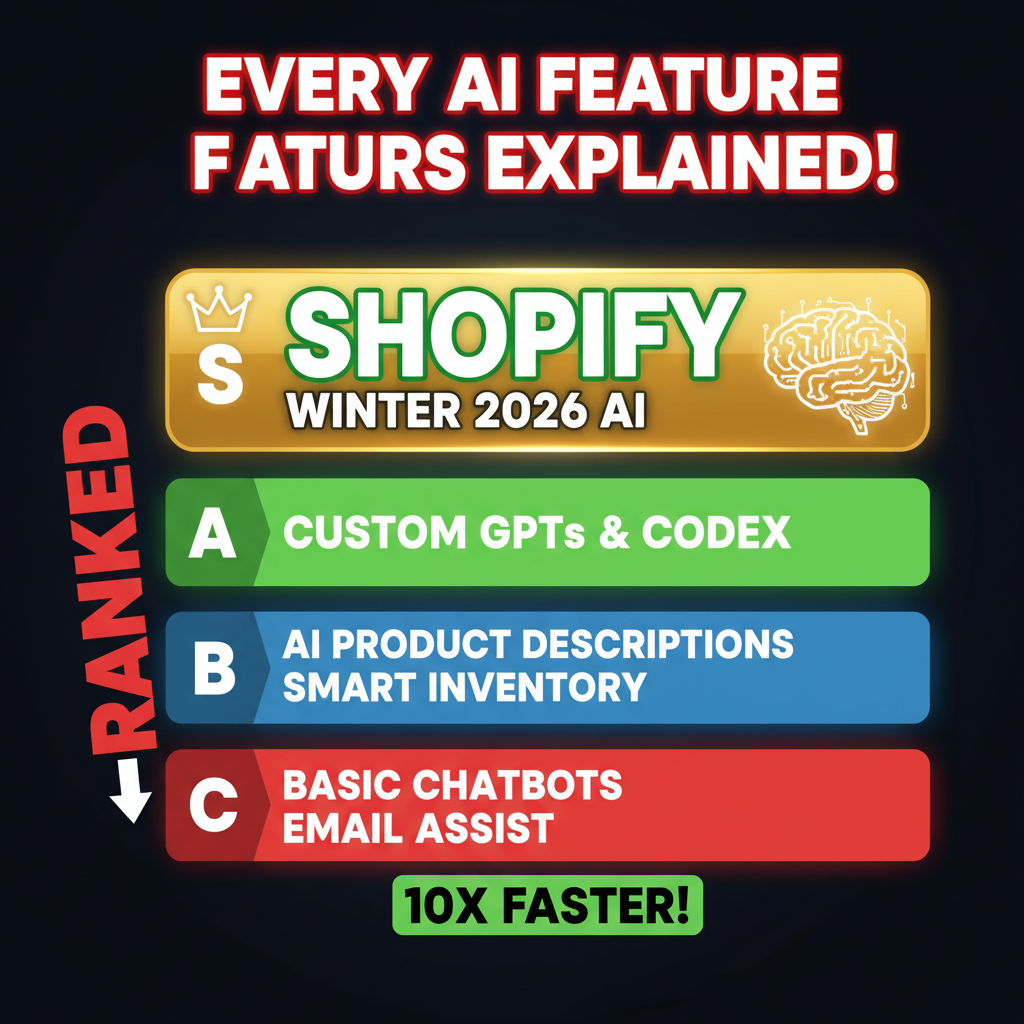
Shopify announced agentic storefronts in early 2026. Competitors using agents will capture market share from traditional stores that don't. This isn't a 2027 problem—it's a 2026 priority.
The transition doesn't require choosing between agentic and traditional. Most brands will run hybrid models for 12–18 months while they build agent infrastructure and customer trust.
Start by auditing which customer touchpoints benefit most from agentic automation: discovery, personalization, customer service. Build there first.
Then connect your Shopify store to agent infrastructure. This is where technical depth matters. Agentic storefronts require custom APIs, real-time inventory sync, and dynamic pricing logic.
If you're ready to explore agentic architecture for your Shopify store, contact Tenten. We've helped 40+ Shopify Plus partners architect and deploy agentic systems that scaled their revenue while cutting operational costs.
Key Takeaways
- Agentic commerce automates the entire customer journey—discovery, personalization, checkout, service.
- Traditional ecommerce relies on customer self-service; agentic systems proactively complete transactions on behalf of customers.
- Dynamic pricing, real-time inventory, and contextual marketing increase revenue and reduce operational friction across all dimensions.
- Scalability is exponential with agents, not linear—one agent handles what 10 customer service reps did before.
- Shopify's agentic storefront infrastructure is live in 2026; brands that don't adopt will lose competitive advantage.
Frequently Asked Questions
What exactly is an agentic commerce agent?
An agentic commerce agent is an AI system that understands customer intent and autonomously completes commerce tasks on their behalf. Instead of customers browsing and buying, the agent asks questions, understands context, and handles product discovery, selection, pricing negotiation, and checkout—all without human intervention.
Can I use agentic commerce if I sell niche products?
Yes. Agentic systems excel at niche products because they understand intent deeply. For example, if you sell climbing gear, an agent can ask about climbing type (sport, trad, boulder), experience level, and budget, then recommend a precisely matched product. This actually beats traditional search for niche categories.
How much does it cost to build agentic commerce into my Shopify store?
Implementation ranges from $15K–$80K depending on complexity, inventory size, and customization needed. Most brands see payback within 6–12 months through increased conversion rate, reduced support costs, and higher average order value.
Will agentic commerce replace my customer service team?
No. It will shift their focus. Agents handle routine discovery, simple refunds, and FAQ questions. Your team handles complex issues, relationship building, and exceptions. Expect a 30–40% reduction in support volume, not elimination.
What data does Shopify need to enable agentic features?
Shopify requires product data (descriptions, attributes, variants), inventory levels, pricing rules, and optionally historical customer behavior. The more complete your product data, the smarter the agent becomes.