Why Subscriptions Change Your Equation
Most e-commerce brands live year-to-year on acquisition volume. One bad quarter in paid spend and you're in trouble.
Subscriptions flip that. A customer who pays you $30 every month is worth $360/year. The unit economics become defensible. Your LTV predictability jumps. Churn becomes the metric that matters most—not just CAC.
The best part? Subscriptions work for any category. Beauty brands built $10M+ businesses on $15-25 boxes. Coffee roasters scaled to $50K MRR. Even apparel brands tested subscriptions and found 15-20% of customers prefer predictability.
Operator insight: the first subscriber is the hardest to acquire. The second is much easier. Not because the customer is different, but because you've solved the system. You know your messaging, your retention mechanics, and your fulfillment costs. This is where most brands fail—they ship the product but ignore the retention machine.
This guide covers everything: setup, pricing psychology, retention, and the economics that make subscriptions viable.
The Subscription Economics: Unit Math That Works
Here's what happens when you layer subscriptions into your growth.
Baseline One-Time Purchase Model:
- CAC: $50
- Order Value: $75
- Gross Margin: 60% ($45)
- LTV: $75 (one-time)
- LTV / CAC: 1.5x
- Profitable? Barely. High risk.
With Subscription Layer:
- CAC: $45 (slightly lower—subscribers are lower friction)
- Subscription Price: $30/month
- Gross Margin: 65% ($19.50/month)
- Average Subscription Tenure: 8 months
- LTV: $156 (8 × $19.50)
- One-time LTV: $75
- Total LTV: $231
- LTV / CAC: 5.1x
- Profitable? Absolutely.
The insight: subscriptions don't require lower CAC if you're acquiring the right customers. They require obsession with retention.
The Math Gets Better With Scale
At 500 active subscribers × $30/month = $15,000 MRR
At 2,000 active subscribers = $60,000 MRR
The compounding works because churn is predictable. If you retain 85% of subscribers month-over-month, you're building a fortress.
Subscription Models: Which One Fits Your Business?
Not all subscriptions work the same. Here are the primary models:
Model 1: Curation Box (Beauty, Food, Lifestyle)
The brand curates products and ships a new selection monthly. Customers get discovery + convenience.
Pricing: $25-75/month
Churn: 5-8% monthly
Best for: Beauty, coffee, snacks, books, pet products
Example: FabFitFun, Birchbox, GreatCoat
Pros:
- High perceived value (curation feels personal)
- Predictable inventory
- Natural retention hook (customers eager for next box)
Cons:
- Requires product sourcing/partnership
- Logistics complexity increases
- CAC to retention ratio is tight (8% churn means you need <40 CAC to break even)
Model 2: Consumables Auto-Replenishment
Customers subscribe to replenish something they use regularly (supplements, vitamins, skincare, pet food).
Pricing: $20-100/month depending on category
Churn: 3-5% monthly (very sticky—habit-based)
Best for: Supplements, cosmetics, household, pet, wellness
Example: Ritual, Calm, Chewy
Pros:
- Lowest churn of all models (habit-forming)
- Easy to communicate (people already buy this)
- Flexible pause/skip options increase retention
Cons:
- Requires differentiation (why subscribe vs. order once?)
- Discount expectations (sub customers expect 10-15% off)
- Quality consistency is critical
Model 3: Access/Community Membership
Customers pay for membership in a community or early access to drops/releases.
Pricing: $5-50/month depending on value
Churn: 6-10% monthly
Best for: Fashion, gaming, fitness, creator communities
Example: Patreon, ClassPass, sneaker communities
Pros:
- Scalable (no product costs)
- Community engagement = retention
- Can upsell other products/services
Cons:
- Requires consistent content/value delivery
- Retention depends on active community management
- Chargeback risk if value delivery lapses
Model 4: Tiered SaaS/Software (for merchants)
Customers pay monthly for software or tools built on Shopify.
Pricing: $9-99/month depending on features
Churn: 2-4% monthly (high switching costs)
Best for: Shopify apps, service providers, B2B
Example: Klaviyo, Gorgias, Subbly
Pros:
- Extremely sticky (switching costs are high)
- Upsell/expansion revenue common
- Predictable recurring revenue
Cons:
- Requires significant product investment
- Onboarding/support costs are high
- Feature parity with competitors necessary
Shopify Subscription Setup: Apps & Architecture
Shopify native subscriptions are limited. Most brands use apps to customize pricing, pause/skip, and retention flows.
Option 1: Shopify Subscriptions (Native)
Pros:
- Built-in, no third-party dependency
- Simple for basic auto-replenishment
- Low cost (no app fees, just Shopify transaction fees)
Cons:
- Limited flexibility (no pause/skip, limited customization)
- Poor retention mechanics
- No easy A/B testing
When to use: Very simple consumables where you don't need retention mechanics.
Option 2: Subbly (Recommended for Most Brands)
Pros:
- Purpose-built for Shopify subscriptions
- Flexible pricing (tiered, gift subscriptions, etc.)
- Advanced retention (pause, skip, edit frequency, upgrade/downgrade)
- Dunning (automatic retry on failed payments)
- Customer portal (customers manage their subscription)
Cons:
- App fee (~$99/month + % of MRR)
- Requires some technical setup
When to use: Any brand serious about subscriptions. The retention mechanics pay for themselves.
Option 3: Recharge
Pros:
- Market leader in subscription infrastructure
- Advanced analytics and cohort tracking
- Integrations with 100+ apps (loyalty, email, analytics)
- Excellent customer support
Cons:
- Higher cost (~$149/month + % of MRR)
- Overkill for small subscription programs
When to use: Brands doing $10K+ MRR in subscriptions.
Option 4: Appstle (Formerly Bold)
Pros:
- Good balance of features and price
- Strong retention tools
- Native integrations with email platforms
- Good for gift subscriptions
Cons:
- Smaller ecosystem than Recharge
- Less extensive analytics
When to use: Brands looking for value + features without enterprise costs.
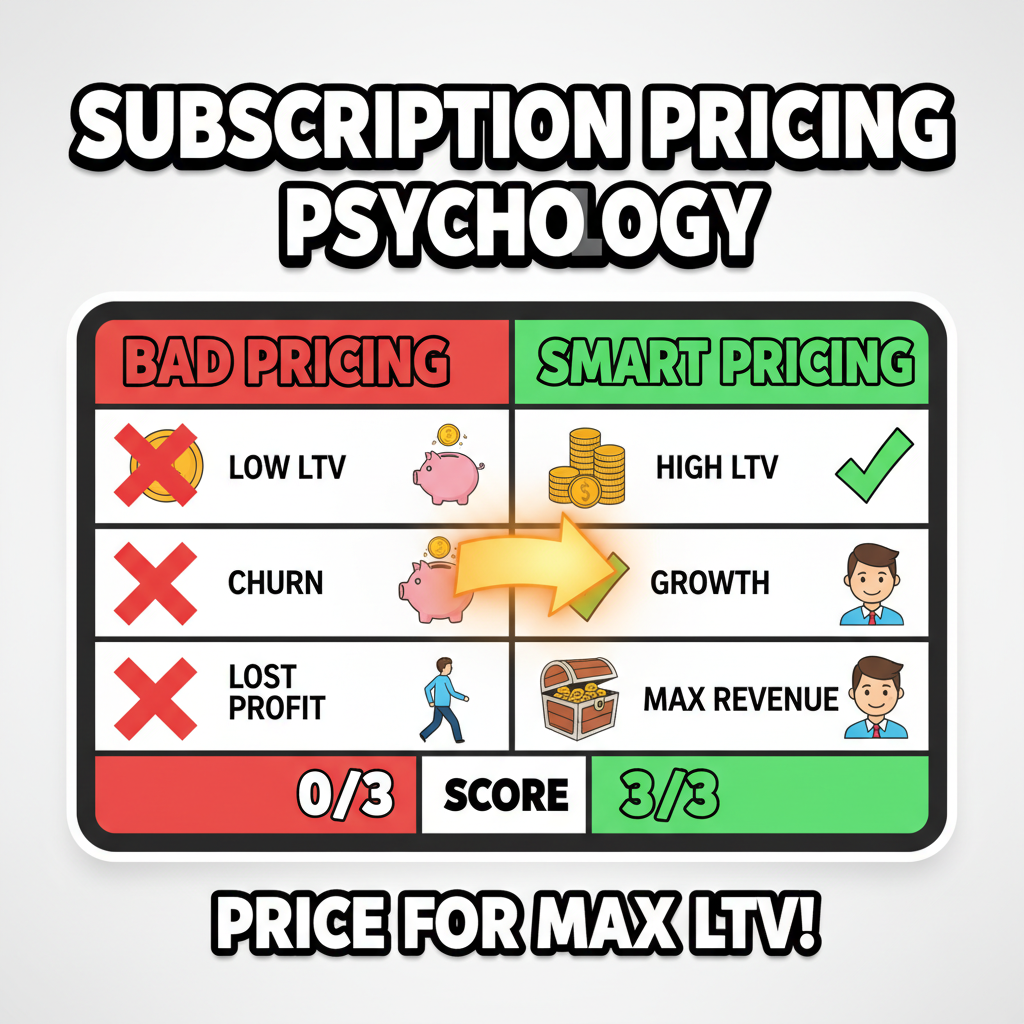
Pricing Your Subscription: Psychology & Data
Pricing is the biggest lever you have.
Discount Strategy
Most brands offer subscriptions at 10-20% below one-time price. This signals value (savings) without cannibalizing one-time sales too much.
Example:
- One-time price: $50
- Subscription price: $40-45 (10-20% discount)
- Monthly recurring: $40
The psychology: customers feel they're getting a deal, and you're still profitable.
A/B test. Start at 15% discount. If churn rises (customers trying and leaving), raise it to 20%. If retention is strong, test dropping it to 10%.
Subscription vs. One-Time: Cannibalization
Question: Will subscriptions eat your one-time sales?
Answer: Yes, but less than you think.
Data from brands we've worked with:
- 25-35% of new customers choose subscription (vs. one-time)
- One-time sales drop 5-10% overall (because some existing customers switch)
- But LTV grows 40-60% because subscription customers stay longer
The takeaway: embrace the mix. One-time orders are still valuable (higher AOV, lower fulfillment cost). Subscriptions are the long-term play.
Retention Mechanics: Reducing Churn 30-50%
Churn is the enemy. A 5% monthly churn rate means you lose half your base in 14 months. A 3% rate means you keep building.
Tactic 1: Pause/Skip Flexibility
The #1 retention mechanic is letting customers pause or skip a month without canceling.
When customers can pause, churn drops 40-50%. They're not abandoning you—they're just pausing.
Implementation:
- Make pause/skip prominent in the customer portal
- Email reminder before shipment: "Your [product] ships tomorrow. Pause, skip, or adjust?"
- Allow pause duration (skip 1 month, 2 months, or pause indefinitely)
Tactic 2: Win-Back Campaigns
When customers cancel, they leave a reason. Email them a win-back offer within 24 hours.
Example email:
Subject: We'd love to have you back — 15% off your next shipment
Hi [Customer],
We noticed you paused your subscription. No judgment—life gets busy. But we'd miss you.
If you come back this week, we're offering 15% off your next box. Just reply with "comeback" and we'll activate it.
See you soon,
[Brand]
Convert 10-15% of cancellations with this tactic.
Tactic 3: Frequency Changes (Edit Shipment Cadence)
Let customers adjust frequency—ship every 4 weeks, 6 weeks, or 8 weeks.
This prevents "I like it, but I don't need it every month" cancellations. They stay subscribed at lower frequency.
Data point: 30% of churning customers would have stayed if they could lower frequency.
Tactic 4: Product Customization
If you're running a curation box, let customers personalize their box—flavor preferences, skip items, add extras.
Implementation:
- Send a pre-shipment survey: "What do you want in your next box?"
- Allow substitutions (doesn't like coffee? Swap it for tea.)
- Build an "extras" marketplace (customers can add products for $10-15)
Customization increases satisfaction by 20-30%, which lowers churn.
Tactic 5: Loyalty/Surprise & Delight
Random acts of generosity work. Every 6th shipment, add a bonus item or gift card.
Not only does this delight customers, but it signals to your algorithms that they're highly engaged.
Cost: $5-10 per customer per year
Impact: 15-25% improvement in retention
Tactic 6: Dunning (Payment Failure Recovery)
5-10% of subscription customers have failed payments every month (card expired, insufficient funds, etc.). Most churn because of this, not intention.
Dunning automation retries failed payments and sends email reminders to update payment methods.
Recharge, Subbly, and Appstle all have dunning built-in.
Tactic 7: Email Cadence
3-email cadence for maximum retention:
Email 1: Shipment notification (3 days before)
- "Your [product] ships tomorrow"
- Pause/skip/adjust options prominent
- Highlight what's in this month's box
Email 2: Tracking (day of shipment)
- "Your order is on its way"
- Tracking link
- Tease next month's selection
Email 3: Post-delivery (3-5 days after)
- "Did you love it?"
- Ask for feedback (opens loop for next month)
- Exclusive offer for next shipment (5-10% off)
This cadence keeps subscribers thinking about value every month.
Advanced: Expansion Revenue & Upsells
Once you have subscription customers, upsells are low-friction.
Strategy 1: Tiered Subscriptions
Offer a "Premium" tier (bigger box, more exclusive items, priority customer service).
Example:
- Standard: $30/month
- Premium: $50/month (1.5x value)
- VIP: $80/month (white-glove, exclusive access)
20-30% of standard subscribers upgrade to premium. Revenue per subscriber grows 15-25%.
Strategy 2: Add-Ons Marketplace
Let customers add products to their box for extra cost.
Example: Subscription box includes 5 items. Customer can add up to 3 extra items at $8-12 each.
10-15% of subscribers add extras. Average add-on revenue: $50/customer/year.
Strategy 3: Complementary Products
Sell one-time purchases that complement the subscription.
Example: Coffee subscription → sell coffee mugs, grinders, brewing equipment.
30-40% of subscription customers buy complementary products. AOV increases 25-35%.
Analyzing Cohort Retention: The Real Health Metric
One number matters: cohort retention.
Acquisition month = Month 0. Track what % of that cohort is still active in Months 1, 3, 6, 12.
| Cohort Month | Month 0 | Month 1 | Month 3 | Month 6 | Month 12 | Notes |
|---|---|---|---|---|---|---|
| Jan | 1,000 | 850 (85%) | 650 (65%) | 520 (52%) | 350 (35%) | Pre-retention tactics |
| Mar | 1,200 | 1,020 (85%) | 840 (70%) | 696 (58%) | 600 (50%) | Post-pause feature |
| May | 1,400 | 1,225 (87.5%) | 1,050 (75%) | 875 (62.5%) | 770 (55%) | Post-email cadence |
The compounding is clear. A 20% improvement in Month 6 retention = 20% improvement in MRR 6 months from now.
Logistics & Fulfillment: Don't Lose Money on Shipping
Subscriptions are margin-sensitive. Fulfillment costs can destroy profitability.
Shipping Strategy
Negotiate rates. If you're shipping 500+ boxes/month, you qualify for USPS Commercial rates (20-30% cheaper than retail).
Example:
- Retail USPS: $8-12 per box
- Commercial USPS: $5-7 per box
- UPS SurePost: $4-6 per box
Savings: $3 per box × 500 boxes = $1,500/month in margin improvement.
Packaging Efficiency
Lightweight packaging = lower dimensional weight charges (UPS/FedEx charge by size, not just weight).
Every 0.5 lbs in packaging weight = $0.30-0.50 per shipment at scale.
Optimize box dimensions to USPS flat-rate envelopes or regional rate boxes where possible.
Warehouse/Fulfillment Partner
At 500+ MRR orders, consider 3PL (third-party logistics) to handle fulfillment. Cost: typically 15-25% of order value, but frees up your operational bandwidth.
Shopify 3PL integrations: ShipBob, Flexport, Deliverr
Common Subscription Mistakes
Mistake 1: Setting Churn Expectations Too High
"Industry average is 5-7% monthly churn, so we'll aim for that."
No. Industry average is for brands that don't optimize for retention. With the tactics above, 2-4% monthly churn is achievable.
Mistake 2: Ignoring Pause/Skip
Brands that don't offer pause/skip see 8-12% monthly churn. With pause/skip, it drops to 3-5%.
Mistake 3: Pricing Subscriptions Too Low
A $19/month subscription creates growth theater (lots of subscribers), but the CAC math doesn't work. Price for profitability, not optics.
Mistake 4: Poor Onboarding
First shipment sets the tone. If it arrives late, is damaged, or disappoints, you've lost them.
Obsess over first-shipment experience. Include a handwritten note, bonus item, and clear instructions for next shipment.
Mistake 5: Treating Subscription Revenue as Passive
Subscriptions require constant work: retention optimization, product sourcing, logistics. The "set and forget" model doesn't exist.
FAQ
What's a good monthly churn rate for subscriptions?
For most categories, 3-5% monthly churn is healthy. This means you retain 95-97% of subscribers monthly. At 3%, you keep growing your base. At 5%, you're treading water unless acquisition is strong. World-class brands (ClassPass, Ritual) achieve 2-3%.
How do I decide between one-time and subscription offerings?
Offer both. One-time purchase is lower friction for first-time buyers. Subscription is better LTV. Data shows 25-35% of customers choose subscription if offered. Don't force it—make it an option.
Can small brands (500 customers/month) do subscriptions?
Yes, absolutely. Even at 100 customers, subscriptions work. The unit economics are the same. Just be sure your fulfillment costs are optimized (negotiate USPS rates, optimize packaging).
What's the optimal subscription price?
No single answer—it depends on category and perceived value. But start with 15% discount vs. one-time. A/B test 10% and 20%. Track churn and LTV separately. Usually, 15% is the sweet spot.
How do I handle failed payments?
Use dunning automation (included in Recharge, Subbly, Appstle). Automatically retry failed payments 3-5 times over 10-15 days, with customer emails encouraging them to update payment info. This recovers 30-40% of failed payments.
Key Takeaways
Subscriptions aren't a gimmick. They're a complete business model reshape that improves LTV 2-3x while providing predictability and retention leverage.
The math is simple: 1,000 subscribers × $40/month × 12 months = $480K annual revenue. At 3% monthly churn, you only need 30 new subscribers/month to maintain growth.
Focus on retention mechanics first (pause, skip, frequency changes), then optimize pricing and expansion revenue. The brands winning with subscriptions aren't better at acquisition—they're better at keeping customers.
Ready to launch or improve your subscription program? Tenten specializes in building retention machines for DTC brands. Let's talk about your retention strategy.
Frequently Asked Questions
Why should my Shopify store have subscriptions?
Subscriptions dramatically improve unit economics by increasing customer lifetime value (LTV) 2-3x. A customer paying $40/month for 8 months generates $320 in LTV versus $75 for a one-time purchase. Subscriptions also provide predictable recurring revenue and lower customer acquisition risk, making your business more defensible.
Which subscription model is best for my business?
The best model depends on your product: curation boxes work for beauty/food (5-8% churn), consumables auto-replenishment is stickiest for supplements/skincare (3-5% churn), membership/access suits fashion and communities (6-10% churn), and SaaS subscriptions work for software tools (2-4% churn). Most brands start with auto-replenishment or curation.
What app should I use to manage Shopify subscriptions?
Shopify's native subscriptions are limited. For flexibility, use Subbly ($99/month, good for most brands), Recharge (market leader, $149+/month for larger scale), or Appstle (balanced price/features). Choose based on your MRR: under $5K = Subbly, over $10K = Recharge.
How much discount should I offer for subscriptions?
Start with 15% off the one-time price. A/B test 10% and 20% to find the optimal balance between perceived value and churn. Most brands find 15% is the sweet spot—it's enough to drive adoption without destroying margins.
What's the best way to reduce subscription churn?
The top retention tactics are: pause/skip flexibility (reduces churn 40-50%), frequency customization (customers can ship every 4, 6, or 8 weeks), win-back campaigns for cancellations (recover 10-15%), and dunning automation for failed payments (recover 30-40%). Track cohort retention monthly to measure progress.
FAQ JSON-LD Schema
{
"@context": "https://schema.org",
"@type": "FAQPage",
"mainEntity": [
{
"@type": "Question",
"@id": "faq-1",
"name": "Why should my Shopify store have subscriptions?",
"acceptedAnswer": {
"@type": "Answer",
"text": "Subscriptions dramatically improve unit economics by increasing customer lifetime value (LTV) 2-3x. A customer paying $40/month for 8 months generates $320 in LTV versus $75 for a one-time purchase. Subscriptions also provide predictable recurring revenue and lower customer acquisition risk, making your business more defensible."
}
},
{
"@type": "Question",
"@id": "faq-2",
"name": "Which subscription model is best for my business?",
"acceptedAnswer": {
"@type": "Answer",
"text": "The best model depends on your product: curation boxes work for beauty/food (5-8% churn), consumables auto-replenishment is stickiest for supplements/skincare (3-5% churn), membership/access suits fashion and communities (6-10% churn), and SaaS subscriptions work for software tools (2-4% churn). Most brands start with auto-replenishment or curation."
}
},
{
"@type": "Question",
"@id": "faq-3",
"name": "What app should I use to manage Shopify subscriptions?",
"acceptedAnswer": {
"@type": "Answer",
"text": "Shopify's native subscriptions are limited. For flexibility, use Subbly ($99/month, good for most brands), Recharge (market leader, $149+/month for larger scale), or Appstle (balanced price/features). Choose based on your MRR: under $5K = Subbly, over $10K = Recharge."
}
},
{
"@type": "Question",
"@id": "faq-4",
"name": "How much discount should I offer for subscriptions?",
"acceptedAnswer": {
"@type": "Answer",
"text": "Start with 15% off the one-time price. A/B test 10% and 20% to find the optimal balance between perceived value and churn. Most brands find 15% is the sweet spot—it's enough to drive adoption without destroying margins."
}
},
{
"@type": "Question",
"@id": "faq-5",
"name": "What's the best way to reduce subscription churn?",
"acceptedAnswer": {
"@type": "Answer",
"text": "The top retention tactics are: pause/skip flexibility (reduces churn 40-50%), frequency customization (customers can ship every 4, 6, or 8 weeks), win-back campaigns for cancellations (recover 10-15%), and dunning automation for failed payments (recover 30-40%). Track cohort retention monthly to measure progress."
}
}
]
}