
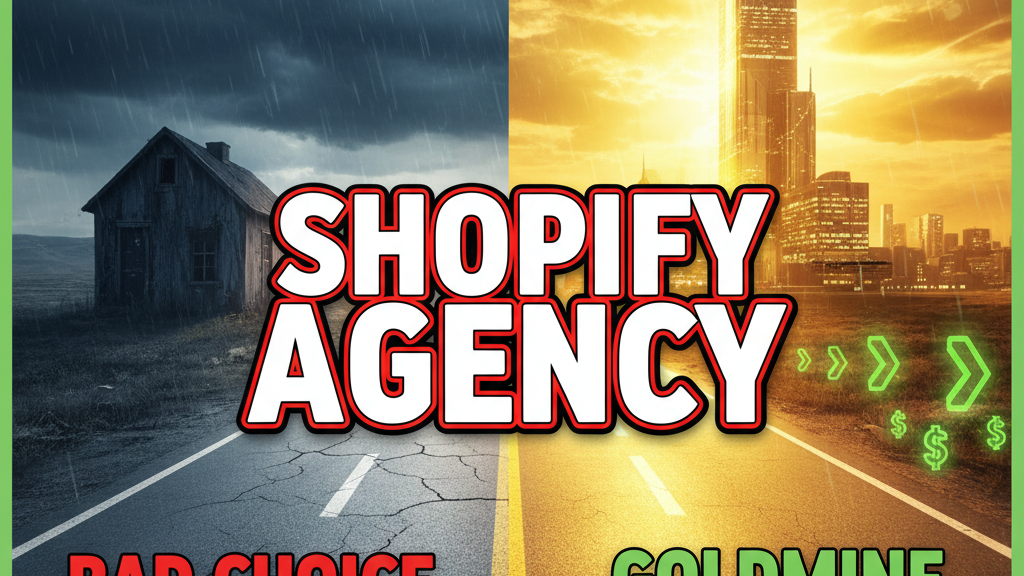
The Real Cost of the Wrong Shopify Partner
Hiring a Shopify agency is one of the few decisions that directly multiplies your revenue—or tanks it. The cost difference between an excellent implementation and a mediocre one isn't measured in months of extra work. It's measured in lost customers, technical debt that compounds for years, and features you'll never build.
A misaligned agency doesn't just delay your project. They ship code that breaks scaling, architecture decisions that prevent future growth, and integrations that require constant maintenance. Many merchants don't realize the damage until they're locked into a relationship or trying to migrate away from poorly-built infrastructure.
What Type of Shopify Partner Do You Actually Need?
The "best" Shopify agency is meaningless without context. Your business model, store size, and technical ambitions dictate which partner fits.
| Partner Type | Best For | Implementation Speed | Cost Range | Red Flag |
|---|---|---|---|---|
| Freelancer / Micro-Agency | Small stores, feature tweaks, Liquid customization | 2-4 weeks | $5K-$30K | No bench strength; disappears mid-project |
| Boutique Agency (10-30 people) | Mid-size DTC, Shopify Plus migrations, custom apps | 6-12 weeks | $75K-$250K | Thin expertise in specific verticals; inflated rates |
| Enterprise Firm (50+ people) | Fortune 500, multi-channel, complex integrations | 12+ weeks | $250K-$2M+ | Slow, bureaucratic, junior devs doing actual work |
| Shopify Official Partner | Vetted quality, access to Partner resources | Varies | 20-50% premium | May outsource; relies on Shopify reputation, not their own |
Shopify Partners are vetted by Shopify, but that doesn't mean they're right for you. An Official Plus Partner might have zero Hydrogen experience. A certified Expert might have shipped 1,000 basic Shopify stores and zero B2B platforms.
The 5 Non-Negotiable Criteria
1. Shopify Expertise Beyond the CMS
Ask directly: "What was your last project using the Shopify Storefront API?" Not "Hydrogen" in general—specific, recent project experience.
Many agencies can build a store on Shopify. Few can architect custom solutions:
- Hydrogen / React-based storefronts
- Multi-tenant platforms
- Headless commerce with custom frontends
- Shopify Plus App Bridge extensions
- Private apps with GraphQL APIs
If your roadmap includes anything beyond theme customization, your partner must have shipped it. Case studies with production metrics (not vanity metrics) are proof.
Red flag: Agency talks about Shopify Plus but can't name 3 Plus-exclusive features they've implemented.
2. Philosophy on Technical Debt vs. Speed
The tension between shipping fast and building clean code is real. How an agency resolves it reveals their long-term thinking.
Ask: "How do you handle scope creep? What do you refuse to do?" A good partner will:
- Enforce clear boundaries on what's in/out of scope
- Push back on "quick fixes" that create debt
- Document decisions with Architecture Decision Records (ADRs)
- Hand off code that your internal team can maintain
- Propose refactoring work proactively (even if it's not profitable for them)
A bad partner will:
- Build everything you ask, regardless of technical cost
- Leave you with code only they understand
- Disappear when bugs surface 6 months later
Red flag: Agency says "we can do anything" without discussing trade-offs.
3. Hands-on Leadership + Continuity
In a 3-month project, do you meet the same people, or does the client roster rotate?
The principal/partner should be hands-on—not shadowing every decision, but doing deep work on high-risk pieces (architecture, critical integrations). If the partner is a sales figurehead and you get a rotating cast of junior developers, you're paying for overhead you don't benefit from.
Ask: "Who writes the code?" and "Who will be on calls?" Names matter. Continuity matters.
Red flag: You're told your point person will "oversee" the work, but a junior dev you've never met owns the codebase.
4. Post-Launch Support Model
The real relationship starts when your store goes live.
Ask:
- How many hours per month does your support retainer cover?
- What's your SLA for critical bugs (checkout down, payment gateway broken)?
- Who owns maintenance after the initial contract ends?
- Do you charge for theme updates when Shopify breaks backward compatibility?
A good partner will offer ongoing support tiers. A bad one will try to lock you into expensive monthly retainers for basic fixes.
Compare:
- Tier 1 (Retainer): 10-20 hrs/month, planned work, $2K-$5K/month
- Tier 2 (Hourly): Fixed rate ($150-$250/hr), billed monthly
- Tier 3 (Emergency): On-call support for critical bugs, 2-4 hr response time, premium rate
Red flag: Agency doesn't have a documented support model or expects you to buy an expensive retainer upfront.
5. Proven Economics & Handoff Strategy
How do they ensure you're not dependent on them forever?
Red flags include:
- Obfuscated code you can't modify
- Custom frameworks that only they understand
- Refusing to teach your internal team
- Constantly recommending new features that require their help
Good partners will:
- Deliver code with clear comments and README documentation
- Spend time documenting architecture decisions
- Train your team on maintenance and deployments
- Gradually reduce hours as your team gains ownership
- Provide runbooks for common support scenarios
How to Vet an Agency Properly
Step 1: References From Real Merchants (Not Case Studies)
Case studies are marketing. References are truth.
Ask for 3 recent clients (last 18 months) who:
- Worked on a project similar to yours
- Are willing to discuss costs, timelines, and scope creep
- Can speak to post-launch support quality
Call them directly. Ask:
- "Did they ship on time and on budget?"
- "What surprised you—good or bad?"
- "Would you hire them again?"
- "What would you do differently?"
Step 2: Reverse-Engineer Their Work
Inspect their recent client sites:
- Open the production store in DevTools. Check bundle sizes, Core Web Vitals, API response times.
- Look for theme customization signals (proprietary CSS classes, custom data attributes).
- Test checkout flow. Is it snappy or does it lag?
- Check for basic mistakes: duplicate content, missing alt text, slow images.
Sites built by good agencies feel fast and well-architected. Sites built by okay agencies feel bloated and fragile.
Step 3: Technical Screening Conversation
Don't hire based on a sales call.
Ask the technical lead:
- "Walk me through a recent project architecture. What were the key trade-offs?"
- "How do you handle Shopify API rate limits in high-traffic scenarios?"
- "What's your testing strategy? Do you write tests for client work?"
- "Tell me about a project that went wrong and how you recovered."
- "What's a technical decision you'd make differently in hindsight?"
Good engineers will:
- Speak in specifics, not generalities
- Acknowledge trade-offs and constraints
- Share failure stories (they've learned)
- Ask clarifying questions about your project
Step 4: Rate Pressure Testing
Don't negotiate too hard—but do test the rate.
If an agency quotes $200/hr and drops to $150/hr immediately, that's a signal they're padding. A confident partner will explain rate structure (seniority levels, phases of work) and stick to it.
Conversely, if they won't budge 5-10% on a multi-month engagement, they're not relationship-oriented.
Red Flags That Cost You Money
| Red Flag | Why It Matters |
|---|---|
| "We build everything in-house" (custom CMS, custom payment, etc.) | You're paying for their ego, not Shopify's best practices |
| "We guarantee 2-week turnaround on any scope" | Scope is being cut, quality is suffering, or timeline is lying |
| "Our team is distributed / contractor-based" | Low accountability; high context-switching; junior devs on critical work |
| Agency won't share past project code samples | Can't verify quality; may be hiding poor workmanship |
| "We specialize in all industries" | Jack-of-all-trades, master of none; likely haven't solved your specific problem |
| Support is "available, but we'll discuss pricing later" | You'll get hit with surprise retainer costs; no clear SLA |
| "Shopify is simple; we'll figure it out as we go" | They don't understand API nuances; technical debt is guaranteed |
| They push expensive apps/integrations you don't need | Revenue incentive; not your best interest |
Article FAQ
Q: How much should I expect to pay for a Shopify agency?
Budget $75K-$250K for a solid mid-market project (3-6 months). Freelancers run $5K-$50K for feature work. Enterprise firms charge $250K-$2M+. Don't confuse cheap with good—the wrong partner can cost you 10x the savings in lost revenue and remediation work.
Q: Can I switch agencies mid-project?
Yes, but it's expensive. Expect 2-4 weeks of handoff work and the new agency re-learning your codebase. Clear code documentation from the first agency makes transitions smoother. Always have this conversation upfront: "If we part ways, how do we ensure continuity?"
Q: What's the difference between a Shopify Expert and a Shopify Plus Expert?
A Shopify Expert is certified on the base platform. A Plus Expert has specific experience with Plus features: custom apps, dedicated support, advanced APIs. If you're considering Plus, hire a Plus Expert, not just a generalist Expert.
Q: How do I evaluate an agency's code quality?
Ask for a code sample from a recent project. Look for: clear variable names, comments explaining complex logic, consistent indentation, use of modern Liquid patterns. Request they show you a pull request from their codebase—how do they review code? Good code speaks for itself.
Q: Should I hire a Shopify Official Partner or a smaller boutique?
Official Partners are vetted but often trade reputation for margin. A smaller boutique may have deeper expertise in your specific niche. What matters most: do they have shipped experience with your exact problem, and do references vouch for their quality?
Key Takeaways
- Right agency = 3-5x ROI on development spend. Wrong agency = years of technical debt.
- Expertise beyond the CMS is non-negotiable. If your roadmap includes Hydrogen, custom apps, or integrations, your partner must have shipped it.
- Philosophy on technical debt reveals long-term thinking. Partners who push back on scope creep and document decisions will serve you longer.
- Post-launch support model prevents vendor lock-in. Agree upfront on ongoing support, SLAs, and knowledge transfer.
- References beat case studies. Always talk to recent clients directly.
Call to Action
Choosing the right Shopify partner is too important to leave to chance. Tenten helps merchants evaluate their technical roadmap and connect with the right partners—or handle complex projects directly.
Contact Tenten for a strategic consultation to vet your next agency hire or discuss your Shopify development needs.
Author Perspective
We've seen merchants waste $500K+ on agencies that shipped code nobody could maintain. The right partner isn't the cheapest—it's the one who understands your business model, documents their work, and positions you for long-term independence.