Shopify's 2026 Editions: Separating Signal from Hype
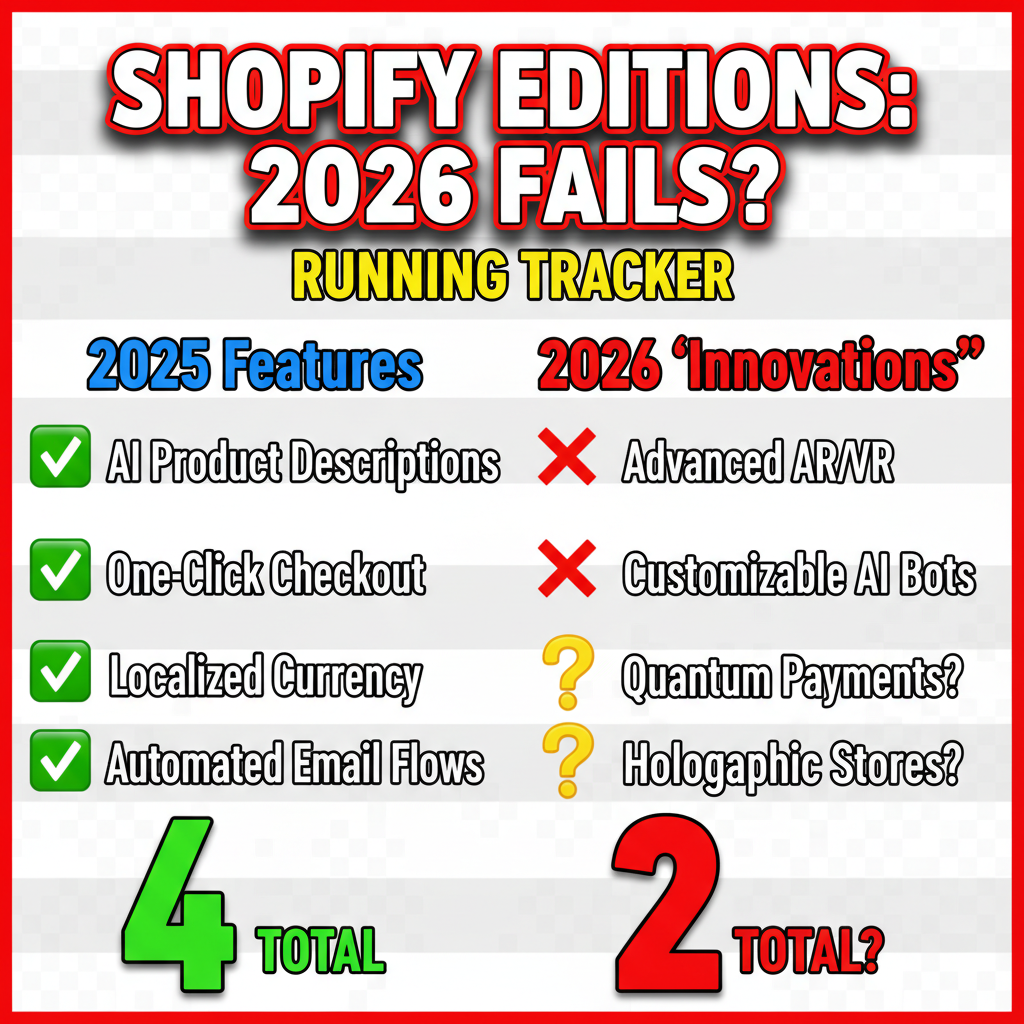
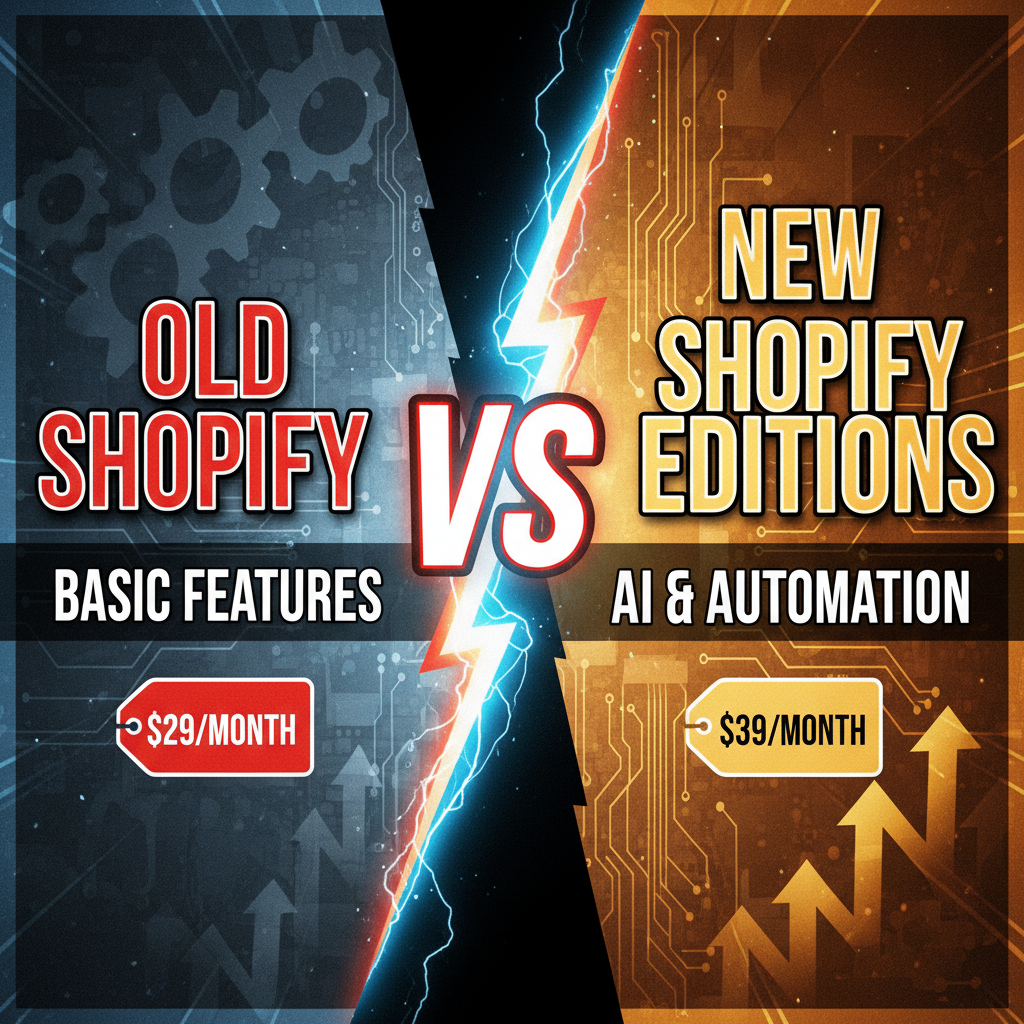
Shopify's quarterly Editions announcements are part product roadmap, part marketing theater. The 2026 announcements are no exception. Between the polished demos and the LinkedIn hype, there are three genuinely useful improvements buried inside.
Most merchants see the press release and think "oh, new feature" without understanding whether it actually applies to their store or moves their needle. We've spent the last two weeks dissecting the recent announcements with teams running $5M to $50M+ stores. Here's what actually matters and what you can skip.
The Three Real Wins for Merchants
The 2026 Editions focused on three categories: AI-powered commerce, developer experience, and payments infrastructure. Not all three apply to every merchant. But if you run a DTC brand on Shopify, at least one of these directly impacts your bottom line.
AI-Powered Personalization (The Big Shift)
Shopify's new AI capabilities center on product recommendations, search results, and dynamic content. The key difference from previous attempts: this time it's native, not an app.
Here's why that matters. Third-party recommendation apps charge $500–$5,000/month and require custom training. Native AI uses Shopify's graph of your store data—products, customer behavior, inventory—without additional setup. For a $10M store, that's real margin recovery.
The accuracy depends on your data quality. If your product descriptions are thin or metadata is messy, the AI returns mediocre results. If you've invested in rich descriptions, category trees, and customer data, you get 8-15% lift in AOV according to Shopify's internal testing.
Shopify Flow 2.0 (The Efficiency Play)
Flow automation just got visual-builder capabilities. Instead of writing YAML or JSON, you drag blocks—conditions, actions, webhooks—into a canvas. The result: conditional automations that previously required developer time now take an hour to build in-house.
Real-world example: automating your email list exports, inventory sync between channels, and fulfillment notifications without Zapier or custom code. For a 5-person team, this is 5-10 hours reclaimed per week.
The catch: Flow is still limited to Shopify data. Cross-platform workflows still require external tools like Zapier or Make. But for pure Shopify-to-Shopify automation, this is a game-changer.
Shopify Payments Infrastructure (The Under-the-Radar Win)
Shopify launched new payment options and settlement flexibility. This is unglamorous but high-impact: custom payment networks for B2B, staggered settlement timelines, and multi-currency support without currency conversion fees for Plus merchants.
For merchants doing international B2B, this is a $50K–$200K annual savings depending on volume. For DTC brands in the US, it's less impactful unless you're handling complex payment scenarios.
What You Can Safely Skip
| Feature | Why | When to Revisit |
|---|---|---|
| Admin API Webhooks v2.1 | Incremental improvement, affects developers, not merchants | If you're building a custom app or integrating with unusual data sources |
| Enhanced Fulfillment UI | Slight UX improvement to order management | Only useful if you manage 500+ orders/day in admin |
| New Checkout Extensions | Requires developer implementation; limited ROI unless you charge for post-purchase upsells | If your AOV can support $50-$100 in custom development per feature |
| Metafield Enhancements | Useful only if you're using metafields already | Skip unless you're running a headless storefront |
These aren't bad—they're just not urgent priorities for most stores. They're nice-to-haves that your developer roadmap should address if you're already working on infrastructure improvements.
The Framework: Which Announcements Apply to Your Store
Here's a quick decision tree to figure out what actually matters:
Are you running $1M–$10M annual revenue? AI personalization is your play. Test the native recommendations for 30 days and measure AOV lift. If you see 5%+ improvement, keep it. If you don't, it means your product data is thin.
Are you managing fulfillment, inventory syncing, or customer notifications across multiple channels? Flow 2.0 justifies a week's investment in building your automation layer. Calculate your current manual time (emails, exports, calls to 3PLs) and automate it.
Are you a Plus merchant with B2B or complex international payments? The payments infrastructure update is worth a conversation with your Shopify account manager. You're likely sitting on $100K+ in annual optimization opportunities.
Are you under $1M or pure B2C domestic? The 2026 announcements don't apply yet. Focus on basics: product images, descriptions, and mobile checkout. That beats any platform feature.
Common Misconceptions About Editions
Myth 1: "Shopify just copied AI everyone else offers." Partially true, but the implementation matters. Most AI recommendation engines are bolt-on apps. Shopify's sits in the core platform, touching customer journey data in ways external apps can't. That depth advantage is real.
Myth 2: "I need to implement all of this right now." No. Editions are quarterly releases. Pick one priority per quarter. Shopify isn't going anywhere, and your current store is probably fine as-is. Incremental improvements compound.
Myth 3: "This stuff replaces my developer/agency relationship." No. Flow 2.0 handles automations, not core architecture changes. If your store needs a redesign, faster checkout, or custom APIs, you still need specialists. Flow is for glue logic, not engineering.
The Real Catalyst: Data Quality
The tipping point for getting real value from Editions is data quality. If your product metadata is rich, your customer data is clean, and your inventory is synchronized, these tools sing. If your data is messy, even new features fall flat.
Before implementing any 2026 feature, audit your product data. Are descriptions 200+ characters? Do you have consistent sizing, material, and care information? Is your taxonomy (categories, collections) clean and consistent? Is your customer data (purchase history, segment tags) accurate?
Better data beats better tools. Always.
How to Approach 2026 Updates
-
Prioritize based on revenue impact. Start with AI personalization (5-15% AOV lift potential) or Flow automation (20-30% time savings). Skip the rest for now.
-
Run a controlled test for 30 days. Turn on native AI recommendations for a single collection. Measure revenue impact. If it works, roll out. If not, your data needs work.
-
Document your use case. When you turn on a new feature, record why you're doing it and what success looks like. "Implement Flow to automate email exports" is better than "because Shopify said so."
-
Plan for one feature per quarter. You have time. Shopify releases Editions every 90 days. Pick one priority, implement it, measure it, move to the next.
Ready to Leverage Shopify's Latest?
Shopify's 2026 Editions deliver real value—but only if you choose the right priorities for your business. The most successful stores don't implement everything; they implement what moves their specific needle: AI for conversion lift, Flow for operations, Payments for complex transactions.
At Tenten, we help merchants evaluate new Shopify capabilities and build implementation plans that deliver ROI. If you're uncertain whether these announcements apply to your store, our Shopify Plus team can run a 30-minute analysis and recommend your top two priorities.
Ready to optimize your Shopify setup? Get in touch.
Editorial Note
We see a lot of merchants treating Shopify Editions like Apple releases—waiting in line for the latest thing. The reality: most feature launches are 70% marketing, 30% real utility. Our job is to figure out which third applies to your store and help you implement it efficiently. If you're trying to evaluate these announcements for your own business, the framework above—revenue-based prioritization, controlled testing, quarterly pacing—is exactly how we approach it with our clients.
Frequently Asked Questions
Are Shopify's new AI features worth implementing for a $2M store?
Test them for 30 days on a single collection. If you see 5%+ AOV lift, roll them out. Most stores see 3-8% improvement. For a $2M store, that's $60K–$160K in incremental revenue annually.
Do I need developer support to implement Editions?
Flow 2.0 is no-code. AI features are native toggles. Payments infrastructure might require an account manager conversation. No custom code required for most merchants.
How long does it take to see results from new features?
AI recommendations take 2-3 weeks to train. Flow automations work immediately. Payments changes take 1-2 billing cycles to show impact. Test over 30 days before deciding.
What's the difference between Shopify Editions and regular updates?
Editions are quarterly bundles of features across the platform. Regular updates are ongoing fixes and minor improvements. Editions are the bigger announcements.
If I ignore these announcements, will my store suffer?
No. Focus on fundamentals first—product data, checkout speed, customer service. Editions amplify a solid foundation; they don't fix a broken one.