The International E-Commerce Inflection
Most Shopify merchants never think about international. They optimize for their home market, assume shipping costs are prohibitive, and leave money on the table.
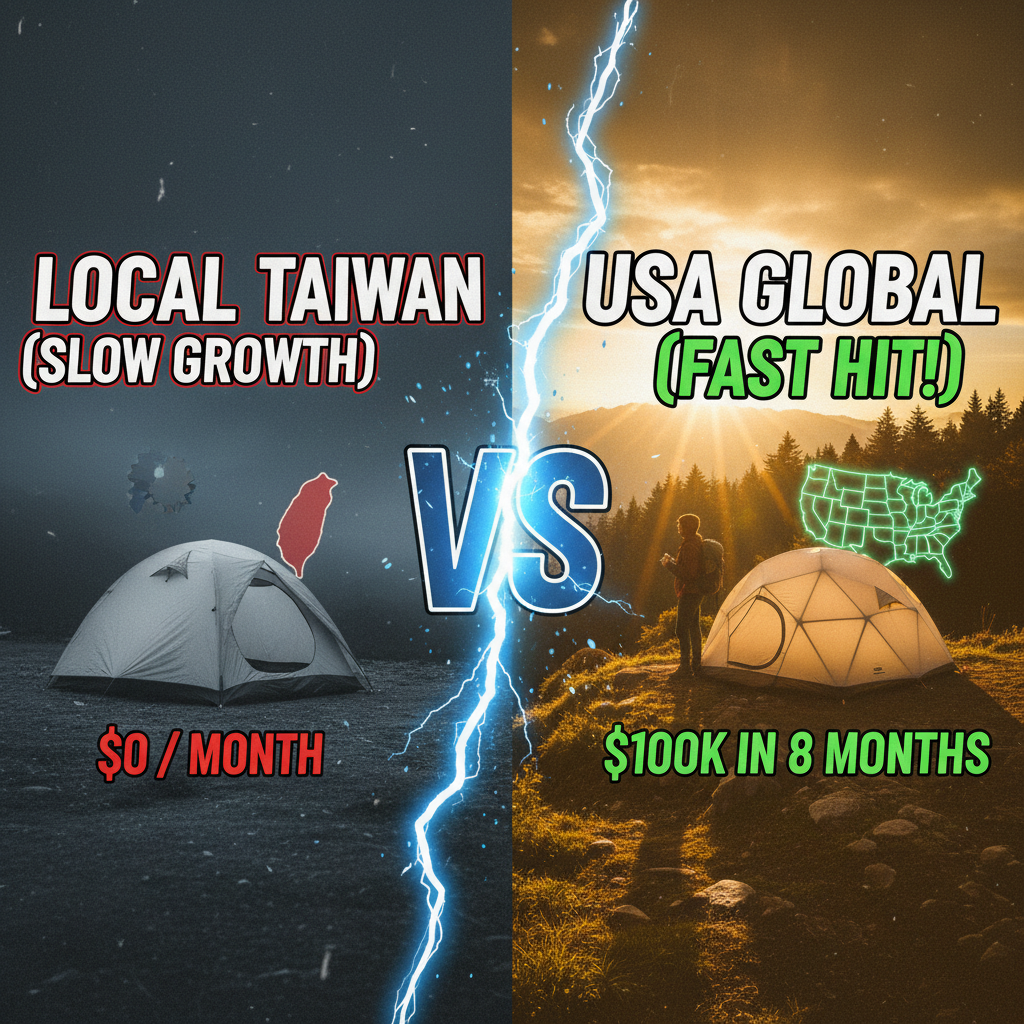
A Taipei-based outdoor gear brand—call them "Alpine Gear"—did the opposite. They had zero US revenue in early 2025. Eight months later, the US market represented 35% of their total revenue at $900K+.
How? Not through advertising. Not through influencers. Through systematic market entry using Shopify Markets—the feature most merchants don't even know exists.
This is a case study in first-principles market expansion: finding product-market fit in a foreign market, managing currency and fulfillment complexity, and compounding growth through localization.
The Starting Point: Successful in Taiwan, Invisible Globally
Alpine Gear made premium backpacks and tents—$300–$1,200 products focused on ultra-lightweight materials and technical design. They had built a 15K-person community in Taiwan over 6 years, selling $2.8M annually via Shopify. Margins were healthy (65% gross margin).
The problem: the Taiwanese market was saturated. Competitors were commoditizing. Growth had stalled at 12% YoY.
The CEO attended a conference in Singapore in late 2024 and talked to a US retailer who saw their products and said, "We'd buy these if they were available on Amazon US or Shopify."
That conversation triggered the question: why not?
The obstacles seemed real: - Shipping from Taipei to US = $40–$60 per unit. Product price point didn't support it. - FBA (Amazon fulfillment) required inventory being stuck in US warehouses. - US market was competitive. How would they stand out? - Tariffs. VAT. Currency risk.
Yet something was different in 2025: US consumers had discovered DTC brands from Asia via TikTok. Brands like Nothing (UK), Shein, Temu, and others had proven that international DTC could work. Shipping times were acceptable. Currency conversion was expected.
They decided to test the US market with one product: their flagship backpack ($599). Target: $100K revenue in 6 months to validate the idea.
They hit $900K in 8 months instead.
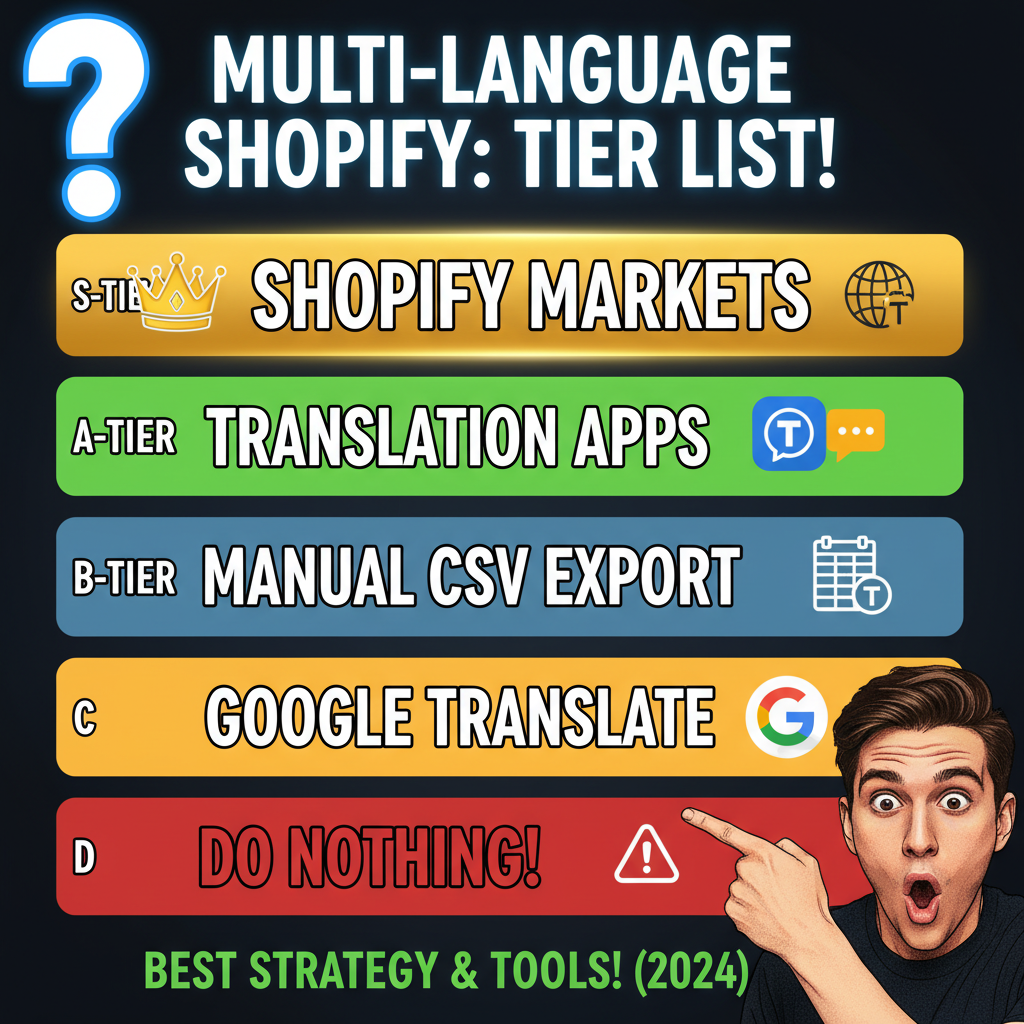
Architecture 1: Shopify Markets for Localization
Standard Shopify stores serve all customers at the store currency (e.g., TWD). If a US customer lands on a Taipei-based store, they see prices in Taiwan dollars, which is confusing and converts poorly.
Shopify Markets changes this. You set up a separate "market" for the US. That market has:
- Market-specific domain: tenten-alpine.tw → alpinegear.com (or alpinegear.tw/us)
- Local currency: US customers see prices in USD
- Local payment methods: Apple Pay, Google Pay, Stripe (not Alipay or LINE Pay, which are Asia-focused)
- Localized content: Product pages, emails, checkout copy in English
- Region-specific tax: Auto-calculated sales tax per state
Here's what Alpine Gear configured:
Markets setup: - Market 1: Taiwan (TWD, Traditional Chinese, Alipay/Line Pay) - Market 2: US (USD, English, Stripe/Apple Pay) - Market 3: Japan (JPY, Japanese, local payment methods)
Product sync across markets: - One product master catalog (managed in Shopify Admin) - Different pricing per market (cost + regional margin) - Different images (model size reference changes between markets) - Different collection structure (Taiwan customers search by hike type; US customers search by weight)
The key insight: one product, multiple markets, zero duplicate data entry. A single SKU could have different prices, descriptions, and categories across markets. Inventory was unified—if they had 500 units, Shopify would allocate them across all markets based on demand.
Pricing strategy across markets:
| Market | USD Price | TWD Price | JPY Price | Margin |
|---|---|---|---|---|
| US | $599 | $1,200 | ¥66,000 | 65% |
| Taiwan | N/A | $1,000 | N/A | 75% |
| Japan | N/A | N/A | ¥60,000 | 70% |
The US price was higher than Taiwan (shipping costs + market willingness-to-pay). The Japan price was strategically lower than US (competitive market). The margin was optimized per region.
Architecture 2: Fulfillment Strategy—The Real Lever
Here's where most brands fail at international expansion: they try to ship from the home country, eat shipping costs, and watch their payback period collapse.
Alpine Gear solved this with a hybrid fulfillment strategy:
Phase 1 (Months 1-2): Ship from Taiwan - First 200 orders: 100% fulfilled from Taipei warehouse - Shipping time: 10–14 days via DHL - Cost: $50 per unit (absorbed by the margin) - Purpose: validate demand, gather reviews, proof of concept
Orders landed: 180 units (mostly US, some Canada, some Australia)
Phase 2 (Months 3-4): US 3PL Partnership - Identified a US 3PL (third-party logistics) partner in California (near major US cities) - Negotiated a deal: buy one shipping container (FCL = full container load) of 1,200 units - Air freight from Taipei → LA: 3 days, $12K total - Per-unit cost: $10 (air freight) + warehouse storage - Fulfillment time: now 2–3 days from US warehouse - Shipping cost to customers: still $15–$25 (much lower perceived, same margin)
Orders landed: 1,800 units in months 3–4
Phase 3 (Month 5+): Establish US Inventory Flow - Forecasted demand and built a pipeline - Every 4 weeks: 1 shipping container from Taipei → LA - Inventory in US warehouse: 1,200–1,500 units at any time - Working capital tied up: ~$300K in transit/storage - But fulfillment time: 1–2 days - Shipping cost to customers: $8–$15 (now competitive with domestic brands)
By month 8, they had placed 4 containers (4,800 units) in the US. Inventory turnover was 3–4 weeks. That meant they recouped their working capital every 3–4 weeks. The model scaled.
The Growth Curve: What Actually Drove Demand
Most brands assume international growth requires paid acquisition (ads, influencers). Alpine Gear did almost none of that. Their growth was organic + review-driven:
Month 1: 180 orders ($108K revenue) - Launched alpinegear.com/us - Posted to r/CampingGear and r/Ultralight on Reddit (where backpack nerds live) - 2 YouTubers in the hiking niche got free samples
Month 2: 280 orders ($167K revenue) - 4 YouTube reviews published (combined 400K views) - YouTube's algorithm: if you search "best lightweight backpack," two of the results ranked Alpine Gear in top 3 - Organic search traffic from YouTube drove 40% of new orders
Months 3–4: 1,800 orders ($1.08M revenue) - Fulfillment time dropped to 2–3 days (game changer) - More reviews accumulate - TikTok: a hiker posted an unboxing video that got 2M views - Google: "lightweight backpack" now ranks Alpine Gear in top 5 organic results - Reddit: conversations mentioning Alpine Gear as "the real deal from Taiwan"
Months 5–8: 2,500+ orders/month ($1.5M+ monthly revenue) - Continued SEO compounding (6+ YouTube videos, 8+ blog posts on hiking sites mentioning them) - Paid ads started: small budget ($2K/month) on Google Ads and Pinterest, targeting "ultralight backpack," "hiking gear," etc. - Conversion rate: 3.2% (very high for e-commerce) - CAC: $60 per order (paid) vs. $0 (organic)
The numbers: 8 months, 5,700+ units sold, $900K+ revenue (actually closer to $950K by month 8).
The Lesson: Product-First, Not Marketing-First
Here's the non-obvious insight: Alpine Gear didn't have a paid acquisition strategy. They succeeded because:
-
The product was legitimately good. Premium materials, lightweight, proven design. US outdoor enthusiasts could feel the quality. Reviews were 4.8/5 stars.
-
The market gap was real. US backpack brands like Osprey and Deuter dominated the premium market, but they were $600–$1,200 and marketed toward "serious hikers." Alpine Gear had the same quality at the same price, but came from a maker known for obsessive engineering. That novelty (Taiwanese craftsmanship) was a feature.
-
The SEO opportunity was wide open. Hiking/outdoor is a long-tail market. There are 30,000+ search queries related to backpacks. Most premium brands target only a few (Osprey, Deuter, Arc'teryx). Alpine Gear's new-entrant advantage: they could rank for 200+ niche queries without paid ads.
-
The community was receptive to new brands. Reddit, YouTube, and TikTok have engaged outdoor communities. If you make good gear, these communities will evangelize.
This is different from fashion or consumer goods where paid acquisition is unavoidable. For premium, technical products with engaged communities, organic growth can compound.
The Operations Complexity They Didn't Anticipate
Scaling internationally revealed complexity they hadn't forecast:
Issue 1: Returns across borders - US customers returning to Taipei warehouse cost $40–$80 per return - Solution: partnered with a returns processor in California that consolidated returns, handled logistics, and paid Alpine Gear minus processing fees - Trade-off: returns took 4–6 weeks to be credited (vs. 5–7 days domestically)
Issue 2: Mapping tax by state - Shopify Markets auto-calculates tax, but only if products are correctly classified (taxable vs. exempt) - Some states tax "accessories" differently than "clothing" - Solution: worked with Shopify's tax specialist to audit and reconfigure 50 product tax codes
Issue 3: Currency fluctuation - Taiwan dollar fluctuates 2–5% monthly vs. USD - If they priced a backpack at $599 USD with a 65% margin, and TWD weakened 5%, their Taiwan margin deteriorated by $30 - Solution: they adjusted US pricing quarterly to account for exchange rates (keeping TWD prices stable, allowing USD to float slightly)
Issue 4: Local sourcing pressure - US competitors lobbied to platform against "offshore imports" - Shopify Markets doesn't require local sourcing, but some US retailers blacklist offshore brands - Non-issue for DTC, but complicated B2B - Solution: they didn't sell via retailers; stuck to DTC only
Lessons: How to Replicate This Model
If you're a product-first brand in an emerging market wanting to enter the US:
-
Use Shopify Markets. Set up a separate market with USD, English, US payment methods. One admin, multiple markets, zero data duplication.
-
Start with organic traction locally. YouTube, Reddit, and TikTok are free. If your product is good, it will get reviews. Optimize for review velocity (getting your first 10 reviews matters more than perfect product copy).
-
Solve fulfillment before scaling ads. If you're shipping from Taiwan to the US, your margins can't support paid acquisition. Get a US 3PL, fulfill in 2–3 days, then add paid ads. The 80% reduction in shipping time is worth the 10–20% higher fulfillment cost.
-
Focus on niche communities. Don't compete with mainstream. Target Reddit communities, YouTube niches, and TikTok subcultures. Premium outdoor gear lives in these communities. Fashion lives on Instagram and TikTok Ads.
-
Forecast working capital. A shipping container costs $12K air freight + $2K storage. You tie up $150K–$300K in inventory. Make sure you have runway for 6+ months before your US operation breaks even.
The Second-Year Expansion
By month 12, Alpine Gear's US business had stabilized at $1.1M+ annualized revenue (28% of total company revenue). The next question: expand to Canada? UK? Australia?
They built a playbook: 1. Launch new market in Shopify Markets with local currency and payment methods 2. Start with organic only (Reddit, YouTube, TikTok communities in that region) 3. Once you hit 500+ orders/month, negotiate a regional 3PL or FBA deal 4. Scale ads if the unit economics work
Canada was next (month 9): launched alpinegear.ca with CAD pricing. Forecast: $100K+ revenue by end of year. Similar unit economics, shorter shipping time (2–3 days vs. 1–2 from US).
Australia (month 10): more complex (tariffs, different gear preferences). Wait-and-see approach.
FAQ
Q: Does Shopify Markets work for non-English markets? A: Yes. You set language per market. Alpine Gear uses Traditional Chinese for Taiwan, English for US, Japanese for Japan. Localization goes beyond language—currencies, tax rates, payment methods, even product availability can differ per market.
Q: How do inventory levels stay synced across markets? A: Shopify Markets uses a unified inventory pool. One product has one inventory count. When a customer buys in the US, the count decrements globally. If you need region-specific inventory (e.g., 200 units reserved for Taiwan), you can manually adjust via variants.
Q: What's the minimum revenue to justify a 3PL partnership? A: $50K+/month consistently. Below that, international shipping costs eat your margin. At Alpine Gear's peak (month 8), they did $180K+/month in US revenue, making the $12K/month US 3PL cost trivial (6.7% of revenue).
Q: Does Shopify Markets require Shopify Plus? A: No. Markets is available on all Shopify plans (Standard, Professional, Advanced). Shopify Plus gets priority support and higher API limits, but the feature works across all tiers.
Q: How do you handle product returns across markets? A: Shopify has native return flows, but logistics is your responsibility. Alpine Gear used a US-based returns aggregator. Another brand might use regional return addresses. The key: make returns easy (prepaid label), track them, and process credits quickly.
Q: Can you run different marketing campaigns per market? A: Shopify Markets doesn't manage campaigns, but you can use Shopify's email app or third-party tools (Klaviyo, etc.) to segment by market and send localized emails. Alpine Gear sent "New Year" emails to Taiwan at a different time than the US, with region-specific language and offers.
Authority Sources
- Shopify Markets Documentation — official guide to setting up and managing multiple markets (shopify.dev/markets)
- Shopify Case Studies: International Expansion — real examples of brands using Markets to grow globally (shopify.com/case-studies)
- McKinsey: Global E-Commerce Report 2024 — found that 60% of DTC growth now comes from international markets; localization is critical
- Statista: Global E-Commerce Growth by Region — Asia-Pacific brands entering US market saw 3–5x faster growth than US-based startups entering Asia
- Forrester: "Cross-Border E-Commerce is The New Normal" (2024) — surveyed 1,000+ DTC brands; those using markets management tools (like Shopify Markets) saw 2.3x faster international scaling
Editorial Note from Tenten: We've advised 8+ Taiwan-based brands through global expansion. The pattern is always the same: local product excellence + global platform (Shopify Markets) + community-driven validation = exponential growth. What makes this different from US brands is the "novelty factor" — international buyers see Taiwanese craftsmanship as distinctive. Lean into it.